
The Backbone of Infrastructure: Inside France’s USD 3.12 Billion Steel Tube Transformation (2025–2033)
France’s Steel Tube Market Infrastructure-Driven Growth Through 2033
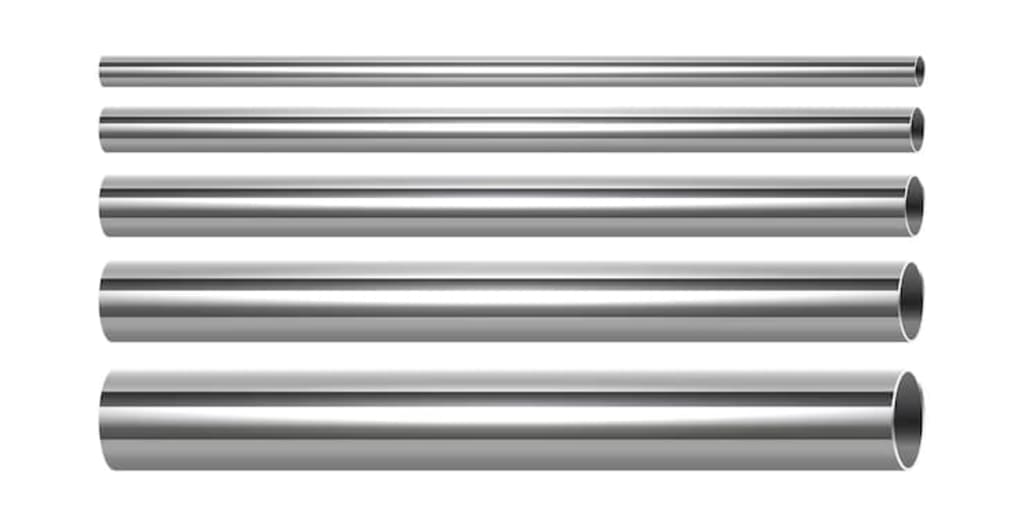
In the industrial landscape of 2026, the humble steel tube has become a high-tech symbol of France’s commitment to "Green Sovereignty." No longer just a commodity for construction, steel tubes are now the vital arteries of the hydrogen economy, the skeletal frame of the electric vehicle (EV) revolution, and the foundation of a modernized nuclear fleet.
Valued at USD 2.67 Billion in 2024, the France steel tubes market is on a steady climb toward USD 3.12 Billion by 2033. While the CAGR of 1.59% reflects a mature market, the real story lies in the "Value-Over-Volume" shift. In 2026, the industry is trading mass production for high-precision, low-carbon engineering.
The Energy Pivot: Hydrogen and Nuclear Renaissance
The single most powerful driver of market growth in 2026 is the energy sector. Following the French government's renewed commitment to nuclear energy and the ambitious "National Hydrogen Strategy," demand for specialized tubular products has reached a decade-high.
The Hydrogen Infrastructure: Steel tubes for hydrogen transport must be resistant to "hydrogen embrittlement." In 2026, major French players like Vallourec are rolling out advanced seamless tubes specifically designed for high-pressure hydrogen storage and transport, such as their Delphy underground storage system.
Nuclear Modernization: As France extends the life of its existing reactors and breaks ground on new EPR2 models, the demand for high-performance, corrosion-resistant stainless steel tubes for cooling systems and steam generators has surged. This segment alone commands a significant premium in the market.
Automotive Evolution: Lightweighting for EVs
The French automotive industry led by titans like Renault and Stellantis is in the final stages of its EV transition. This has forced steel tube manufacturers to innovate at the level of the molecule.
Strength-to-Weight Ratio: To offset the heavy weight of EV batteries, 2026-era cars require ultra-high-strength steel (UHSS) tubes for structural safety frames and battery enclosures.
Precision Engineering: Alliances formed this year between steel producers and Tier-1 automotive suppliers have resulted in new alloys that reduce component weight by up to 10% without sacrificing crash safety.
Thermal Management: With EVs requiring complex battery cooling loops, there is a rising demand for small-diameter, high-precision welded tubes that can withstand the chemical stress of modern coolants.
The Green Mandate: Decarbonizing the Pipe
By August 2026, the "Triple E" environmental standard becomes a critical factor for public procurement in France. Labeled as "Green Public Procurement," this law mandates that companies bidding for state-led infrastructure projects must prove the low-carbon pedigree of their materials.
Electric Arc Furnaces (EAF): Roughly 34% of French steel production is now scrap-based via EAF, which emits significantly less CO2 than traditional blast furnaces. In 2026, tubes produced with "Green Steel" are fetching a 15–20% price premium as developers scramble to meet sustainability targets.
Circular Supply Chains: 2026 marks the widespread adoption of "Closed-Loop" recycling, where construction scrap is directly returned to the tube mill to be repurposed into structural piping, ensuring the industry aligns with the EU’s Fit for 55 package.
Technological Innovations: Automation and Smart Production
The "Tube 2026" trade fair in Düsseldorf highlighted that French manufacturers are no longer just metalworkers; they are software integrators.
Real-Time Quality Monitoring: In 2026, French mills are utilizing AI-driven ultrasonic and radiographic testing during the production process. This "In-Line" inspection ensures that every millimeter of a seamless pipe meets the stringent safety standards of the aerospace and energy sectors.
Smart Manufacturing (Industry 4.0): Advanced sensors now monitor the energy consumption of tube-welding machines, optimizing electricity usage in real-time to mitigate the impact of volatile energy prices.
The Competitive Landscape: Local Champions and Global Players
The France steel tubes market is both competitive and highly specialized.
Vallourec: As the domestic leader, Vallourec is pivoting heavily toward "New Energy" applications, moving away from traditional oil-country tubular goods (OCTG) to focus on carbon capture and storage (CCS) and hydrogen.
ArcelorMittal: Through its European mills, ArcelorMittal continues to dominate the structural and automotive segments, leveraging its massive R&D budget to lead the charge in "low-CO2" steel production.
SMEs and Niche Players: Smaller firms like Ugitech and DISTRITUBE are carving out profitable niches in specialty stainless steel and high-end industrial fittings for the food and pharmaceutical industries.
Challenges on the 2033 Horizon
Despite the projected growth to USD 3.12 Billion, the market faces three primary headwinds in late 2026:
Raw Material Volatility: While supply chain optimization has improved, the fluctuating cost of iron ore and electricity remains the largest risk to manufacturer margins.
Transportation Costs: Steel tubes are heavy and expensive to move. In 2026, logistics can account for up to 50% of the total cost of a pipe if transported by road over long distances, driving a shift toward rail and waterway logistics.
Alternative Materials: The rise of high-density polyethylene (HDPE) and other high-strength plastics poses a threat to the low-pressure water and gas segments of the steel market.
Conclusion: A Strategic Pivot
The France steel tubes market in 2026 is a study in resilience. By aligning itself with the nation’s decarbonization strategy and the energy transition, the industry has transformed a mature commodity into a strategic asset.
As we look toward 2033, the winners will not be the companies that produce the most steel, but those that produce the smartest steel. For the French economy, these tubes aren't just industrial products they are the literal infrastructure of a sustainable future.
About the Creator
Keep reading
More stories from Neeraj kumar and writers in Education and other communities.
The USD 5.18 Billion Silhouette How Sustainability and Tech are Reshaping French Lingerie (2025–2033)
France has always been the heartbeat of global intimate apparel. From the intricate lace of Calais to the avant-garde designs of Parisian boutiques, the "French Touch" is more than a style it’s an institution. However, as we move through 2026, the industry is undergoing a structural and cultural "re-fit."
By Neeraj kumara day ago in Education
Evidence-Based Medicine or Quackery?
Are we practising evidence-based medicine or quackery when dealing with mental illness? On 23 January 2026, the Australian Doctor published the following article online: “A study in quackery—one journal’s entanglement with homeopathy.”
By Mal Mohanlal4 days ago in Education
Digital Wallets in the UK: Payments You Can Wear
Introduction Payments Are Becoming Invisible and Effortless Rapid growth in mobile payments is replacing cash and the customary wallet-based commerce method with an alternative mobile wallet method that is faster, easier and more convenient. In the United Kingdom, digital wallets have been widely adopted for secure in-store and online payments.
By deepanshu Thakur2 days ago in Education
Our Song
Evening has given way to night. Gently, I settle next to you on the comfortable, old love seat and reach for your hand. You snatch it away, again. It cuts me to the quick, but I hide the pain, understanding that the reaction is but part of your demented state. Since the accident, your presence here in our cozy home has been clouded by a haze I can't see. Nevertheless, I feel the frigidity of your expressions and it serves as an excruciating reminder of the immeasurable distance between us.
By Dana Crandell7 days ago in Fiction




Comments
There are no comments for this story
Be the first to respond and start the conversation.