
Middle Eastern Countries Failure In Football
Middle Eastern Countries in Football
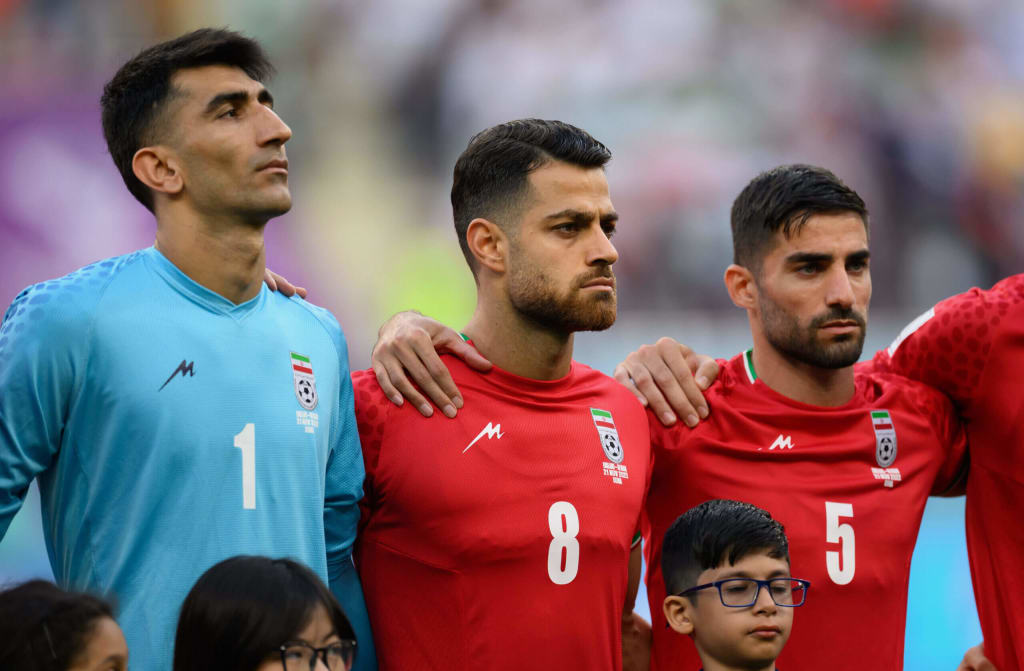
The reasons behind Middle Eastern countries failure in Football
The Middle East is home to some of the world's most passionate football (soccer) fans, and the region has produced some talented players who have made their mark on the international stage. However, Middle Eastern countries have generally struggled to achieve sustained success in football at the highest levels. Here are some reasons behind Middle Eastern countries' failure in football:
Limited resources and infrastructure: Many Middle Eastern countries face challenges in developing the necessary resources and infrastructure to support football. Some countries lack modern stadiums, training facilities, and qualified coaches, which can make it difficult for players to develop their skills and compete at the highest level. Additionally, limited funding and resources can make it difficult to attract and retain top talent.
Political instability and conflict: Many Middle Eastern countries have experienced political instability and conflict, which can have a negative impact on football development. Civil unrest can lead to disrupted seasons, cancelled games, and limited access to training and competition. Additionally, international sanctions and travel restrictions can make it difficult for teams to participate in international competitions and attract foreign talent.
Cultural factors: In some Middle Eastern countries, cultural factors can also play a role in football development. For example, some countries have limited opportunities for women to play football, which can limit the talent pool and stunt the growth of the sport. Additionally, some cultures may place a greater emphasis on other sports or leisure activities, which can limit interest and investment in football.
Lack of consistent development programs: Many Middle Eastern countries have struggled to develop consistent programs for youth development and player recruitment. This can make it difficult to identify and develop talented young players, and limit the overall quality of football played in the region.
Competition from other regions: Finally, Middle Eastern countries face strong competition from other regions with more established football traditions, such as Europe and South America. This can make it difficult for Middle Eastern countries to consistently qualify for major international tournaments and attract top talent.
Overall, there are several complex factors that contribute to Middle Eastern countries' struggles in football. To address these issues, countries in the region will need to invest in infrastructure and development programs, as well as work to create stable political environments and cultural shifts that prioritize football as a national priority.
Some Middle Eastern countries's achivements in Football
espite the challenges faced by many Middle Eastern countries in football, there have been some notable achievements by teams from the region in both regional and international competitions. Here are a few examples:
Iran: Iran has a long history of football success, with the national team consistently ranking as one of the top teams in Asia. The team has qualified for the World Cup five times and has won the Asian Cup three times, most recently in 1976.
Saudi Arabia: The Saudi Arabian national team has also enjoyed success on the international stage, having qualified for the World Cup five times and making it to the round of 16 in 1994. The team has also won the Asian Cup three times, most recently in 1996.
Iraq: The Iraq national team won the Asian Cup in 2007, defeating Saudi Arabia in the final. The team's victory was seen as a symbol of hope and unity in a country that was still recovering from years of war and instability.
Qatar: Qatar is set to host the 2022 World Cup, which will be the first time the tournament has been held in the Middle East. The country has invested heavily in football infrastructure and development programs, with the goal of building a strong national team that can compete at the highest level.
UAE: The United Arab Emirates has also had some success in football, having qualified for the World Cup in 1990 and winning the Gulf Cup on three occasions. The country has invested in football infrastructure, including modern stadiums and training facilities, with the goal of developing a strong national team.
While there is still work to be done to develop football in the Middle East, these achievements show that progress is possible with investment, development programs, and a commitment to the sport.
About the Creator
Emir JR
I am a Special Science High School student from balkans, writing articles about sports.
Rabbi Shlomo Slatkin, M.S., LCPC on Imago Dialogue, Repair, and Relationship Safety
Rabbi Shlomo Slatkin, M.S., LCPC, is founder and therapist at The Marriage Restoration Project in the Baltimore area. An ordained rabbi and Certified Imago Relationship Therapist and workshop presenter, he guides couples through intensives, retreats, and counseling aimed at restoring safety, communication, and connection after conflict or crisis. He holds a master’s in Counseling Psychology from Loyola University Maryland and trained with the Imago Relationship Institute. Slatkin earned a B.A. in Middle Eastern Studies, with undergraduate study at George Washington University and Oxford, and authored The Five Step Action Plan to a Happy & Healthy Marriage. He also co-edited curricula.
By Scott Douglas Jacobsen43 minutes ago in Education
Why UMPCO Fasteners Still Solve Critical Aerospace Problems Today
When I started researching legacy aerospace fastener manufacturers, I wasn’t just looking for brand names—I was looking for solutions to real aviation problems. Structural failure, vibration fatigue, corrosion at altitude, and long-term reliability are challenges that every aerospace engineer eventually faces. One name that repeatedly surfaced in technical documentation and historical aerospace supply chains was UMPCO fasteners.
By Beckett Dowhan7 days ago in Education


Comments
There are no comments for this story
Be the first to respond and start the conversation.