
Message Passing in C++
Key Concepts of Message Passing


Introduction
Message passing is a crucial concept in concurrent and parallel programming. It allows different parts of a program, or different programs altogether, to communicate with each other by sending messages. In C++, message passing can be achieved through various means, including standard libraries, third-party libraries, and custom implementations.
In this blog, we will explore the concept of message passing, its significance in concurrent programming, and how to implement it in C++ using different techniques and libraries.
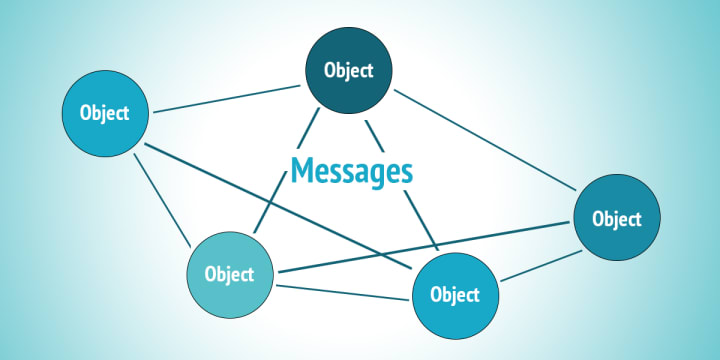
Message passing is a method of communication where messages (data or signals) are sent between processes or threads. Unlike shared memory, where threads communicate by reading and writing to a common memory space, message passing ensures encapsulation and avoids many of the pitfalls associated with concurrent programming, such as race conditions and deadlocks.
Key Concepts of Message Passing
Messages: The data or signals exchanged between processes or threads.
Channels: Pathways through which messages are sent and received.
Senders and Receivers: Entities that send and receive messages, respectively.
Why Use Message Passing?
Encapsulation: Processes or threads do not share memory, leading to better encapsulation and modularity.
Safety: Reduces the risk of race conditions, as there is no shared memory.
Scalability: Easier to scale across multiple processors or machines.
Message Passing in C++
In C++, message passing can be implemented using various libraries and techniques. We'll explore some common methods:
1. Using the Standard Library (std::thread, std::mutex, std::condition_variable)
The C++ standard library provides basic support for threading and synchronization, which can be used to implement message passing.
Example: Basic Message Queue with std::thread and std::condition_variable
#include <iostream>
#include <thread>
#include <queue>
#include <mutex>
#include <condition_variable>
std::queue<int> messageQueue;
std::mutex mtx;
std::condition_variable cv;
void producer() {
for (int i = 0; i < 10; ++i) {
std::unique_lock<std::mutex> lock(mtx);
messageQueue.push(i);
std::cout << "Produced: " << i << std::endl;
lock.unlock();
cv.notify_one();
std::this_thread::sleep_for(std::chrono::milliseconds(100));
}
}
void consumer() {
while (true) {
std::unique_lock<std::mutex> lock(mtx);
cv.wait(lock, [] { return !messageQueue.empty(); });
int msg = messageQueue.front();
messageQueue.pop();
std::cout << "Consumed: " << msg << std::endl;
lock.unlock();
if (msg == 9) break;
}
}
int main() {
std::thread t1(producer);
std::thread t2(consumer);
t1.join();
t2.join();
return 0;
}
2. Using Boost Libraries (boost::asio, boost::interprocess)
Boost provides a rich set of libraries that facilitate message passing in C++.
Example: Message Passing with Boost.Interprocess
#include <boost/interprocess/ipc/message_queue.hpp>
#include <iostream>
#include <string>
using namespace boost::interprocess;
void sender() {
message_queue mq(open_or_create, "message_queue", 100, sizeof(int));
for (int i = 0; i < 10; ++i) {
mq.send(&i, sizeof(i), 0);
std::cout << "Sent: " << i << std::endl;
std::this_thread::sleep_for(std::chrono::milliseconds(100));
}
}
void receiver() {
message_queue mq(open_or_create, "message_queue", 100, sizeof(int));
for (int i = 0; i < 10; ++i) {
int msg;
size_t recvd_size;
unsigned int priority;
mq.receive(&msg, sizeof(msg), recvd_size, priority);
std::cout << "Received: " << msg << std::endl;
}
}
int main() {
std::thread t1(sender);
std::thread t2(receiver);
t1.join();
t2.join();
message_queue::remove("message_queue");
return 0;
}
Conclusion
Message passing is an essential paradigm in concurrent and parallel programming, providing a robust way to communicate between processes or threads. C++ offers various mechanisms to implement message passing, ranging from the standard library to powerful third-party libraries like Boost and ZeroMQ. Understanding these tools and techniques is crucial for building efficient and scalable concurrent applications in C++.
About the Creator
Pushpendra Sharma
I am currently working as Digital Marketing Executive in Tutorials and Examples.
Keep reading
More stories from Pushpendra Sharma and writers in Education and other communities.
Understanding Serializability in DBMS
Database Management Systems (DBMS) are crucial for managing and manipulating large volumes of data efficiently. A fundamental aspect of DBMS is ensuring that transactions are executed in a way that maintains the consistency and integrity of the database. One key concept that helps achieve this is serializability. In this blog, we will explore what serializability is, its importance, types, and methods to ensure serializability in a DBMS.
By Pushpendra Sharmaabout a year ago in Education
How Social Media Helps Small Businesses Grow Faster
Small businesses need smart ways to grow without large budgets. Social media offers one of the fastest and most affordable paths. When used well, it helps small brands reach new customers, build trust, and drive steady sales. Growth that once took years can now happen in months.
By Michael Kazma6 days ago in Education
Prevention First: How Proactive Medical Care Builds Stronger Communities
Preventive medical care plays a critical role in shaping healthier communities. When people receive care before illness develops, they avoid many severe conditions. This approach improves quality of life and reduces strain on healthcare systems. Moreover, prevention supports long-term wellness rather than short-term treatment. Communities that prioritize preventive care experience lower rates of chronic disease. As a result, individuals remain active and productive. Preventive care, therefore, serves as the foundation for sustainable public health.
By St. John's Community Health3 days ago in Education




Comments
There are no comments for this story
Be the first to respond and start the conversation.