
Mastering On-Page SEO: Essential Steps to Boost Your Website Rankings
Best Practices of On-Page Search Engine Optimization

On-page SEO is all about all the elements on your website which you can control. Imagine having a beautifully designed website but no one visits it. The truth is, without effective on-page SEO; even the most stunning websites can remain invisible. On-page SEO is the key to unlocking your site's potential and ensuring it's seen by the right audience. In this article, we will explore ten vital steps to optimize your pages, helping you climb higher in search rankings and capture the attention of your target audience.
The Fundamentals of On-Page SEO
On-page SEO is like tuning a musical instrument; every element must harmonize to create a seamless experience for both users and search engines. At the heart of on-page SEO lays keyword optimization. It's not just about sprinkling keywords throughout your content; it's about strategically placing them in titles, headings, and Meta descriptions. This helps search engines understand what your page is about, while also enticing users to click through. For instance, if you’re writing about "vegan recipes," ensure this phrase appears naturally within your headings and opening paragraphs, but also think about related terms like "plant-based meals" or "meat-free dishes" to capture a wider audience.
Another critical component is content quality. Search engines favor pages that offer valuable, relevant information. Make your content engaging by addressing common questions or problems your audience faces. Use short paragraphs, bullet points, and visuals to make your content easy to digest. Incorporating internal links can guide readers to related topics on your site, keeping them engaged longer and improving your site's authority in the eyes of search engines. Think of each page as a doorway to more knowledge, encouraging visitors to explore further.
Don't overlook the technical aspects either. Fast loading times, mobile-friendliness, and proper URL structures are fundamental. These elements ensure a smooth user experience, which search engines reward with higher rankings. A page that loads quickly on a Smartphone and provides clear navigation keeps visitors coming back. In essence, mastering on-page SEO is about balancing user-centric content with technical precision to create an optimized digital environment where information flows effortlessly and engagement thrives.
Note: While I would agree that technical aspects fall under on-page or on-site optimization, they would be better addressed under technical search engine optimization about which I wrote in one of my previous articles on this very platform. I definitely recommend reading it as well as my other posts on SEO.
Key Elements of On-Page SEO
When it comes to on-page SEO, understanding the key elements is crucial for enhancing your page's visibility and performance. Each component plays a unique role in how search engines interpret and rank your content. Let's delve into these elements and explore their impact on page optimization.
- Meta Title: Think of this as your page's headline in search results. A compelling Meta title grabs attention and encourages clicks. Studies show that pages with optimized titles see up to a 20% increase in click-through rates.
- Meta Description: This snippet below your title gives users a preview of your content. Crafting an engaging Meta description can increase user engagement, as 43% of users admit to deciding based on this alone.
- URL Structure: A clean, keyword-rich URL is like a roadmap for both search engines and users. It improves navigation and indexing. A well-structured URL can boost your rankings by up to 25%, according to SEO experts.
- Content Structure: Organize your information with headers, bullet points, and concise paragraphs. This not only aids readability but also enhances SEO. Well-structured content keeps readers on your page longer, reducing bounce rates significantly.
- Image Optimization: Optimize images with alt text and proper file sizes. This can speed up page load times, which is crucial since 53% of mobile users abandon sites that take over three seconds to load.
- Internal Linking: These links connect different pages of your website, improving navigation and spreading link equity. Effective internal linking can lead to a 40% increase in page views, enhancing user experience and boosting SEO.
In the following sections, we will dissect each element further, analyzing their specific roles and how they collectively enhance your website's optimization strategy. By mastering these components, you can unlock the full potential of your site’s SEO performance. Stay tuned as we unravel the secrets behind each element, ensuring your pages achieve peak efficiency in the competitive digital landscape.
Meta Title - A Beacon for the World to See
A Meta title is often the first impression your content makes on search engines and users alike. It's the bold, clickable headline that appears on search results, serving as a crucial on-page SEO element. But why is it so important? A well-crafted Meta title can significantly enhance your click-through rate (CTR). According to a study by Backlinko, pages with titles between 40 and 60 characters have the highest CTR. That's a sweet spot for capturing attention without overwhelming your audience.
Creating an engaging Meta title requires more than just inserting keywords. It’s about crafting a promise that resonates. Imagine you're searching for the best Italian restaurant in town. "Top-Rated Italian Eateries: A Gastronomic Journey" would likely catch your eye more than a bland "Italian Restaurants List." This approach not only improves visibility but also builds trust. When users find what they're looking for, they’re more likely to click and explore further.
Incorporating emotional triggers can also work wonders. Words like "ultimate," "exclusive," or "discover" can entice curiosity and encourage action. Remember, your Meta title is more than a string of words; it's an invitation. By optimizing it thoughtfully, you don’t just climb search rankings—you also open the door to new audiences eager to engage with your content.
Note: The optimal length of the tile tag has been a subject of discussion for quite a long time now among search engine experts. Some claim that between 55 and 70 characters is optimal while others prefer to go even above that. I usually keep mine between 60 and 65 characters because too long title tags are usually truncated by the search engines. Therefore, make sure that your targeted keyword appears near the beginning of your title.
Meta Description - The Snippet that Entices Visitors
The Meta description sits directly beneath the Meta title in search results. This brief text snippet serves as a powerful tool to entice clicks and communicate your site's essence. Imagine it as the elevator pitch of your website—capturing interest within seconds. While the Meta title should ideally be concise, around 50-60 characters, the Meta description offers a little more room to maneuver, with an optimal length of 150-160 characters. This space is your opportunity to craft a compelling narrative that tells potential visitors exactly what they can expect upon clicking through.
A well-crafted Meta description not only boosts click-through rates but also aligns perfectly with user intent. For instance, if your website is about eco-friendly home solutions, your Meta description could highlight unique benefits such as "Discover sustainable home tips that save money and the planet." This not only uses the targeted keyword but also sets clear expectations for content, building trust before visitors even arrive. According to recent studies, pages with compelling Meta descriptions receive up to 5% more clicks than those without.
Ultimately, Meta descriptions are more than mere summaries—they are strategic invitations into your digital world. They translate the essence of your content into a few choice words that captivate and inform. Embrace this on-page SEO element as a bridge between search engines and human curiosity, guiding potential visitors seamlessly to your site.
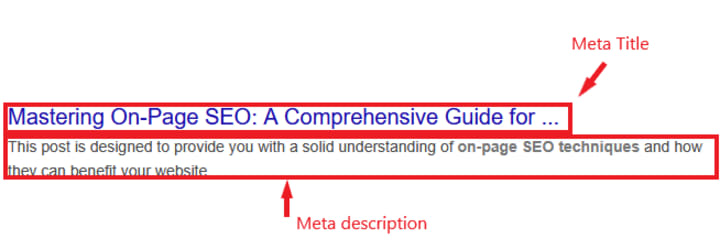
This image above shows how the Meta Title and the Meta Description were displayed when I searched for the term "how to master on-page SEO". Here, we can see how they clearly communicate what the page is about.
URL Structure
The URL structure serves as a crucial on-page SEO element, acting as the digital address of a webpage. It must be both comprehensible and logical to readers and search engines alike. An effective URL structure facilitates ease of navigation, enhances user experience, and contributes positively to search engine optimization. The ideal URL should therefore be succinct, incorporating relevant keywords while avoiding unnecessary parameters and excessive length.
A well-structured URL is characterized by its clarity and relevance. For instance, "www.example.com/seo-tips" effectively communicates the content's subject matter. In contrast, an unwieldy URL such as "www.example.com/index.php?id=1234&session=5678" obfuscates the page's purpose and detracts from user engagement.
To achieve SEO-friendly URL structures, it is essential to prioritize human readability alongside algorithmic accessibility. This dual focus ensures that both users and search engines can decipher the page's content effortlessly. While this brief overview touches upon key aspects of URL structuring, I have previously delved into more intricate details in my article on technical SEO, thus precluding further elaboration here.
Content Structure
Let's assume that you have conducted your keyword research properly, have identified the keyword you would like to target and are ready to create your content around your chosen keyword(s). The structuring of content using headers, bullet points, and concise paragraphs is an essential on-page SEO element, designed to enhance both readability and search engine optimization. Headers should be utilized in a hierarchical manner, with H1 typically reserved for the title tag of the document, serving as the primary descriptor of the content's subject matter. Subsequent headers—H2, H3, and so forth—should delineate subtopics, thereby creating a clear and logical progression of information. This hierarchy not only aids in the cognitive processing of content by readers but also facilitates search engine algorithms in comprehending the thematic structure of the page.
Inappropriately using headers can lead to confusion and diminished user experience. For instance, employing multiple H1 tags within a single page can dilute the focus and mislead search engines regarding the page's primary topic. Additionally, skipping header levels—such as jumping from H2 to H4 without an intervening H3—can disrupt the logical flow and coherence of information. Effective implementation of headers involves maintaining this structural integrity, ensuring that each level of header accurately reflects the importance and relationship of its content to the overarching topic.
Furthermore, bullet points serve as an effective tool for summarizing key ideas or listing items succinctly. They enhance readability by breaking down complex information into digestible pieces. Concise paragraphs further contribute to clarity, allowing readers to absorb information without feeling overwhelmed. According to a study by Nielsen Norman Group, users typically read only 20-28% of text on a web page; thus, organizing content thoughtfully with headers and bullet points maximizes engagement by enabling users to quickly locate pertinent information. In this way, strategic content structuring not only improves user experience but also optimizes the page for search engines.
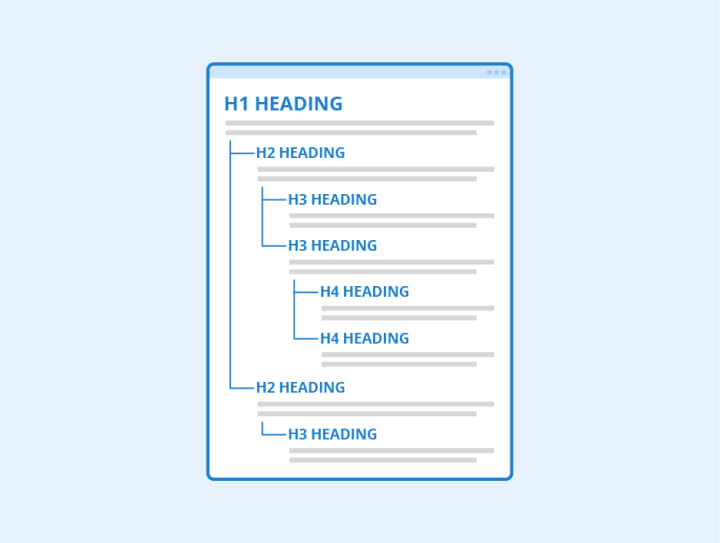
From the picture above, we can see how to implement headers properly and effectively.
The Dos and Don'ts of Content Creation for On-Page SEO
When it comes to creating content, understanding the dos and don'ts is crucial for maintaining your site's integrity and visibility. First and foremost, prioritize quality over quantity. Your content should be original, engaging, and informative. Use your chosen keywords, such as "on-page SEO," strategically but sparingly. Aim for a keyword density between 1% and 1.2%. This ensures that your content remains relevant without being perceived as spammy by search engines. Remember, overusing keywords can lead to penalties, drastically impacting your rankings and exposure.
Equally important is the structure of your content. Break down your information using clear headers like "On-Page SEO Techniques" and "Common Mistakes." This not only aids readability but also helps search engines better understand the context of your page. Incorporate bullet points or numbered lists where necessary to present key insights concisely. By organizing your content effectively, you enhance user experience and facilitate easier navigation.
Also, stay updated with the latest trends in search engine optimization. The digital landscape is constantly evolving, and what works today might not work tomorrow. Regularly audit your content for relevance and accuracy. Engage with your audience through comments and feedback to refine your approach continually. By doing so, you not only maintain a robust online presence but also foster trust and authority in your niche.
Image Optimization: Aid for the Visually Impaired
Image optimization is the process of refining images to improve website performance and accessibility. For the visually impaired, it plays a crucial role in ensuring that web content is accessible to all users. Alt tags, short for alternative text, are one of the most important elements in image optimization. They provide descriptive text for images, allowing screen readers to convey what the image represents to those who cannot see it. This not only enhances user experience for visually impaired individuals but also improves on-page SEO by helping search engines understand the content of images.
Attention: Search engines cannot read images perse. However, Google can read and understand the text within images using Optical Character Recognition (OCR) technology.
The size of an image can significantly impact on-page SEO and overall site performance. Large images can slow down page load times, leading to a negative user experience and potentially lower search engine rankings. To mitigate this, it's essential to reduce image sizes without compromising quality. Methods such as compressing images using tools like TinyPNG or JPEGmini, and choosing appropriate file formats like WebP can effectively decrease file size. Additionally, leveraging responsive design techniques ensures that images are appropriately sized for different devices, further enhancing load speeds and user experience.
Good image optimization balances quality and performance. For example, using a high-quality JPEG for a detailed photograph while opting for a PNG format for graphics with fewer colors can result in optimal image delivery. Employing lazy loading techniques can also improve page speed by only loading images when they appear in the user's viewport. By thoughtfully optimizing images, websites become more accessible and efficient, ultimately boosting on-page SEO and providing a better experience for all users.
Examples of well crafted image alt tag:
1. Consider an image of a scenic sunset over the Grand Canyon. A well-crafted alt tag might read: "Vibrant sunset casting orange and pink hues over the majestic Grand Canyon." This description not only provides context for visually impaired users but also employs keywords that can improve search rankings.
2. An e-commerce site showcasing a pair of sneakers could use an alt tag like: "Men's black running sneakers with white soles, perfect for jogging." This description highlights key features and potential uses, integrating keywords like "running sneakers" to enhance on-page SEO. By thoughtfully composing alt tags, you enrich your site's narrative and improve its search engine performance.
Tip: Just like the case with headers, you should make sure that while crafting out your alternative text for images, try to weave in your target keyword.
Internal Linking Strategy for On-Page SEO
Internal linking is a powerful yet often underestimated tool in the realm of on-page SEO. It acts as a roadmap for both users and search engines, guiding them through your website's content. By strategically linking related pages, you can enhance user experience, reduce bounce rates, and distribute page authority throughout your site. This interconnected web of links helps search engines understand the hierarchy and relationship between your pages, allowing them to index your content more effectively.
A well-executed internal linking strategy not only supports navigation but also highlights valuable content. For instance, when you link to cornerstone articles or key service pages from various locations within your site, you signal their importance to search engines. This can improve their ranking potential. Moreover, internal links provide additional context and relevance to your content, helping search engines better grasp the nuances of your subject matter. Consequently, this can lead to improved visibility in search results.
To maximize the benefits of internal linking for on-page SEO, focus on using descriptive anchor text that naturally incorporates relevant keywords. Avoid generic phrases like "click here" or "read more." Instead, opt for keyword-rich descriptors that clearly convey the content of the linked page. This not only enhances user experience by setting clear expectations but also reinforces keyword signals for search engines. Regularly audit your links to ensure they remain functional and relevant, adapting your strategy as your site evolves. By prioritizing an effective internal linking strategy, you can significantly boost your on-page SEO efforts, driving more traffic and engagement to your site.
Monitoring and Analyzing Your Performance
Your effort of performing on-page search engine optimization will be in vain if you fail to monitor the performance of your pages. You should be able to detect whether what you are doing are yielding any positive results. Tools like Google Analytics and SEMrush are instrumental in this process, providing valuable insights into how your on-page efforts are translating into real-world results. These tools allow you to track metrics such as bounce rate, page load speed, and keyword rankings. By analyzing this data, you can identify what’s working and what needs improvement, enabling you to make informed decisions that will enhance your site's exposure and rankings.
Consider utilizing this data to your advantage. For instance, if you notice a high bounce rate on certain pages, this could indicate that the content isn't engaging enough or that there are technical issues affecting user experience. Similarly, tracking keyword performance can reveal opportunities to refine your content strategy, ensuring your pages are optimized for the right search terms. The ability to dissect this information empowers you to tweak and refine your strategies continuously, ultimately driving more organic traffic to your site.
However, diving deep into on-page SEO can be overwhelming. If the intricacies of search engine optimization leave you feeling lost, it may be time to consider hiring an SEO expert. These professionals carry the expertise to lift the weight off your shoulders, ensuring that your site not only retains its rankings but excels in visibility. An SEO expert can navigate the complexities of on-page factors, allowing you to focus on other aspects of your business while reaping the benefits of a well-optimized website.
The Final Verdict: Consistency is Key to Your On-Page SEO Success
The importance of consistency in your on-page SEO strategy cannot be overstated. A consistent approach ensures that all elements of your website align with the best practices for search engine optimization. This alignment enhances your website's exposure and boosts its rankings, ultimately leading to increased traffic and engagement. Neglecting consistency could result in missed opportunities and, worse, penalties from search engines, which could significantly affect your online presence. Therefore, it is essential to regularly audit and update your on-page SEO practices to maintain a competitive edge. Take action today by reviewing your website’s SEO strategy and ensuring every page reflects your commitment to consistency.
About the Creator
Reuben Oyeyele
Reuben Oyeyele is an SEO specialist, a seasoned content writer and blogger with over 17 years of extensive experience in crafting compelling narratives that resonate with diverse audiences.
Keep reading
More stories from Reuben Oyeyele and writers in Education and other communities.
How to Master Local SEO Basics: A Step-by-Step Guide for Small Businesses [2025 Edition]
Local SEO basics can be learned in a relatively short time, but, before we start the journey, I would like to point to some facts just so you fully understand the gravity of not paying proper attention to this marketing strategy as a business owner in your community. The facts:
By Reuben Oyeyele11 months ago in Education
What causes cavities
When a team of archaeologists recently came across some 15,000-year-old human remains, they made an interesting discovery. The teeth of those ancient humans were riddled with holes. Their cavities were caused by the same thing that still plagues us today: specific tiny microbes that live in our mouths.
By Munesh Yadava day ago in Education
How Business Coaching Helps Founders Scale With Clarity and Control
Business coaching assists founders to scale since hustle and reactivity are substituted with structure, systems and strategic leadership. Strategic coaching provides clarity in the marketing, operations, leadership, and decision-making roles of the business, eliminating the need to use the owner as the bottleneck, instead enabling the business to expand without havoc, burnout, or firefighting.
By Alice Adams5 days ago in Education



Comments
There are no comments for this story
Be the first to respond and start the conversation.