
Mastering Money: The Best Finance Books to Take Control of Your Financial Future"
Discover the essential personal finance reads that can help you budget smarter, invest wisely, and build lasting wealth.

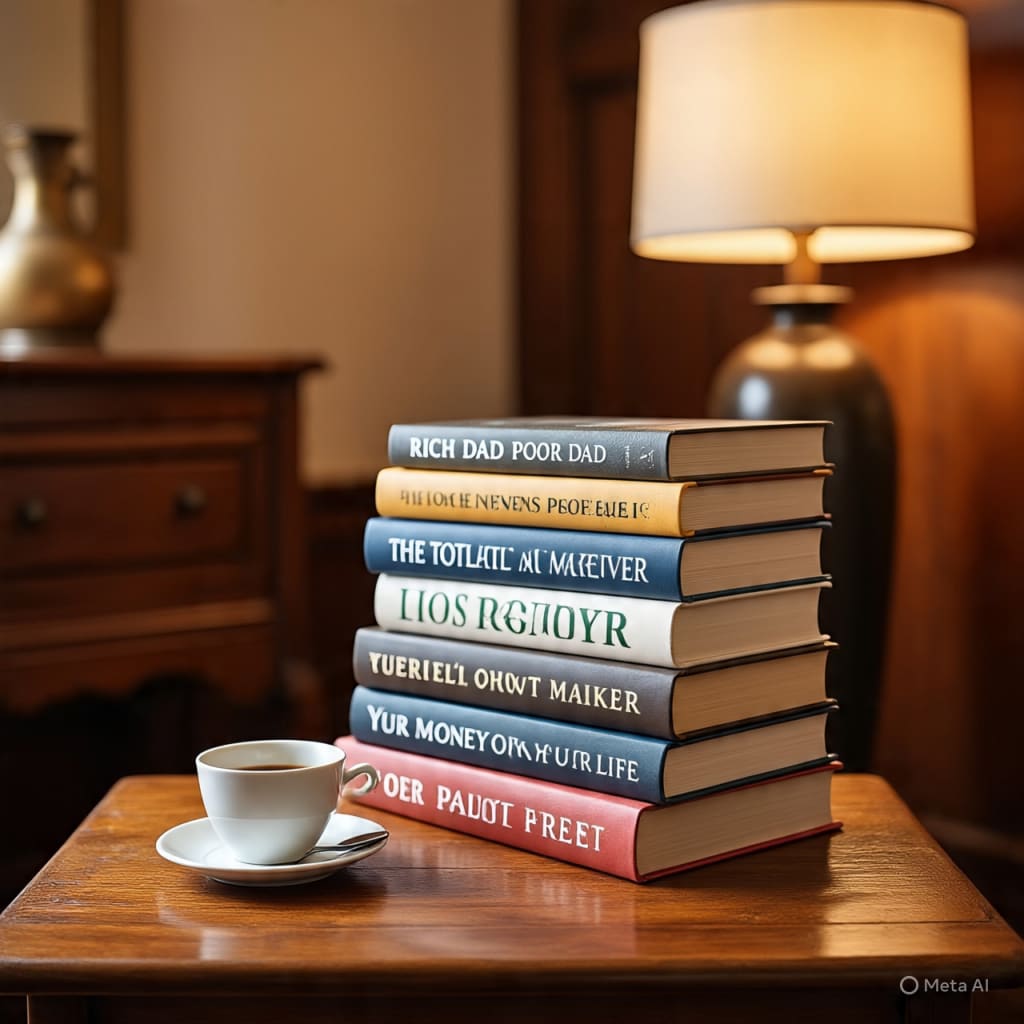
Finance Books and Money: A Path to Financial Freedom
Money is a central part of our lives. We earn it, spend it, save it, and sometimes worry about not having enough of it. Yet, for all its importance, most people receive little to no formal education about how to manage money effectively. That’s where finance books come in. By reading books on personal finance, investing, and wealth building, anyone can improve their financial literacy and take greater control of their future.
Why Financial Literacy Matters
Financial literacy is the ability to understand and use various financial skills—budgeting, saving, investing, and managing debt. Without this knowledge, people often fall into common financial traps: living paycheck to paycheck, accumulating high-interest debt, or failing to plan for retirement.
Finance books provide a powerful way to gain this knowledge without needing a degree or financial advisor. The best finance books break down complex concepts into simple, actionable strategies. They help readers develop healthier financial habits, make smarter money decisions, and work toward long-term financial security.
Key Concepts in Personal Finance
Before diving into the books, it’s important to understand a few foundational principles that most personal finance books emphasize:
Budgeting – Knowing where your money goes is the first step in gaining control. Budgeting helps you spend less than you earn and set aside money for savings or investing.

Emergency Fund – A financial cushion (usually 3–6 months of expenses) protects you against unexpected events like job loss or medical emergencies.
Debt Management – Not all debt is bad, but high-interest debt (like credit cards) can destroy wealth. Learning how to pay it off efficiently is crucial.
Investing – Investing allows your money to grow over time through compound interest. Starting early and staying consistent is key.
Financial Independence – Many finance books promote the idea of building enough assets to no longer rely on a paycheck—this is often called financial independence or FIRE (Financial Independence, Retire Early).
Essential Finance Books to Read
1. “Rich Dad Poor Dad” by Robert Kiyosaki
This classic is often the first finance book people read. Kiyosaki contrasts his "rich dad" (his friend’s father) with his "poor dad" (his biological father) to explain how the wealthy think differently about money. It emphasizes financial education, investing in assets, and breaking free from the "rat race."

Key takeaway: Don’t just work for money—make money work for you.
2. “The Total Money Makeover” by Dave Ramsey
Dave Ramsey offers a step-by-step plan for getting out of debt and building wealth. His “baby steps” method is simple: start with a $1,000 emergency fund, pay off all debt using the snowball method, and then move on to saving and investing.
Key takeaway: Financial success comes from discipline and consistent behavior over time.
3. “Your Money or Your Life” by Vicki Robin and Joe Dominguez
This book focuses not just on money, but on aligning your spending with your values. It teaches you to think about what your time is worth and how to achieve financial independence by reducing unnecessary expenses and living more intentionally.
Key takeaway: Money is a tool to live a more meaningful life, not just to buy more stuff.
4. “The Millionaire Next Door” by Thomas J. Stanley and William D. Danko
Based on extensive research, this book reveals that most millionaires live modestly, budget carefully, and invest consistently. They aren’t flashy—they’re financially smart.
Key takeaway: Wealth is built through discipline, not through luck or high income.
5. “I Will Teach You to Be Rich” by Ramit Sethi
Geared toward young professionals, Sethi’s book is a modern, no-shame guide to automating finances, investing early, and still spending on the things you love. It’s practical, funny, and very accessible.
Key takeaway: You can build wealth and still enjoy life—just be intentional.
The Power of Taking Action
Reading finance books is the first step. The next—and most important—is action. Whether it’s setting a budget, opening a high-interest savings account, or starting to invest in a low-cost index fund, progress happens through small, consistent steps.
Finance books can give you the knowledge and confidence to make informed money decisions. But remember, no single book has all the answers. Each person’s financial journey is different. The goal isn’t perfection—it’s progress.
Final Thoughts
Money doesn’t have to be confusing or stressful. With the right mindset and a little education, anyone can build a strong financial foundation. Finance books are an affordable, accessible way to start learning. Whether you're trying to get out of debt, save for a home, or retire early, there's a book out there that can help you get closer to your goals.
Start with one book. Take one step. Your financial future is worth the effort.
About the Creator
Keep reading
More stories from MoneyOrbit and writers in Education and other communities.
10 Golden Rules to Earn and Manage Money Wisely
Rules to Earn and Manage Your Finances Wisely Word Guide to Financial Success In today’s world, financial literacy is more important than ever. Whether you're starting your first job, building a business, or planning for retirement, understanding the rules of earning and managing money can set the foundation for long-term wealth and stability.
By MoneyOrbit5 months ago in Education
Do you really need to take 10,000 steps a day?
While most people avoid spending the night in jail, Jean Béliveau jumped at the opportunity. For the past three years, Béliveau had been walking from country to country, with the goal of circumnavigating the globe on foot. This required sleeping in tents, strangers’ homes, and the occasional jail cell along the way. But this morning, as Béliveau was ready to leave, the police chief, who had agreed to his sleeping arrangement, was nowhere to be found, and the guards weren’t buying his story. Few people have the time or desire to walk such extreme lengths.
By Munesh Yadavabout 3 hours ago in Education
What’s the best position to sleep in?
In the 1970s, psychoanalyst Samuel Dunkell proposed a curious, albeit almost completely unsubstantiated, theory that the position you sleep in reflects your personality. For example, preferring to snooze in the so-called royal position indicated self-confidence, while sleeping semi-fetal meant you’re sensible and well adjusted. While Dunkell’s ideas lack any definitive proof, how we sleep can impact our health. So, what’s the best position to sleep in? Sleep positions go by countless creative names—
By Munesh Yadavabout 3 hours ago in Education



Comments
There are no comments for this story
Be the first to respond and start the conversation.