
Markhor: The Majestic National Animal of Pakistan
A Symbol of Strength, Survival, and Natural Beauty

Introduction
The Markhor, scientifically known as Capra falconeri, is a wild goat species that inhabits the mountainous regions of northern and western Pakistan. It holds the honor of being the national animal of Pakistan, symbolizing bravery, resilience, and the wild beauty of the country's natural landscape. With its striking twisted horns, robust build, and noble presence, the Markhor represents not only Pakistan’s rich biodiversity but also the need to protect endangered species through conservation.
---
Appearance and Characteristics
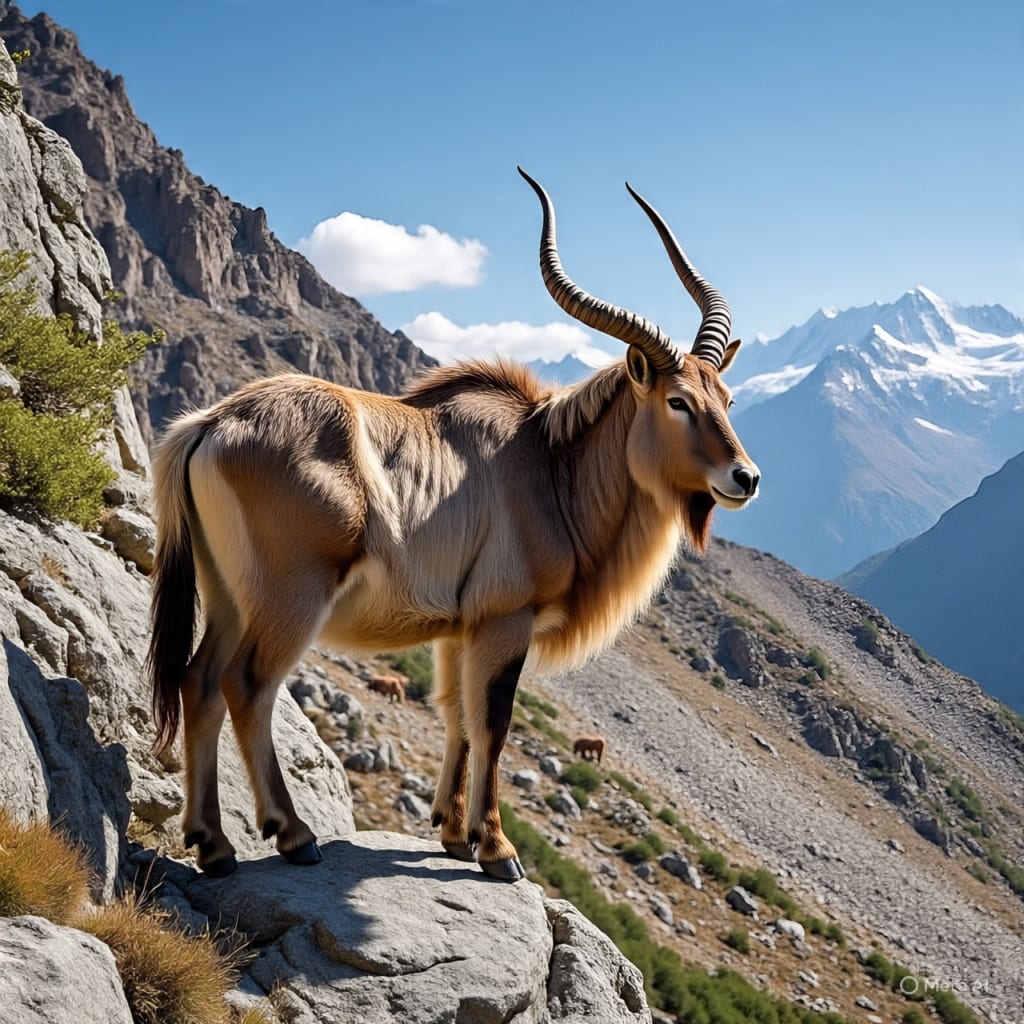
Markhor is one of the most impressive wild goats in the world, primarily recognized by its spiral horns, which can grow up to 160 centimeters in males and about 25 centimeters in females. The name "Markhor" is derived from Persian words Mar (snake) and khor (eater), leading to the interpretation of “snake-eater.” This name possibly refers to the corkscrew shape of its horns or its ability to kill snakes—though it is not actually known to eat them.
Markhors have a muscular body covered with a long, shaggy coat that varies in color from grayish to brown. Males are larger and heavier than females and also sport a majestic beard and longer fur around the neck and chest, especially during the winter. Their powerful hooves and keen eyesight make them excellent climbers, suited to the rugged mountainous terrain they inhabit.
---
Habitat and Distribution
Markhors are typically found in the remote mountain ranges of Khyber Pakhtunkhwa, Gilgit-Baltistan, and Balochistan. Their preferred habitat includes steep, rocky slopes between 600 and 3,600 meters above sea level. These areas are rich in vegetation that provides them food such as grasses, leaves, and herbs. In winter, they often move to lower altitudes to find food, while during summer, they migrate upward.
While Pakistan is home to the largest population of Markhors, small populations also exist in Afghanistan, India (Kashmir), Tajikistan, Turkmenistan, and Uzbekistan. However, due to habitat loss and hunting, their numbers have dwindled significantly in many regions.
---
Subspecies in Pakistan
There are three main subspecies of Markhor found in Pakistan:
1. Astor Markhor (Capra falconeri falconeri) – Found in Gilgit-Baltistan, particularly in the Astor Valley.
2. Kashmir Markhor (Capra falconeri cashmiriensis) – Found in Chitral and the northern parts of Khyber Pakhtunkhwa.
3. Suleiman Markhor (Capra falconeri jerdoni) – Inhabits the Suleiman Range of northern Balochistan.
Each subspecies has slight differences in horn shape, body size, and coat coloration, adapted to their specific environment.
---
Conservation Status and Challenges
The Markhor was once on the brink of extinction, with only about 2,500 individuals left worldwide by the early 1990s. Excessive hunting for meat, trophies, and traditional medicine, combined with habitat destruction due to deforestation and livestock grazing, greatly reduced their population.
The International Union for Conservation of Nature (IUCN) had listed the Markhor as endangered, but due to conservation efforts in recent years, its status has improved to near threatened. Pakistan has played a leading role in protecting the Markhor through community-based programs, wildlife reserves, and strict anti-poaching laws.
---
Community-Based Trophy Hunting Program
One of the most successful initiatives in Pakistan is the community-based trophy hunting program, particularly in Chitral and Gilgit-Baltistan. Under this scheme, a limited number of Markhor hunting permits are auctioned each year to international hunters at very high prices, sometimes exceeding US $100,000 per permit.
Importantly, 80% of the revenue goes directly to local communities, giving them a strong incentive to protect the species. As a result, poaching has decreased, and the Markhor population has rebounded significantly in many regions. These programs have not only helped save the Markhor but also promoted eco-tourism and awareness about wildlife conservation.
---
Cultural and National Importance
The Markhor is not just a wild animal in Pakistan; it is a symbol of pride and national identity. Its image is used on government logos, emblems, and currency. It represents the strength and resilience of the Pakistani people, particularly those living in the harsh mountain regions.
In the military context, the Markhor is also used in the insignia of certain army units, symbolizing agility, courage, and high-altitude survival. It plays a part in traditional folklore and local storytelling as well, often seen as a guardian of the mountains.
---
Conclusion
The Markhor of Pakistan is a magnificent creature that stands as a testament to nature’s wonder and resilience. From being on the verge of extinction to making a remarkable comeback through conservation, it represents hope for endangered species around the world. Pakistan’s efforts to preserve this national treasure are a powerful example of how wildlife and people can coexist for mutual benefit.
Protecting the Markhor is not just about saving a species—it’s about preserving the spirit of the mountains, the identity of a nation, and the delicate balance of our natural world. As long as the Markhor leaps across the cliffs of northern Pakistan, it will continue to inspire pride, respect, and responsibility in the hearts of those who cherish the wild.
About the Creator
Keep reading
More stories from Muhammad Bilal and writers in Education and other communities.
The Hidden Struggles of a Honey Bee
When we think of honey bees, we often picture sweet honey, colorful flowers, and the pleasant hum of buzzing wings. But behind this seemingly cheerful image lies a life full of intense labor, constant threats, and an unwavering commitment to the hive. The life of a honey bee is not just about making honey—it is a tale of sacrifice, survival, and purpose.
By Muhammad Bilal6 months ago in Education
Family Moves Made Simple: Real Estate Tips for Relocating With Children in California
Relocating within California—or moving to the state for the first time—can be especially complex when children are involved. Parents must balance housing needs, school requirements, emotional transitions, and logistics, all while navigating one of the most competitive real estate markets in the country.
By Stacey Yim7 days ago in Education
Sowing Strength: How Farmer Training Breaks the Cycle of Hunger
A single factor rarely causes hunger. It is the result of interconnected challenges, including poverty, weak agricultural systems, climate change, and limited access to education. Although global food production is sufficient to feed the world’s population, millions of people still struggle to secure enough nutritious food. In many cases, those most affected by hunger are farmers themselves—individuals who work the land daily but lack the training needed to farm efficiently and sustainably.
By Convoy of Hopeabout 22 hours ago in Education
Bruce Lee and The God of War: Kuan Ti
It starts with love.. The Power to the God Of War and Wealth Walk into a Chinese restaurant (even in Oklahoma, USA), a Chinese police station, a kung fu martial arts studio or even a Chinese temple and you often see a red faced warrior holding a heavy quan-do (spear like weapon).
By WILD WAYNE : The Dragon King4 days ago in Chapters


Comments
There are no comments for this story
Be the first to respond and start the conversation.