
The Hidden Struggles of a Honey Bee
A Tiny Creature's Relentless Journey of Survival, Duty, and Sacrifice


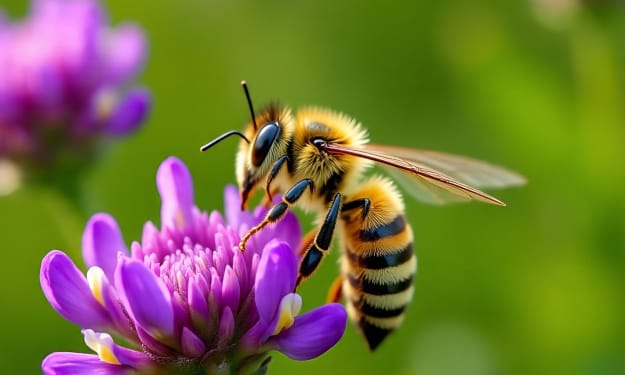
When we think of honey bees, we often picture sweet honey, colorful flowers, and the pleasant hum of buzzing wings. But behind this seemingly cheerful image lies a life full of intense labor, constant threats, and an unwavering commitment to the hive. The life of a honey bee is not just about making honey—it is a tale of sacrifice, survival, and purpose.
Born to Serve
A honey bee’s life begins inside a wax cell, carefully laid and nurtured by the queen. After 21 days of development, the worker bee emerges—not into freedom, but into immediate responsibility. There’s no honeymoon period or gentle training. From the moment she steps out of the cell, she becomes a part of a vast, complex system where every second counts.
In the first few days of life, the young worker bee is tasked with cleaning the cell she was born in to make space for the next egg. Then she moves on to caring for larvae, building wax comb, storing nectar, and guarding the hive. Each task is crucial, and each bee performs it with precision and dedication.
Tireless Workers
The average worker bee lives for only 5 to 6 weeks during the busy summer months. But in that short time, she works herself to death. A single bee produces only about 1/12th of a teaspoon of honey in her lifetime, yet her efforts are essential for the survival of the entire colony. She will visit thousands of flowers each day, tirelessly collecting nectar and pollen, flying back and forth between blossoms and the hive.
Her journey is not safe. She must navigate through winds, rain, predators, and human-made hazards like pesticides. She works from sunrise to sunset, beating her wings over 11,000 times per minute, helping in pollination while constantly dodging danger.
The Queen’s Burden
The queen bee may live up to five years, but her life is far from royal luxury. Once mated during a brief flight early in life, she returns to the hive and spends her remaining days laying eggs—up to 2,000 a day. She rarely leaves the hive and is fed and cared for by worker bees. But her constant egg-laying is physically taxing, and her entire existence is dedicated to reproduction.
Should the queen become weak or infertile, the colony will begin preparing to replace her. It's a brutal but necessary step to ensure the survival of the hive.
The Harsh Life of the Drone
Male bees, called drones, have one purpose: to mate with a queen from another hive. They do not collect nectar or pollen, nor do they contribute to the hive’s maintenance. Their brief moment of glory comes during the mating flight, after which they die. Those that don’t mate are often expelled from the hive before winter, left to perish in the cold.
Though their role seems minor, drones are vital for genetic diversity. Their sacrifice helps ensure strong, healthy queens in future generations.
Under Constant Threat
A bee’s life is not just hard because of work—it is also constantly under threat. Parasites like Varroa mites, bacterial and viral diseases, habitat loss, and exposure to pesticides pose serious dangers to honey bees globally. Climate change is disrupting the availability of flowers and food sources, forcing bees to adapt quickly or die.
Moreover, humans often misunderstand bees. Swarms may be feared, hives may be destroyed, and the importance of pollinators is often overlooked in agricultural practices. Yet honey bees are responsible for pollinating around 75% of the crops we consume.
Winter’s Silence
In colder climates, honey bees must prepare all summer for winter. Worker bees store honey and pollen, ensuring the colony has enough food to survive the cold months. As temperatures drop, the bees huddle together in a tight cluster, vibrating their wings to generate heat. The queen stays at the center of the cluster, protected and warm.
During winter, thousands of bees may die, but the colony persists, waiting for spring to begin their tireless work again.
A Life of Purpose
Despite the hardships, the honey bee never complains. Every moment of her short life is lived with purpose—for the hive, for the future. She does not seek rest or reward, only fulfillment of her role. In many ways, the honey bee embodies the purest form of dedication and community.
Their story is not just one of hard work, but of quiet heroism. As we enjoy the fruits, flowers, and food made possible by bees, we should pause to appreciate their incredible contribution—and perhaps learn from their selfless way of life.
---
Let us not take for granted the silent labor of these tiny workers. The next time you hear the gentle buzz of a bee, remember the fierce, noble life behind that sound.
About the Creator
Keep reading
More stories from Muhammad Bilal and writers in Education and other communities.
The Secret Life of Honeybees
When most people think of honeybees, they picture a buzzing insect hovering around flowers or a spoonful of golden honey. But honeybees are far more than sweet syrup producers—they're complex, social creatures that play an essential role in our food system and natural ecosystems.
By Muhammad Bilal8 months ago in Education
The Digital Nomad Blueprint
In a not-so-distant future, where technology thrived and the world became increasingly connected, many people chose to break free from traditional lifestyles. Among them was a young woman named Mia. Mia was a digital nomad, traveling the globe with her laptop, working remotely while exploring new cultures. Her heart was set on living life to the fullest, but she was also searching for something greater—a sense of purpose.
By Hamad Afridi 2 days ago in Education



Comments
There are no comments for this story
Be the first to respond and start the conversation.