
Mahatma Gandhi; The Underappreciated Prodigy.
Mahatma Gandhi's corrugated Life.
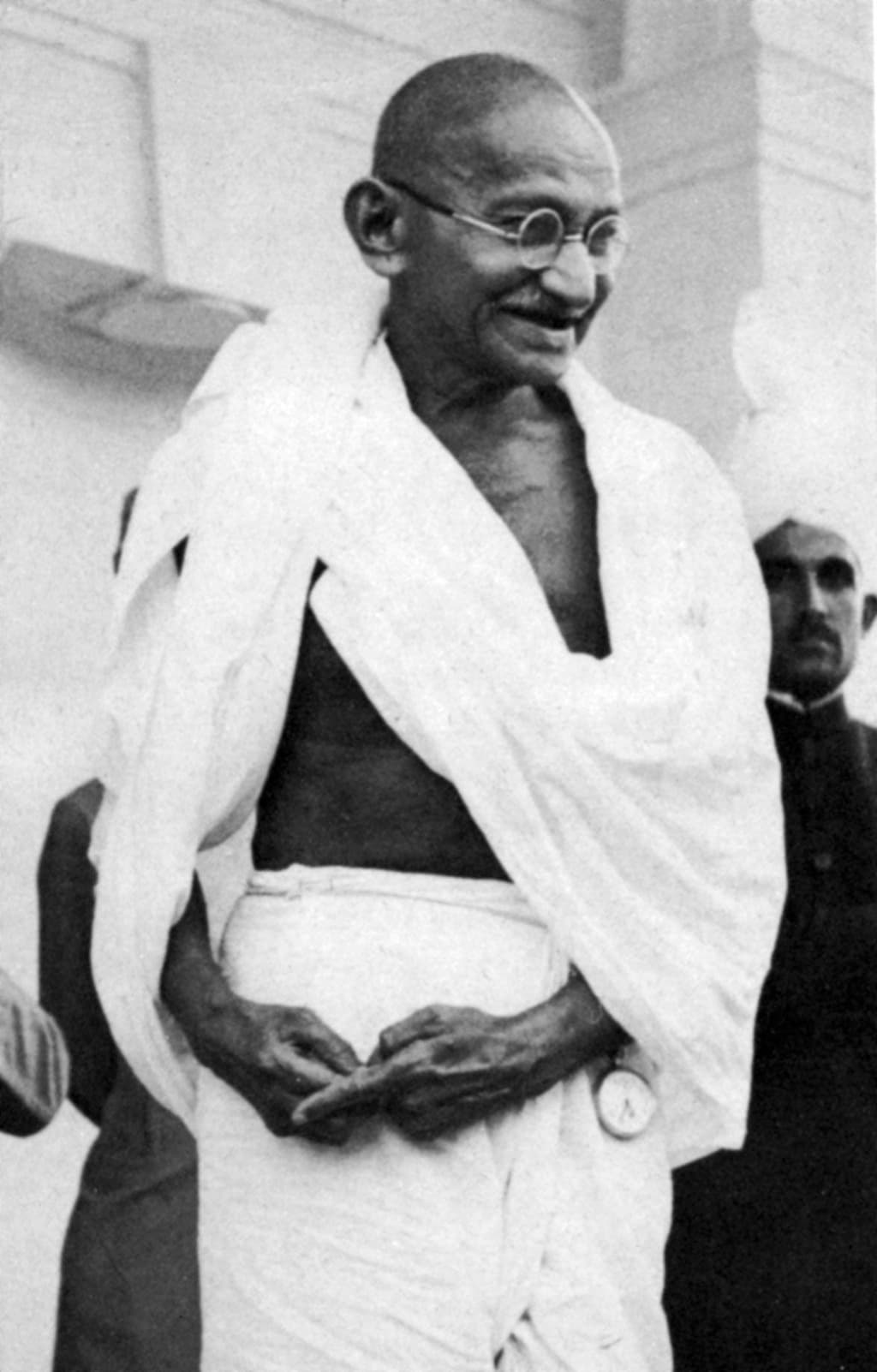
Once upon a time in a small town in India, a child named Mohandas was born on October 2, 1869. Little did anyone know that this ordinary child would grow up to become an extraordinary man who would leave an indelible mark on the history of India and the world. This child would later be known as Mahatma Gandhi.
From a young age,During his early years, Mohandas Gandhi, who would later be known as Mahatma Gandhi, lived a relatively ordinary life. He was born on October 2, 1869, in the town of Porbandar in the western Indian state of Gujarat. His father, Karamchand Gandhi, was the Diwan (chief minister) of the small princely state, and his mother, Putlibai, was a devout and religious woman.
As a child, Gandhi displayed a curious and inquisitive nature. He was deeply influenced by his mother's teachings of religion, morality, and compassion. He was also greatly influenced by the stories of mythological figures and the lives of saints, which shaped his understanding of righteousness and the importance of truth.
Gandhi received his early education at home, as was the custom in those days. He learned the basics of reading, writing, and arithmetic. Although he excelled academically, he was a shy and introverted child. He was not particularly interested in physical activities or outdoor games like his peers. Instead, he found solace in books and spent a considerable amount of time studying.
At the age of nine, Gandhi and his family moved to Rajkot, where his father had taken up a new job. There, he continued his studies and developed a passion for literature, including classics such as the Ramayana and the Mahabharata. He also showed a keen interest in subjects like history and mathematics.
In his teenage years, Gandhi's life took a tragic turn. At the age of 13, he was married to Kasturba, who was also of the same age. It was an arranged marriage, as was common in those days. However, Gandhi, influenced by his upbringing and moral values, later described this as a turning point in his life, vowing to remain celibate and devote himself to a life of service.
In 1888, at the age of 18, Gandhi left for London to pursue higher education. His family hoped that he would become a barrister. It was during this time that Gandhi's intellectual horizons expanded. He studied law and explored various philosophical and religious texts. He also developed a deep interest in the works of thinkers like Henry David Thoreau and Leo Tolstoy, who influenced his ideas on civil disobedience and nonviolence.
After completing his studies in London, Gandhi returned to India in 1891 and started practicing law in Bombay (now Mumbai). However, he found the legal profession unfulfilling and realized that his true calling lay in fighting against injustice and advocating for the rights of the oppressed.
Gandhi's early years laid the foundation for his later transformation into Mahatma Gandhi, the leader of India's struggle for independence. His upbringing, education, and exposure to different cultures and philosophies shaped his worldview and values. The seeds of truth, nonviolence, and compassion were sown in his early years, and they would continue to grow and guide him throughout his remarkable life.
Mohandas showed great intelligence and curiosity. He was an avid reader and always had a thirst for knowledge. He excelled in his studies and displayed a keen interest in mathematics. Numbers fascinated him, and he loved solving complex equations and puzzles.
As Mohandas grew older, he developed a strong sense of justice and a deep desire to help others. He witnessed the harsh realities of colonial rule in India, where the native people were oppressed and discriminated against. This deeply affected him and ignited a fire within his heart to fight for the rights and freedom of his fellow countrymen.
In 1893, Mohandas traveled to South Africa to work as a lawyer. It was there that he encountered racial discrimination firsthand. He was deeply troubled by the treatment of Indians in the country and decided to fight against injustice. This experience transformed him and set him on a path of nonviolent resistance, which would become the cornerstone of his philosophy.
Gandhi believed in the power of truth and nonviolence. He believed that one could change the world through peaceful means and that love and compassion were stronger than hatred and violence. He used his knowledge of mathematics and logic to devise strategic plans for his peaceful protests and movements.
Like a mathematician solving a complex equation, Gandhi carefully calculated each step of his nonviolent struggle. He organized boycotts, protests, and strikes, all with a careful precision that aimed to maximize impact while minimizing violence. He believed that every action should be calculated to create the greatest positive outcome.
Gandhi's mathematical approach to activism proved to be incredibly effective. His methods of peaceful resistance inspired millions of people and led to significant social and political changes. He led the Salt March, where thousands of Indians walked for miles to protest against the British monopoly on salt production. He used civil disobedience to challenge unjust laws and fought for the rights of the poor and marginalized.
Through his actions, Gandhi showed the world that mathematics could be applied to more than just numbers and equations. He proved that logical thinking and strategic planning could be powerful tools for social change. His philosophy of nonviolence and his commitment to truth and justice continue to inspire people around the globe.
As the years passed, Gandhi's influence grew, and he became a symbol of hope and freedom. His teachings transcended borders and cultures, inspiring leaders like Martin Luther King Jr., Nelson Mandela, and many others. His dedication to the principles of nonviolence remains a guiding light for those who strive for a better world.
On January 30, 1948, the world lost Mahatma Gandhi, but his legacy lives on. His mathematical mind, coupled with his deep compassion and unwavering commitment to justice, forever changed the course of history. Today, his life and teachings remind us that even in the face of immense challenges, one person can make a difference through the power of peace and love.
It's high-time we appreciated our trailblazers; they deserve to be adored for their monstrous achievements.
About the Creator
Keep reading
More stories from writers in Education and other communities.
The Lean Advantage: How Small Improvements Create Massive Business Wins
In today’s fast-moving market, businesses don’t always need massive overhauls to see major growth. The real competitive advantage often comes from Lean process improvement—small, consistent changes that reduce waste, improve speed, and strengthen customer value. With a proactive approach, companies can spot inefficiencies early, prevent recurring problems, and build smarter systems before minor issues become costly setbacks.
By Duke Valentour7 days ago in Education



Comments
There are no comments for this story
Be the first to respond and start the conversation.