
Indonesia's Tasty Secret
Discovering the magic of tempeh mendoan

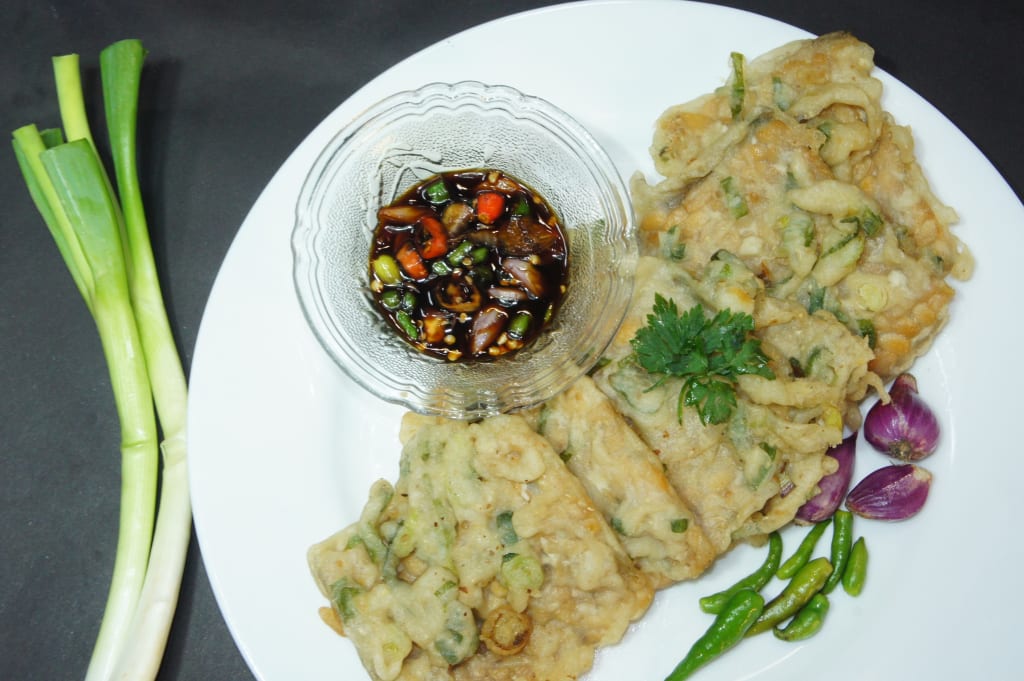
Have you ever heard of tempeh mendoan? This mouth-watering Indonesian snack has been tantalizing taste buds for centuries, yet it remains relatively unknown to many outside of its country of origin. Tempeh mendoan is a delectable deep-fried tempeh dish that is crispy on the outside and soft and chewy on the inside. In this article, we’ll dive into the simple process of making tempeh mendoan, the history of tempeh, the philosophy of tempeh mendoan, the fun facts about tempeh mendoan, and the recommended shops where you can get your hands on some to satisfy your cravings. So, get ready to expand your culinary horizons and discover the delicious world of tempeh mendoan!
Tempeh mendoan is a popular street food in Indonesia, particularly in the Central Java region where it originated
What is Tempeh Mendoan?
Tempeh mendoan is a traditional Indonesian snack made from thinly sliced tempeh (fermented soybean cake) that is battered, fried, and served with a dipping sauce.
The term “mendoan” refers to the frying technique used in the preparation of the dish, where the tempeh slices are only briefly fried until lightly golden, resulting in a crispy exterior while retaining the soft and chewy texture of the tempeh inside.
The batter for tempeh mendoan typically consists of wheat flour, rice flour, garlic, salt, and water. The tempeh slices are coated in the batter and then deep-fried until crispy. It is often served with a dipping sauce made from chili, shallots, garlic, and sweet soy sauce.
Tempeh mendoan is a popular street food in Indonesia, particularly in the Central Java region where it originated. It is enjoyed as a snack or a side dish, and is often served alongside other Indonesian dishes like nasi goreng (fried rice) or gado-gado (vegetable salad with peanut sauce).
This is why Tempeh Mendoan is sometimes referred to as “half-cooked tempeh”
The Simple Process of Making Tempeh Mendoan
To make tempeh mendoan, the tempeh is sliced thinly and then coated in a batter made from wheat flour, rice flour, tapioca starch, and water.
The batter is usually seasoned with spices such as garlic, coriander, leeks, shallots, and turmeric which give Tempeh Mendoan its distinctive flavor and golden color. Once the tempeh slices are coated in the batter, they are deep-fried until they become crispy and golden brown.
One unique aspect of Tempeh Mendoan is that it is not fully cooked through, unlike other fried tempeh dishes. Instead, the tempeh is only lightly fried, allowing it to retain its natural texture and flavor. This is why Tempeh Mendoan is sometimes referred to as “half-cooked tempeh”.
Tempeh mendoan originated when the soy-based food called “tempe” began to grow and be consumed in Southeast Asia, China, and Indochina
The History of Tempeh Mendoan
Tempeh mendoan got its name from the Javanese Banyumasan word “mendo,” which means half-cooked. This refers to the cooking technique used to make tempeh mendoan, which involves frying the tempeh until it is only partially cooked. The history behind this method goes back to the past when tempeh mendoan was created as a fast food dish. The purpose was to shorten the preparation time, so that the time spent waiting for the tempeh to be fried until completely dry wouldn’t be wasted.
Tempeh mendoan originated when the soy-based food called “tempeh” began to grow and be consumed in Southeast Asia, China, and Indochina. Soybeans were brought by Central Asian people during migration to Southeast Asia. That was when tempeh mendoan emerged and became a delicious snack to be savored. Tempeh mendoan has been around for a century. In the early 1960s, tempeh mendoan began to be commercially managed in the tourism industry, becoming an economic commodity. Tempeh mendoan is no longer just a tasty snack to accompany tea or coffee, but has become the backbone of tourism in Banyumas Regency in Central Java, Indonesia.
The philosophy of tempeh mendoan can also be linked to the spirit of heroes who fought for Indonesian independence
The Philosophy of Tempeh Mendoan
Tempeh mendoan is not just any ordinary half-cooked fried snack, but also has a philosophy related to the characteristics of native Banyumas people. Banyumas people are likened to the flexible and resilient tempeh mendoan, which reflects the nature of the Banyumas community who can adapt to the existing conditions. Tempeh mendoan can be served in dry and crispy form. The crispy texture symbolizes the bravery of Banyumas people to fight in difficult situations, even to the point of sacrifice. These two characteristics represent the character of Banyumas people that are reflected in tempeh mendoan.
The philosophy of tempeh mendoan can also be linked to the spirit of heroes who fought for Indonesian independence. Many Banyumas figures, such as General Soedirman, Lieutenant General Soepardjo Rustam, General Gatot Subroto, and Soesilo Soedarman, became prominent figures in diplomacy and the military. They had the spirit and determination to fight against colonialism for the sake of Indonesia’s independence. Therefore, tempe mendoan is not only a delicious food, but also has a deep meaning and philosophy.
A professional motorcycle racer, Marc Marquez, was eating a type of fried snack that looked like tempeh mendoan
The Fun Facts about Tempeh Mendoan
- Once eaten by a well-known Spanish motorcycle racer, Marc Marquez
In an opportunity, it was seen that Marc Marquez was eating a type of fried snack that looked like tempeh mendoan while walking briskly. At that time, he was participating in a MotoGP racing event in Mandalika, Lombok, Indonesia in 2022.
- Estimated to be 400 Years Old
This Indonesian cuisine is believed to be over 400 years old. According to Google, tempeh was documented in the 1600s in Tembayat Village, Klaten, Central Java.
Tempeh is also recorded in Serat Centhini, a compilation of twelve volumes of Javanese stories and teachings. Serat Centhini was written in poetic form and was published in the early 1800s.
- Becomes Indonesian Cultural Heritage
Tempeh mendoan has been recognized as an intangible cultural heritage of Indonesia during the “Determination Session of Indonesia’s Intangible Cultural Heritage” held by the Ministry of Education, Culture, Research, and Technology in Jakarta from October 26th to 30th, 2021.
- Made from not just any ordinary tempeh
The tempeh used for mendoan is a special type that is thin in shape and not the commonly sliced tempeh. The production of this tempeh is quite complicated, and this type of tempeh is difficult to find outside the Banyumas region.
- Has a myriad of health benefits
Consuming tempeh mendoan, which is made from tempeh, has several health benefits including improving gut health, making you feel full for longer, lowering cholesterol, promoting heart health, and improving brain health while preventing Alzheimer’s.
Some Recommended Shops That Sell Tempeh Mendoan in Indonesia
If you happen to be in Purwokerto, a city located in central Java, and you’re looking for a place to buy tempeh mendoan, it is recommended that you visit a location called Sawangan. The shop selling tempeh mendoan is situated in front of the Bank BRI of Purwokerto. Besides that, you can find a unique type of tempeh mendoan that is said to have the most delicious taste in the area. The name of the shop is Warung Ndeso located on Martadinata Street.
The range of prices for a single piece of tempeh mendoan in Purwokerto is approximately Rp. 3,000 to 15,000.
If you are currently in Jakarta. You can find tempeh mendoan at a shop called “Tempe Mendoan Pak Boy.” The shop is located on West Pancoran XI Street Number 28–6 in the Pancoran area of South Jakarta. The shop is open every day from 2:00 PM until 11:00 PM. The price of tempeh mendoan in this shop is started from Rp. 3,000.
You can also buy tempeh mendoan in this recommended shop called “Mendoan Bagong”. There are three tempe mendoan packages available, namely Package Mendoan Bagong 1, Package Mendoan Bagong 2, and Package Mendoan Bagong 3 with prices ranging from Rp 20,000 to Rp 40,000 per package. Each package contains 5–10 pieces of tempe mendoan and Mendoan Bagong’s signature sambal. This shop, which is open every day from 4:30 PM to 10:00 PM, is located at Jalan Palmerah Barat IX Number 66, Palmerah, Kec. Palmerah, West Jakarta City, Special Capital Region of Jakarta.
About the Creator
Pandu Aryantoro
Hai, saya seorang ayah dan suami yang suka bercerita melalui tulisan. Menulis menjadi cara saya untuk menjadi lebih baik, lebih kuat dan lebih peka dengan sekitar.
Keep reading
More stories from Pandu Aryantoro and writers in Education and other communities.
Embracing Plant-Based Food
Since living in Java as a kid, I have tried traditional cuisines such as tempeh mendoan, sayur asem, putu cake, nagasari cake, and sate ayam Madura, among others whose names you might find difficult to pronounce. Growing up, I have come to understand that what I have eaten is just a small part of the rich tapestry of Indonesian foods. To be honest, it surprises me.
By Pandu Aryantoro2 years ago in Feast
Education Reform for the 21st Century
Friends, have you ever watched a bright teenager like Priya in Mumbai sit through another day of rote memorization, her eyes dimming as high-stakes exams sucked the joy out of learning? She once told me she loved science but felt trapped in a system built for another century. That moment hit me hard because Priya’s story echoes across continents. In our world of rapid AI growth, climate crises, and shifting job markets, education must evolve from industrial-era factories into vibrant spaces of discovery. Research from UNESCO, OECD’s PISA, and the World Economic Forum shows the gap is widening, yet reform offers real hope. Together, we can build systems that prepare every child for the skills of the 21st century.
By Arjun. S. Gaikwad3 days ago in Education
Understanding the Quiet Shift: What You Need to Know About the Move Toward Value-Based Healthcare
A significant transformation is unfolding in the healthcare industry, yet many people outside the field may not fully realize its impact. This quiet shift is the transition from volume-based care, where providers are paid for the number of services they deliver, to value-based healthcare, where reimbursement depends on quality, outcomes, and patient satisfaction. This evolution is reshaping how providers deliver care, how patients experience treatment, and how the entire system measures success. As healthcare becomes more complex and costly, value-based care offers a more sustainable, patient-centered path forward. Understanding what this shift means is essential for anyone interested in the future of healthcare delivery.
By Evan Weiss St Louis3 days ago in Education




Comments (1)
Interesting