
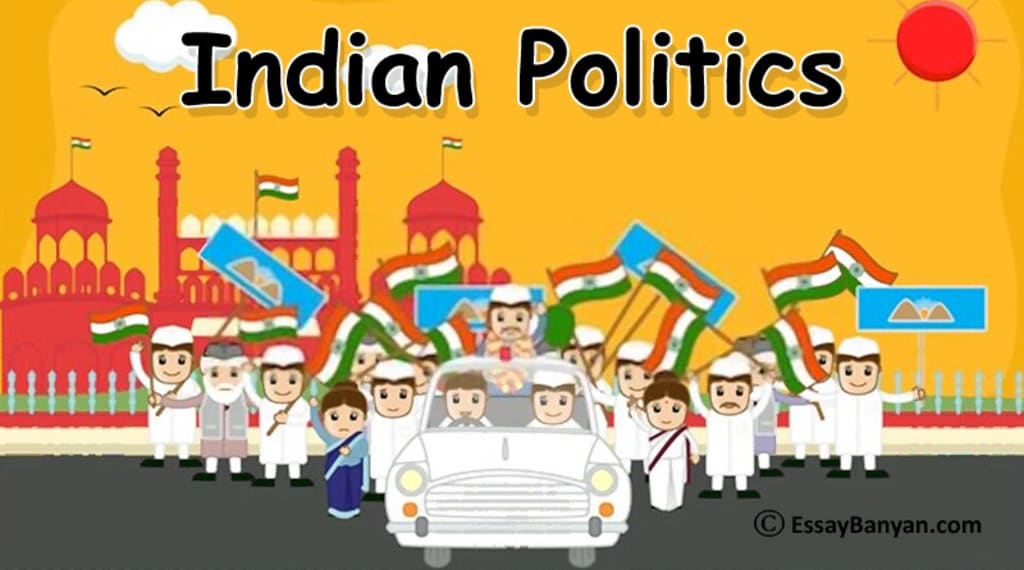
India is a country of diversity, culture and history, and its politics is no exception. Indian politics is characterized by a multitude of political parties, each with their own ideologies and agendas. The political landscape is also characterized by a history of corruption and nepotism, but despite these challenges, India has produced some notable politicians who have contributed significantly to the country's development.
One of the most prominent Indian politicians is Jawaharlal Nehru, who served as India's first Prime Minister from 1947 to 1964. Nehru was a leader of the Indian independence movement and played a crucial role in the country's transition from British rule to independence. Nehru's vision for India was one of secularism, democracy, and economic development. He introduced several policies that aimed at improving the standard of living of the Indian people, including the establishment of public sector enterprises, the implementation of land reforms, and the promotion of science and technology.
Another prominent Indian politician is Indira Gandhi, who served as India's Prime Minister from 1966 to 1977 and again from 1980 to 1984. Gandhi was Nehru's daughter and continued his legacy of economic development and social welfare. She implemented several policies that aimed at improving the lives of the poor and marginalized, including the nationalization of banks, the abolition of the princely states, and the promotion of family planning.
However, Gandhi's legacy is also marred by controversy. She imposed a state of emergency in 1975, which saw the suspension of civil liberties and the imprisonment of political opponents. Her regime was also accused of human rights abuses, particularly during the Indian Army's operation against Sikh militants in the Golden Temple in 1984. Gandhi was assassinated by her Sikh bodyguards later that year.
The Indian political landscape has also seen the rise of regional parties, which represent the interests of specific regions or communities. These parties have often played a crucial role in the formation of coalition governments at the national level. One such party is the Dravida Munnetra Kazhagam (DMK), which represents the Tamil community in the southern state of Tamil Nadu. The DMK has been in power in Tamil Nadu several times, and its leaders, such as M.K. Stalin, have played a prominent role in national politics.
However, regional parties have also been accused of promoting divisive politics and catering to narrow interests. The Shiv Sena, a party based in the western state of Maharashtra, has been accused of promoting a militant form of Hindu nationalism and targeting immigrants from other parts of the country.
The Indian political landscape has also seen the emergence of a new generation of leaders who are challenging the traditional political establishment. One such leader is Arvind Kejriwal, who founded the Aam Aadmi Party (AAP) in 2012. The AAP was born out of a popular anti-corruption movement, and its agenda is centered around transparency, accountability, and participatory governance. Kejriwal has served as the Chief Minister of Delhi since 2015, and his government has introduced several innovative policies, such as free public transport for women and the provision of free electricity to households consuming up to 200 units per month.
The Indian political landscape is also characterized by the prevalence of corruption and nepotism. Many politicians are accused of using their positions of power to enrich themselves and their families. This has led to a general disillusionment with the political class, with many Indians believing that politicians are more interested in serving their own interests than the interests of the people.
Despite these challenges, Indian politicians have played a crucial role in shaping the country's destiny. From Nehru's vision of a modern, secular, and democratic India to Kejriwal's innovative approach to governance, Indian politicians have shown that they are capable
About the Creator
Keep reading
More stories from writers in Education and other communities.
The Grey to Green Shift: Inside France’s USD 20,912.99 Million Cement Revolution (2025–2034)
In the industrial corridors of France in 2026, a massive transformation is underway. Cement the literal foundation of modern civilization is no longer just a grey powder. It has become a strategic frontier for carbon technology and a barometer for France’s "Green Sovereignty."
By Neeraj kumar3 days ago in Education
Why Cloud Computing Is Transforming Brazil’s Digital Futur
Brazil Cloud Computing and Its Expanding Digital Impact Brazil is experiencing a strong wave of digital transformation as businesses, government institutions, and startups embrace modern technologies to improve efficiency and competitiveness. Among the most significant developments in recent years is the widespread adoption of cloud computing. Once viewed primarily as an option for large technology companies, cloud services are now being integrated across organizations of all sizes throughout the country.
By deepanshu Thakur3 days ago in Education
If You Write A Book, Don’t Tell Anyone
There are days when I’m grateful Amazon doesn’t tell me specifically who has bought my book and who hasn’t. If they did, I would be heartbroken when I read the list and noticed all the important names in my life were not on my list of customers.
By Ellen Frances6 days ago in Writers




Comments (1)
good story