
The Grey to Green Shift: Inside France’s USD 20,912.99 Million Cement Revolution (2025–2034)
Building Sustainably: Inside France’s Cement Industry Revolution
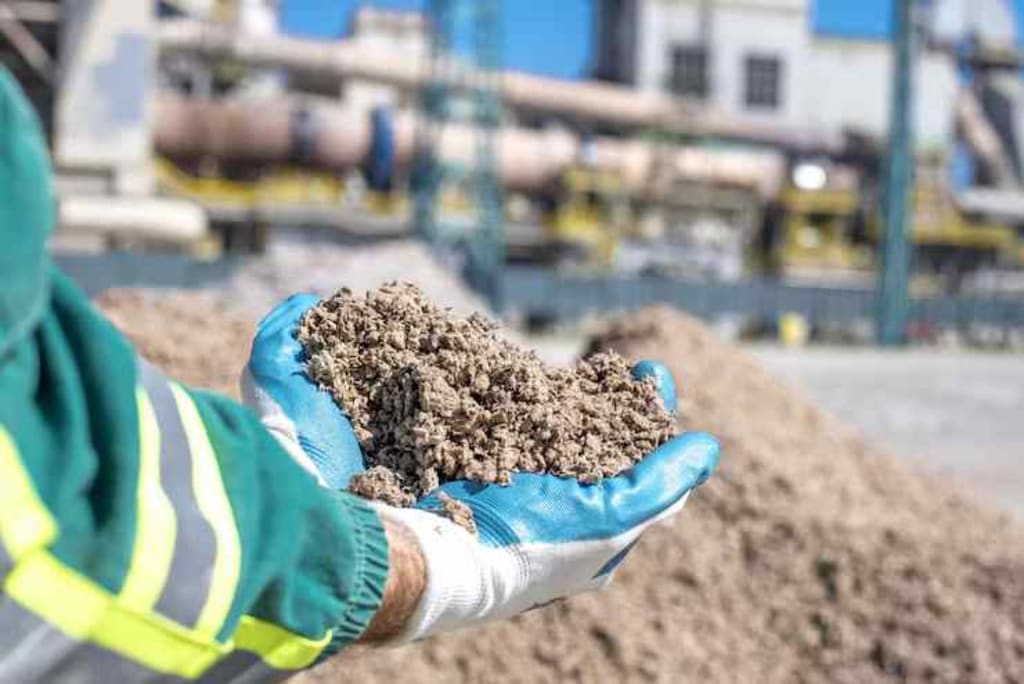
In the industrial corridors of France in 2026, a massive transformation is underway. Cement the literal foundation of modern civilization is no longer just a grey powder. It has become a strategic frontier for carbon technology and a barometer for France’s "Green Sovereignty."
Valued at USD 13,501.05 Million in 2025, the France cement market is projected to reach a staggering USD 20,912.99 Million by 2034. With a CAGR of 4.98%, this growth outpaces most of its European neighbors. However, the true story of 2026 isn't just about volume; it’s about the radical decarbonization of an industry that once stood as the nation's largest industrial polluter.
The Regulatory Hammer: RE2020 and the New Build Reality
The primary driver of the market in 2026 is the RE2020 (Réglementation Environnementale 2020). While it sounds like bureaucratic jargon, it is arguably the most aggressive building regulation in the world.
By early 2026, the thresholds for "embodied carbon" in new buildings have tightened significantly. For the first time, construction firms are being legally penalized if the materials used in their projects exceed strict CO2 limits. This has turned "Green Cement" from a premium option into a survival necessity. In 2026, we are seeing the mainstreaming of "Low-Carbon Clinker," where traditional limestone-based cement is blended with industrial by-products like steel slag and calcined clays to reduce its carbon footprint by up to 50%.
The Rise of "Hoffmann" and the Clinker-Free Frontier
Perhaps the most exciting development in 2026 is the rapid scaling of domestic innovators like Hoffmann Green Cement Technologies. Unlike traditional giants who are retrofitting old kilns, these "New Age" producers are creating cement without clinker the most carbon-intensive component of traditional cement.
In early 2026, Hoffmann announced a strategic partnership to provide 100% carbon-free cement for massive wind energy projects across France. This "clinker-free" revolution is no longer a lab experiment; it is being used to build the foundations of the nation's energy transition. For the 2026-2034 period, this segment is expected to grow at double the rate of the overall market as major developers like GSE and Bio Build integrate these materials into their logistics hubs and office complexes.
"Digital Concrete": AI in the Batching Plant
The cement mill of 2026 is as much about code as it is about kilns. French manufacturers have embraced Industry 4.0 to combat rising energy costs and carbon taxes.
AI-Driven Optimization: Modern plants now use AI sensors to monitor kiln temperatures in real-time, optimizing fuel consumption and reducing CO2 spikes.
Smart Logistics: Because concrete is a perishable product, 2026 has seen the rise of "Smart Dispatch." AI algorithms now coordinate fleets of cement mixers to ensure zero waste and optimized travel routes, which is crucial in congested hubs like the Île-de-France region.
3D Concrete Printing: While still a developing niche, 2026 marks the first year that 3D-printed social housing projects have scaled to multiple French departments, using high-performance cement that sets faster and requires 40% less material than traditional pouring.
Infrastructure: The "France 2030" Stimulus
The USD 20.9 Billion forecast is underpinned by a massive wave of public works. Under the "France 2030" and "France Relance" initiatives, the government is pouring billions into the modernization of the national infrastructure.
The Nuclear Renaissance: With France breaking ground on a new generation of EPR2 nuclear reactors, the demand for "Ultra-High-Performance" concrete materials that can last for a century and withstand extreme pressure has surged.
Grand Paris Express: The largest transport project in Europe continues to consume millions of tons of cement as it enters its final phases of tunneling and station construction in 2026.
Gigafactories: The "Battery Valley" in Northern France requires massive industrial platforms, warehouses, and energy grids, all of which rely on high-durability cement formulations.
Challenges: The Cost of the "Clean" Premium
Transitioning an industry valued at over $13 billion is not cheap. In 2026, the French cement market faces three major hurdles:
Energy Volatility: Producing cement requires immense heat. Even with the shift to biomass and waste-derived fuels, electricity and gas price spikes remain a threat to manufacturer margins.
The "Green Premium": Low-carbon cement currently costs 15% to 25% more than traditional Portland cement. Developers are struggling to pass these costs onto homebuyers in a high-interest-rate environment.
Logistics Bottlenecks: While France is a major producer, it is also a major importer. Port congestion and the rising cost of carbon-neutral shipping are making cross-border trade with Spain and Belgium more complex.
The Future Outlook: 2034 and Beyond
As we look toward the 2034 target of USD 20.9 Billion, the French cement market will likely be defined by Carbon Capture and Storage (CCS). In 2026, we are seeing the first large-scale pilot projects where CO2 is captured directly from the cement kiln and injected back into the concrete during the "curing" phase, effectively turning buildings into carbon sinks.
The transition from a volume-based industry to a value-based, tech-driven sector is nearly complete. By 2034, the concept of "grey" cement will be a relic of the past. The French construction industry of the future is being built on a foundation of chemistry, data, and environmental responsibility.
Conclusion: A Blueprint for Global Industry
The France cement market is proving that even the most "un-sexy" industrial sectors can lead the charge in innovation. By 2034, the lessons learned in the kilns of France will likely serve as the global blueprint for how to build a sustainable world without stopping the march of progress. At USD 20.9 Billion, the market is no longer just selling a building materialit is selling a solution for a net-zero future.
About the Creator
Keep reading
More stories from Neeraj kumar and writers in Education and other communities.
The Digital Vault: Inside Switzerland’s USD 901.39 Million Data Revolution (2026–2034)
In early 2026, Switzerland is successfully rebranding itself. Long known as the world’s safest vault for physical gold and private wealth, the Alpine nation has spent the last decade laying the groundwork to become the premier "Digital Vault" of the 21st century. The Switzerland data center market, valued at USD 435.12 Million in 2025, is projected to soar to USD 901.39 Million by 2034. With a robust CAGR of 8.43%, this sector is outperforming many of its European neighbors, driven by a unique trifecta of political neutrality, renewable energy, and the insatiable demand for Generative AI.
By Neeraj kumarabout 3 hours ago in Education
How AI Is Making It Harder for College Graduates to Get Jobs in Software Engineering
Artificial intelligence is changing software engineering quickly. While AI tools improve productivity for companies and seasoned developers, they are also altering the job market. This shift makes it harder for new college graduates to find entry-level positions. The traditional route of earning a computer science degree, applying for junior developer jobs, and learning on the job is fading fast. AI is not completely removing software engineering jobs, but it is changing who gets hired, what skills are necessary, and how much output junior engineers are expected to provide right from the start.
By Rajiv Menona day ago in Education
Why a Webcam Privacy Cover Is a Small Tool That Solves a Big Remote Work Problem
Why a Webcam Privacy Cover Is a Small Tool That Solves a Big Remote Work Problem Remote work has transformed how we communicate, collaborate, and stay productive. Video meetings, virtual interviews, and online presentations are now part of everyday professional life. But while most people invest in laptops, keyboards, and monitors, one small but important detail is often ignored: webcam privacy.
By Bahati Mulishi3 days ago in Education




Comments
There are no comments for this story
Be the first to respond and start the conversation.