
India and Pakistan's 2025 War
India and Pakistan's 2025 War: Another Threat to South Asia's Peace



The Beginning of the Attacks and Indian Accusations:
In April 2025, South Asia's two nuclear powers, India and Pakistan, once again got caught in a severe confrontation. The conflict began on April 22nd with a terrorist attack in the Pahalgam area of Indian-administered Kashmir, in which 26 tourists lost their lives. India immediately blamed Pakistan for this attack, while Pakistan rejected the accusation as baseless and called it an Indian conspiracy to divert global attention.
India's "Operation Sandur" and Pakistan's Fierce Defense:
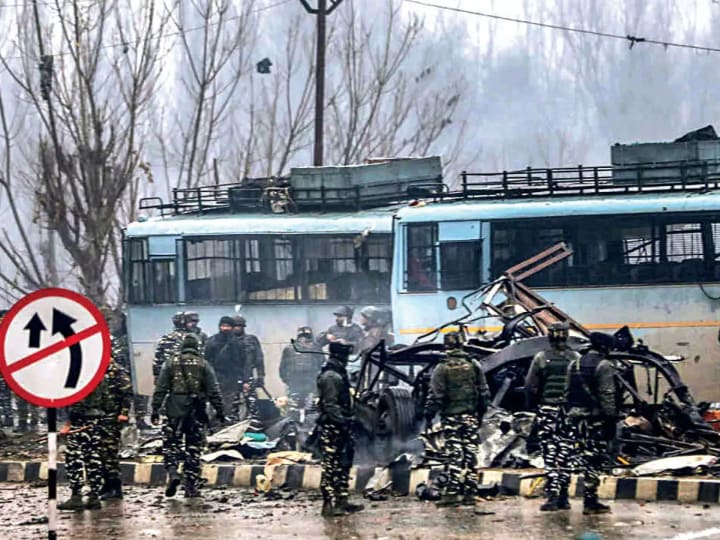
On May 7th, under "Operation Sandur," India launched missile and air strikes on Bahawalpur, Sialkot, and Muzaffarabad. India claimed that these attacks destroyed militant hideouts, but Pakistani media and local reports stated that dozens of innocent civilians were martyred and critical infrastructure was severely damaged.
The Pakistan Air Force effectively and fully defended against India's aggression. Five Indian aircraft were shot down, including three modern French-made Rafale jets, one Russian-made Su-30, and one Indian-made Tejas fighter jet. Pakistani fighter planes destroyed enemy warplanes using advanced technology and aerial strategy.
Along with this success, a female Indian fighter pilot was captured alive when her Rafale aircraft crashed and was destroyed within Pakistani territory. According to military sources, the captured female pilot was treated with full respect and detained under international law. This incident proved to be a major humiliation for India and globally highlighted Pakistan’s victory.
The Pakistani army made full use of its modern defense systems during this war and succeeded in destroying Indian Israeli-made Harop drones. According to the Pakistani military, on May 8th, 29 Indian drones were shot down, followed by the destruction of 48 more Indian drones. These victories showcased the defensive capabilities of the Pakistani military, which effectively thwarted enemy aerial attacks.

Pakistan's Counter attacks and the Scene of Destruction in India:
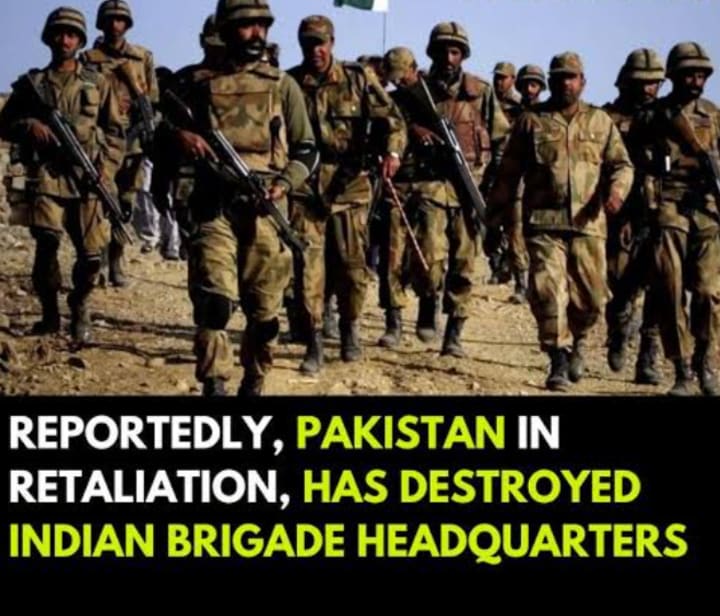
In response to India's aggression, Pakistan launched powerful counterattacks, which created a new landscape of destruction in India. Pakistani missiles and airstrikes targeted Indian military bases, ammunition depots, and communication systems. In Rajasthan, Pathankot, and Gujarat, Indian forces suffered heavy casualties and financial losses. Fires at Indian airbases wreaked havoc for hours and dealt a severe blow to India's air force.
In Indian-administered Kashmir, Pakistani artillery attacks destroyed Indian military bunkers. Indian media broadcasted images of this war devastation, showing military installations reduced to rubble. Panic spread across several Indian cities, and thousands of people were forced to migrate to safer places.
Pakistan's counter-offensives shook India’s military leadership and exposed the weaknesses of Indian forces before the world. The Indian government had to seek help from the international community and began appeals for a ceasefire. These counterattacks clearly demonstrated Pakistan’s superiority in this war and showed the world that Pakistan would never compromise on its sovereignty.
Pakistan's Diplomatic Victory and Global Support:
This time, Pakistan achieved victory not only on the battlefield but also in diplomacy. Prime Minister Shehbaz Sharif contacted the leaders of Saudi Arabia, China, Turkey, and the OIC to garner global support against Indian aggression. China clearly warned India that any unilateral action in the region would pose a serious threat to peace.
Foreign Minister Bilawal Bhutto Zardari demanded an emergency session at the United Nations and labeled India’s war policy as "state terrorism." Pakistani media called this diplomatic campaign a historic success.

Questions Over India's Military Strategy:
During this war, many questions arose about India’s military strategy. The failure of Indian aircraft and flaws in their war plans raised global concerns about India’s military preparedness. In this war, India faced such a serious defeat that its fighter jets and drones appeared helpless in front of Pakistan’s defense systems. Despite having the latest aircraft and weapons, India failed against Pakistan’s defensive strategy.
Pakistan's military not only effectively responded to enemy attacks in this war but also proved its military strength globally. Pakistan’s defense strategy highlighted its military capabilities worldwide and established its army as a strong and powerful defense force.

Impact on South Asia's Peace:
The 2025 war between Pakistan and India posed a severe threat to South Asia's peace. This war harmed both countries' economies and increased tensions at the global level. World powers grew concerned over the effects of this war and attempted to resolve the conflict between the two nations through dialogue. To ensure South Asia's peace and stability, it became necessary to find a solution between India and Pakistan. However, this war once again proved that if the negotiation process is not advanced, the region could become a permanent threat to global peace.

Ceasefire Agreement: Temporary Calm or a Short-Term Solution?
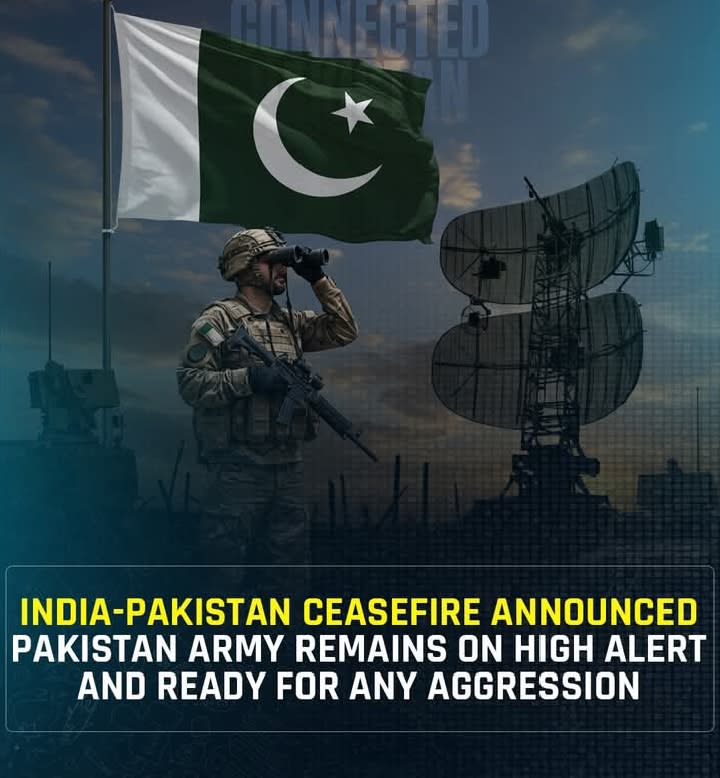
On May 10th, through U.S. and Saudi mediation, both countries announced a ceasefire. However, just a few hours later, reports emerged of shelling and explosions in Kashmir. Both nations accused each other of violating the ceasefire.
According to Pakistani defense experts, India continued its aggression despite the ceasefire, and Pakistan took necessary steps in its defense. General (R) Amjad Shoaib said, "This ceasefire is temporary; until India abandons its expansionist mindset, peace in the region is impossible."

Tensions in Diplomatic Relations and Public Sentiments:
India, limiting relations with Pakistan, suspended the Indus Waters Treaty and revoked visa facilities. In response, Pakistan expelled Indian diplomats and closed its airspace to Indian aircraft.
The Pakistani public praised their military’s response and held nationwide rallies where slogans like "Kashmir will become Pakistan" and "Down with India" echoed. Youth on social media also ran intense campaigns to expose India’s aggression globally.
Current Situation and Future Threats:
Although the ceasefire is in place, ground realities indicate that tensions in border areas remain. Both nations' armies are on high alert, and the Kashmir issue remains unresolved.
According to Pakistani analysts, India's recent aggression is a significant threat to regional peace, and the international community must go beyond statements and take practical steps.
The Pakistani military and government have announced they are prepared to go to any lengths to ensure national security. A statement from GHQ Rawalpindi declared, "Our land, our people, and our sovereignty are sacred. If the enemy looks with an evil eye, history will record our response in golden words."
Conclusion: Pakistan's Steadfastness, India's Failure:
This 2025 war once again reminded the world that Pakistan is not only a nuclear power but also a united and strong nation always ready to defend its borders. India’s unilateral actions failed, and its global reputation suffered a severe blow.
Now, the question is whether the international community will make serious efforts to resolve the Kashmir issue or whether the region will once again be pushed toward a major confrontation.
For now, Pakistan has once again proven that it desires peace but will never compromise its sovereignty.
About the Creator
Keep reading
More stories from Motivational story and writers in Education and other communities.
The Fall of Constantinople: The Last Stand
The year was 1453. For over a thousand years, the great city of Constantinople had stood as the shining jewel of the Byzantine Empire. Its towering walls had repelled countless enemies, and its golden domes had witnessed the rise and fall of empires. But now, the city faced its greatest threat — Sultan Mehmed II of the Ottoman Empire, a young and ambitious ruler determined to make history.
By Motivational story10 months ago in History
Understanding Rework Sign Exit SCRN AFT Parts in Aerospace Maintenance
As someone deeply involved in aviation engineering and aircraft maintenance research, I’ve always been fascinated by how small parts — even those with complex technical names — play a critical role in flight safety and operational readiness. One such category is the “Rework Sign Exit SCRN AFT” part type, commonly referenced in aviation parts catalogs like the one at FulfillmentByASAP.
By Beckett Dowhan4 days ago in Education
K-12 Education Technology Spend Market to Reach USD 253.9 Billion by 2033
K-12 Education Technology Spend Market Summary The K-12 Education Technology (EdTech) Spend market covers the budgets allocated by schools and districts for digital learning software, connected classroom tools, student devices, broadband, cybersecurity, and IT support services. This spend is increasingly treated as core education infrastructure, not an optional add-on, because teaching, assessment, and school operations are now tied to digital systems. The global market size is expected to reach USD 253.9 billion by 2033, up from USD 78.2 billion in 2023, reflecting a forecast CAGR of 12.5% from 2024 to 2033.
By Roberto Crum5 days ago in Education
The BAFTA Awards
By now, in a stunning departure from recent years, most of the world is aware of what happened at the BAFTA film awards. Social Media Headlines will tell you the bare bones: that John Davidson, a Tourette's Syndrome advocate, shouted a racial slur at two Actors of Colour, Michael B Jordan and Delroy Lindo.
By Natasja Rose4 days ago in Psyche




Comments
There are no comments for this story
Be the first to respond and start the conversation.