
How We Transformed Healthcare Operations with Centralized Healthcare Platform
Healthcare Operations with Centralized Healthcare Platform
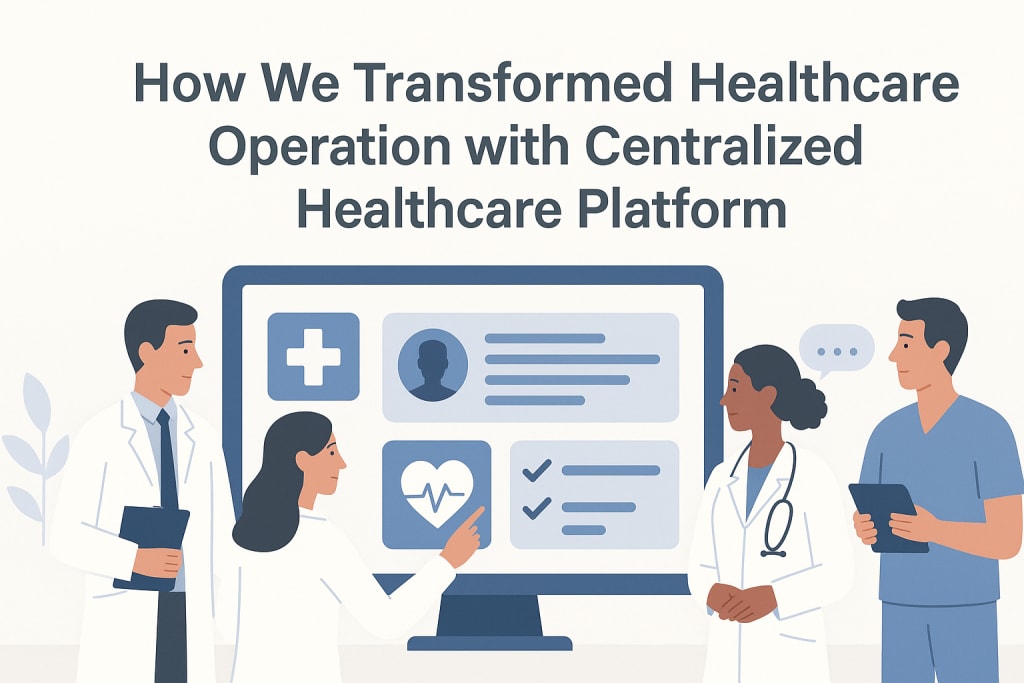
key highlights
- OptiSol’s centralized platform resolved fragmented communication by connecting doctors, trainees, and staff on a single app — enhancing real-time collaboration and critical information sharing.
- The built-in Electronic Medical Records system ensured unified, real-time access to patient data, reducing errors and improving the continuity and quality of care.
- By enabling collaboration on patient care, training, and research, the platform fostered interdisciplinary teamwork, reducing isolation and improving project execution.
- Features like structured case discussions and second opinion support bridged insight gaps, empowering clinicians to make quicker, more accurate treatment decisions.
- The inbox-based messaging system improved task management and coordination, aligning teams across operational, research, and training efforts — ultimately increasing hospital efficiency.
The Challenges of Team in Modern Healthcare Environments
Disconnected Communication: Organizations often rely on disconnected tools and platforms, making it difficult for teams to communicate effectively. This fragmentation leads to misalignment, delays in response, and reduced overall efficiency in operations.
Team Silos: Without unified collaboration tools, departments work in isolation, making cross-functional coordination cumbersome. This lack of synergy hinders timely decision-making and impacts the organization’s ability to execute projects smoothly.
Data Fragmentation: Critical data is frequently spread across multiple systems or stored manually, making it hard to retrieve or update in real-time. This disjointed approach increases the risk of errors, slows down workflows, and affects overall data accuracy.
Insight Gaps: Without real-time dashboards or analytics tools, organizations struggle to turn raw data into useful insights. This limitation forces teams to operate reactively rather than proactively, missing opportunities for optimization.
Limited Development: Employee development is restricted without a centralized platform for knowledge sharing, training, and collaboration. This gap hampers continuous improvement, reduces innovation potential, and weakens long-term competitiveness.
Transforming Healthcare Operations with Smart Communication and EMR Integration
Unified Communication: OptiSol developed a Centralized healthcare app that streamlines communication among doctors, postgraduates, and trainees, enabling faster information exchange and better coordination during critical medical scenarios.
Integrated Records: With a built-in EMR system, healthcare professionals can seamlessly manage, access, and update patient information, ensuring a single source of truth that improves continuity of care and clinical outcomes.
Collaborative Learning: OptiSol introduced features to support collaboration on patient care, research, thesis work, and training, encouraging interdisciplinary interaction and empowering staff through knowledge-sharing.
Clinical Support: The platform allows clinicians to seek second opinions, raise queries, and discuss cases efficiently, fostering a collaborative diagnostic environment and reducing the risk of misdiagnosis.
Smart Coordination: An inbox-based communication system supports individual and group messaging for project coordination and training, simplifying task management and keeping all team members aligned.
Enhancing Patient Care with Integrated Communication
Higher Efficiency: With a centralized healthcare communication platform, OptiSol streamlined hospital workflows and reduced operational silos, significantly enhancing day-to-day efficiency and minimizing administrative overhead.
Better Care: By implementing an integrated EMR system, healthcare professionals improved the accuracy and timeliness of patient data access, leading to more informed decisions and elevated standards of patient care.
Continuous Growth: OptiSol’s collaborative features enabled medical professionals to engage in research, study, and training, fostering a culture of continuous learning and advancing healthcare knowledge.
Quicker Decisions: Through support for second opinions and structured case discussions, the platform accelerated clinical decision-making, reducing diagnostic delays and improving treatment effectiveness.
Stronger Collaboration: OptiSol enabled seamless team coordination with an inbox-driven messaging system, bridging communication gaps and driving efficient execution of care, training, and research initiatives.
About the Creator
Rabbi Shlomo Slatkin, M.S., LCPC on Imago Dialogue, Repair, and Relationship Safety
Rabbi Shlomo Slatkin, M.S., LCPC, is founder and therapist at The Marriage Restoration Project in the Baltimore area. An ordained rabbi and Certified Imago Relationship Therapist and workshop presenter, he guides couples through intensives, retreats, and counseling aimed at restoring safety, communication, and connection after conflict or crisis. He holds a master’s in Counseling Psychology from Loyola University Maryland and trained with the Imago Relationship Institute. Slatkin earned a B.A. in Middle Eastern Studies, with undergraduate study at George Washington University and Oxford, and authored The Five Step Action Plan to a Happy & Healthy Marriage. He also co-edited curricula.
By Scott Douglas Jacobsen5 days ago in Education
Why Tailwheel Training Still Matters for Pilots in Today’s Aviation World
Tailwheel Training may sound old fashioned to some pilots, but it still plays an important role in modern aviation. Many training aircraft today use tricycle landing gear, which feels easier and more forgiving. This has led some pilots to believe that tailwheel skills are no longer needed. That idea is incorrect. Tailwheel Training teaches core flying skills that improve safety, control, and awareness in any aircraft.
By Duke Valentour2 days ago in Education
Affection and Healing for Yourself
During the night of the last quarter moon, I gathered my ritual supplies. I carefully handled the chunk of black tourmaline that would protect me from your overall negative and narcissistic energy. I carefully walked the house with my stick of selenite in hand, asking the universe to cleanse our working space.
By Alisha Wilkins ✒️🦋🖋️5 days ago in Fiction



Comments
There are no comments for this story
Be the first to respond and start the conversation.