
How User Experience Impacts Product Design and Development?
Why UX is No Longer Optional in Modern Product Engineering
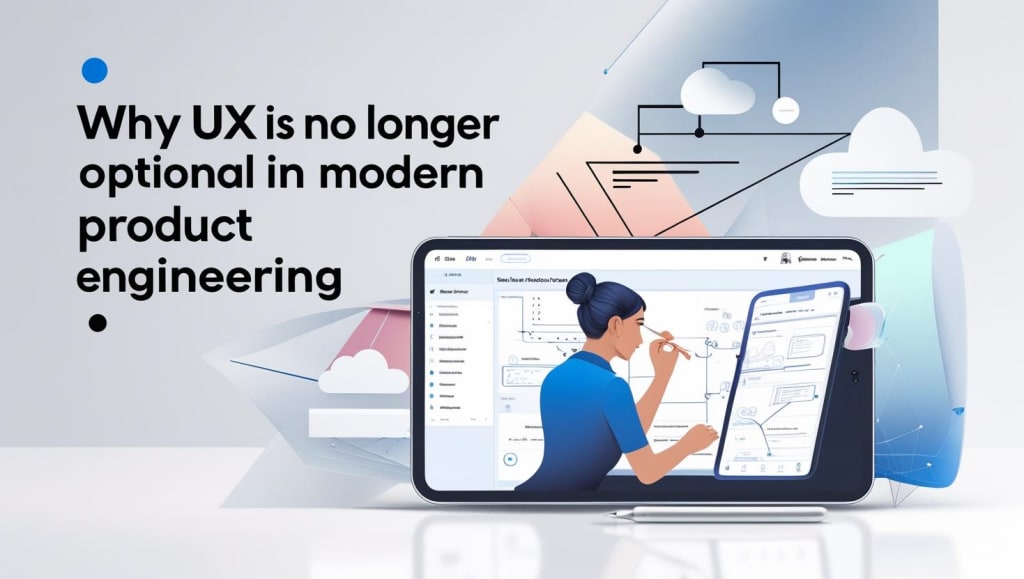
In the modern, tech-centric era, organizations constantly seek new ways to distinguish their products in the cutthroat marketplace. While technical innovation and features are often acknowledged, an important yet neglected aspect of successful product design and development is User Experience (UX).
A staggering 88% of online users are less likely to return to a site after a bad experience, highlighting how crucial UX is for retaining engagement. Moreover, every $1 invested in UX yields an average return of $100 (a 9,900% ROI), underscoring UX as not just a nice-to-have, but a powerful business driver. These insights show why organizations are shifting from prioritizing functionality alone to embracing user-centric design. UX is now the foundation of product engineering - not only making products efficient but ensuring they are accessible, intuitive, and truly delightful to use.
This article helps explore the role of user experience in product engineering and its impact on business results.
Understanding User Experience and Product Engineering
To understand the importance of UX in product engineering, it is significant to understand what these terms mean and how they have evolved.
- User Experience (UX) - UX is an individual's overall experience when interacting with a software product, specifically regarding how simple or accessible the product is. It covers different aspects of the user’s interaction with the organization, its services, and products. UX also emphasizes factors like emotional satisfaction, accessibility, functionality, design, and usability. In digital solutions, UX comes with interface design, prototyping, information architecture, and usability testing.
- Product Engineering - Product engineering refers to the process of designing and developing a software product that is efficient, functional, and manufacturable. It includes steps like ideation, design, prototyping, development, testing, and scaling. It is basically focused on ensuring the software product functions as expected, meets safety protocols, and performs well under multiple conditions. You can expect the global product engineering service market to be valued at around USD 2,642.90 billion 2032.
While both user experience and product engineering generally worked in separate silos, modern product development is an example that integrating UX into the engineering process is beneficial as well as necessary for building successful products. Leading providers of software product engineering services now embedded UX practices early in the engineering lifecycle to ensure seamless, user-friendly outcomes.
The Business Value of UX in Product Engineering
- Client Retention and Loyalty: One of the key aspects of a successful business is client satisfaction, and UX plays a key role in ensuring that end users are happy. A software product that is seamless to use, aesthetically pleasing, and intuitive, which further helps enhance the user’s emotional connection with your brand. Positive experiences often retain client loyalty, which is far more affordable than bringing in new customers. Happy users can probably become product promoters, enhancing the company's presence through organic marketing.
- Minimal Expense and Time to Market: Integrating UX in the initial phases of product engineering can help organizations save considerable expense and time in the long run. By performing user testing, iterating on designs during development, and collecting feedback, you can identify and address any possible issues and design flaws early on. This forward-thinking approach reduces the need for any expensive redesigns or post-launch fixes, which further accelerates time to market and optimizes the product’s overall quality. When you consider UX an integral part of the engineering workflow, it helps prevent the challenges of product development that fail to satisfy user needs.
- Competitive Edge: In the highly competitive market, products often thrive based on their features, performance, and usability. A software product that delivers an intuitive UX can stand out in a crowded marketplace. Even if the competitor presents similar features, faster workflows, a more user-friendly interface, and a superior experience can provide a company with a competitive advantage. In fact, as per research, organizations with a strong focus on UX outpace their rivals by a considerable margin, defining their strong connection between user-centric design and business success.
- Improved Product Innovation: UX is not about making products easier to use; it's an essential driver of innovation. By constantly collecting user feedback and observing how clients engage with a product, organizations can uncover new possibilities for innovation. Product engineers involved in UX research often recognize loopholes in the market or new feature sets that improve functionalities while still being seamless to use. Moreover, promoting a UX-driven culture helps foster collaboration between design, engineering, development, and marketing teams, which leads to more creative and dynamic solutions.
Challenges in Integrating UX with Product Engineering
While merging UX into product engineering has considerable advantages, it also has some limitations. One of the main challenges is balancing the requirement for functionality with user-centric design. In some instances, technical limitations might restrict the degree to which engineers can leverage specific UX features. Moreover, ensuring a smooth partnership between UX designers and engineers needs efficient communication and a common understanding of objectives. Creating cross-functional teams where design and engineering are given equal importance and consideration can help address these limitations.
Conclusion: A Holistic Approach to Product Success
The role of user experience in product engineering is unquestionable. As businesses seek to build products that appeal to users, focusing on UX ensures that the product is not merely a lineup of features but a comprehensive solution that helps meet user requirements intuitively and interactively. With the help of UX being at the heart of the product engineering process, organizations can deliver products that drive client loyalty, innovation, and competitive edge, which ultimately leads to long-term business success.
In today’s time, when clients demand far more than just operational products, businesses must reflect on the dynamic experience that covers design, functionality, and usability. So, when opting for a product engineering approach that prioritizes UX, organizations are perfectly poised to build and deliver remarkable products that help exceed customer expectations.
About the Creator
Keep reading
More stories from Jakob Stanely and writers in Education and other communities.
Responsible AI Development Design, Testing, and Governance for Teams
Artificial Intelligence is transforming how enterprises operate — from automation and predictive analytics to intelligent customer experiences. In fact, over 90% of firms use AI in some capacity today, with adoption expanding quickly across departments and workflows.
By Jakob Stanely7 days ago in 01
How to Install Floodlight Cameras: Step-by-Step Guide
Floodlight cameras give strong security for homes and businesses. They mix bright lights with video recording to scare away intruders and catch clear footage. When you pick the best floodlight camera, you get reliable protection that works day and night. This guide takes you through the installation process in clear steps.
By Bilal Ahmad7 days ago in Education
Early March 2026: 4 Goals Accomplished
It's early March and I've now accomplished my 4th writing goal for the year of 2026. Before diving into the behind-the-scenes of it... why not tell you up front what that accomplishment was? I was published in a 2nd publication for this year. Published in Helix Literary Magazine out of Central Connecticut State University. You can read it for free right now!
By Stephen Kramer Avitabile3 days ago in Writers




Comments
There are no comments for this story
Be the first to respond and start the conversation.