
How the AWS come to an existence?
The story behind largest cloud flat form available today.

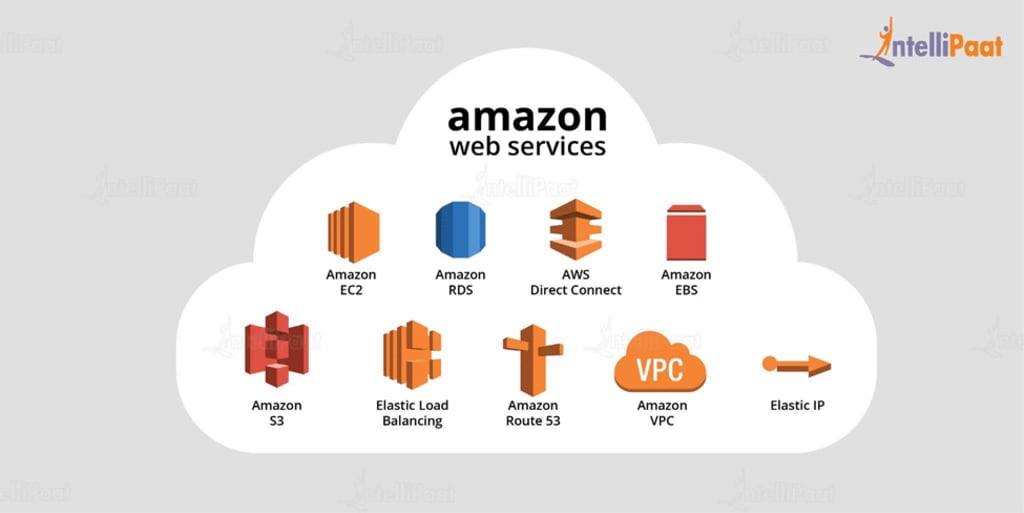
Amazon Web Services (AWS) is a subsidiary of Amazon.com that provides on-demand cloud computing services to individuals, companies, and governments on a metered pay-as-you-go basis. AWS was launched publicly in 2006, but its roots can be traced back to Amazon's own need to scale its e-commerce operations.
Here is the story behind AWS in full detail with points:
In the late 1990s, Amazon.com was growing rapidly as an e-commerce company, and it needed a way to scale its operations efficiently and cost-effectively. Traditional data center solutions were expensive and inflexible, so Amazon began to explore building its own infrastructure.
In 2002, Amazon's CEO, Jeff Bezos, mandated that all Amazon teams should start using APIs to communicate with each other, which laid the foundation for the development of AWS.
In 2003, Amazon began developing its own internal infrastructure as a service (IaaS) platform, which it called the Amazon Web Services platform.
In 2004, Amazon launched its first public-facing AWS service: Simple Queue Service (SQS), which allowed developers to build distributed systems that could scale automatically.
In 2006, AWS launched its Elastic Compute Cloud (EC2) service, which allowed customers to rent virtual computing resources on an as-needed basis. This was a game-changer for the industry, as it allowed customers to avoid the upfront costs and long lead times associated with building their own data centers.
Over the next few years, AWS continued to add new services and features to its platform, including Amazon S3 (Simple Storage Service), Amazon RDS (Relational Database Service), and Amazon DynamoDB (a NoSQL database service).
In 2010, AWS announced a new service called Elastic Beanstalk, which made it easier for developers to deploy and manage web applications on the AWS platform.
AWS continued to grow rapidly throughout the 2010s, adding new services like Lambda (serverless computing) and Amazon Redshift (data warehousing).
Today, AWS is the largest cloud computing provider in the world, with over 200 services available to customers in over 190 countries. Some of the world's largest companies, including Netflix, Airbnb, and Adobe, rely on AWS to power their businesses.
In addition to its public cloud offerings, AWS also provides a range of hybrid and private cloud solutions for customers who need to maintain tighter control over their infrastructure.
AWS has also become a major player in the artificial intelligence (AI) and machine learning (ML) space, offering a range of services that enable customers to build and deploy sophisticated AI applications with ease.
In recent years, AWS has also become a leader in the development of sustainable cloud computing solutions, with a commitment to achieving net-zero carbon emissions by 2040.
In summary, AWS started as an internal infrastructure solution developed by Amazon to support its own e-commerce operations. It evolved into a full-fledged cloud computing platform, offering a wide range of services to customers around the world. Today, AWS is the largest cloud computing provider in the world, with a commitment to innovation, sustainability, and customer success.
Amazon Web Services (AWS) is one of the most popular cloud computing platforms in the world. It offers a wide range of services that enable individuals, businesses, and governments to access computing resources, storage, and other services on-demand. Like any technology platform, AWS has its pros and cons. Here are some of the advantages and disadvantages of using AWS:
Pros of AWS:
Scalability: One of the biggest advantages of AWS is its ability to scale computing resources up or down based on demand. This means that users can quickly and easily add or remove resources as needed, making it an ideal platform for businesses that experience fluctuating demand.
Cost-effective: AWS offers a pay-as-you-go pricing model, which means that users only pay for the computing resources they use. This can be a cost-effective option for businesses, as it eliminates the need to invest in expensive hardware or software upfront.
Flexibility: AWS offers a wide range of services, from compute and storage to artificial intelligence and machine learning. This makes it a flexible platform that can be used for a variety of applications, from running websites to processing large datasets.
Reliability: AWS has a reputation for being one of the most reliable cloud computing platforms in the world. It offers multiple availability zones and redundancy options to ensure that services remain available even in the event of a failure.
Security: AWS offers a range of security features, including encryption, access controls, and monitoring tools. This makes it a secure platform for storing sensitive data and running critical applications.
Cons of AWS:
Complexity: AWS can be a complex platform to navigate, especially for users who are new to cloud computing. It can take time and effort to learn how to use AWS effectively, which can be a challenge for some businesses.
Vendor lock-in: Once a business starts using AWS, it can be difficult to switch to another platform. This is because AWS uses proprietary technology and APIs that are not always compatible with other cloud providers.
Cost management: While AWS can be a cost-effective option, it can also be easy to overspend if users are not careful. Businesses need to actively monitor their usage to ensure that they are not paying for resources they don't need.
Technical expertise: AWS requires a certain level of technical expertise to use effectively. Businesses may need to hire or train staff with specialized skills in order to get the most out of the platform.
Outages: While AWS has a reputation for reliability, it is not immune to outages. In the past, AWS has experienced service disruptions that have affected a large number of users.
In conclusion, AWS is a powerful and flexible cloud computing platform that offers many benefits to users. However, like any technology platform, it has its pros and cons. Businesses need to carefully consider their needs and goals when deciding whether to use AWS, and be prepared to invest the time and resources needed to use it effectively.
About the Creator
Keep reading
More stories from writers in Education and other communities.
How Do Server Storage Support Virtualization and Big Data Needs
Data keeps growing every single day. Businesses are creating and saving more files than ever before. According to a global data report, around 221 zettabytes of data are expected to be generated in 2026.
By Jessica Stephen4 days ago in Education
Killing him slowly
There’s an intruder in my house again. He stumbles through the door, wet carrier bags in hand. He’s bought me offerings. I show my appreciation, letting him caress my beautiful body. He wants to touch me. I rub myself against his legs. He sighs, dropping the bags. He can’t resist touching me. Running his hand slowly down my spine, I arch my back towards his caress, let out a low purr. It’s what we both need.
By N J Delmas3 days ago in Horror




Comments
There are no comments for this story
Be the first to respond and start the conversation.