
How Savvy Investors Find Code Violation Properties
Unearthing Value from the Silence: A Look at Overlooked Property Investments

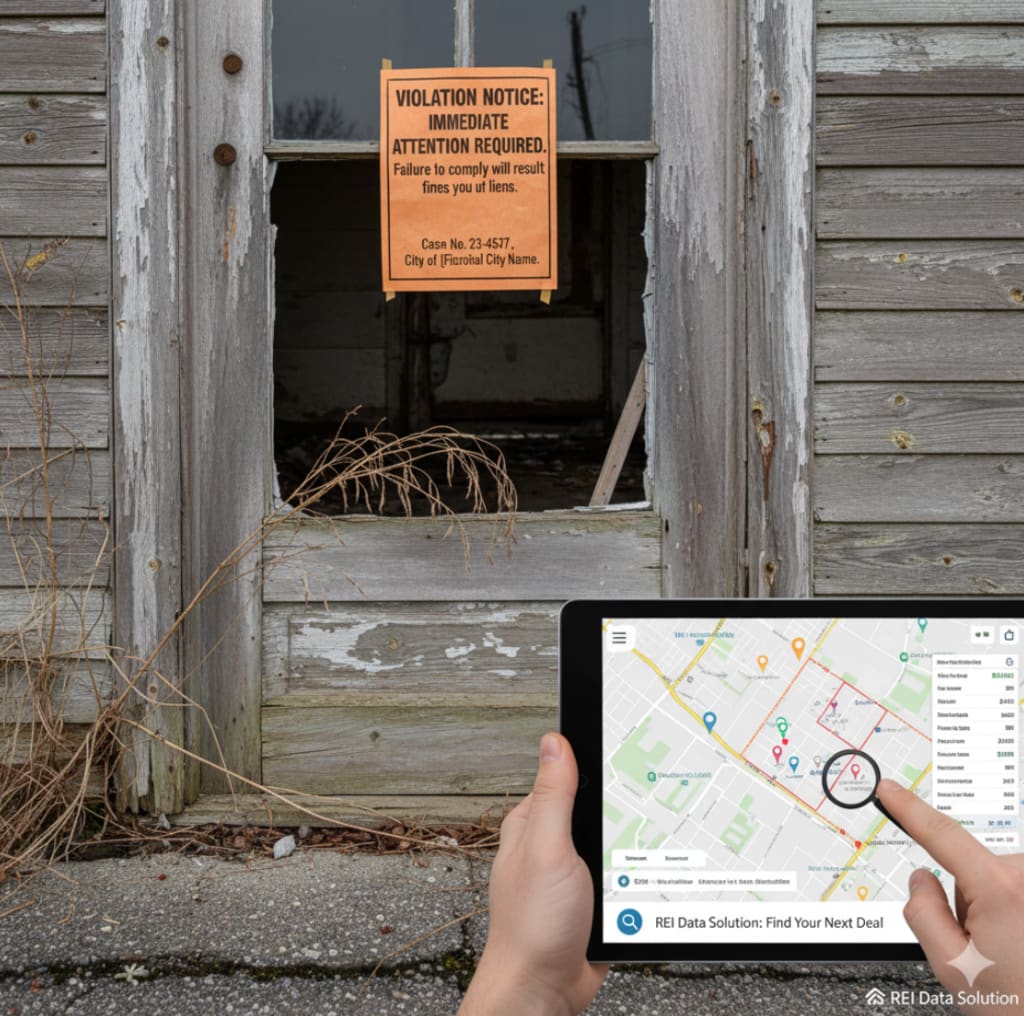
In today's competitive real estate market, it can feel like all the good deals are already gone. The properties that do pop up on the open market often get swept up in bidding wars, and off-market opportunities are a lot harder to come by. But some of the most overlooked opportunities are hiding in plain sight, marked not by a "For Sale" sign but by a bright orange notice on a neglected house.
For most homeowners, a code violation tag signals frustration, fines, and mounting costs. But for those with a different perspective, it's a direct signal that a property might be ripe for negotiation. This isn't about taking advantage of someone's misfortune; it's about seeing potential where others only see problems. By addressing the issues that caused the violation, investors can build equity and, at the same time, breathe new life into a forgotten property.
Why I Pay Attention to Code Violations
When a city or town issues a code violation, it means a property has failed to meet basic building, safety, or health standards. Most people see this as a huge red flag, and for good reason. But I've learned to see these notices differently because they come with a few key advantages:
• Built-in urgency: An owner who is facing daily fines or the threat of liens is often under a lot of financial stress. They might be highly motivated to sell quickly, even if it means taking a lower price, just to stop the financial bleeding.
• Reduced competition: The stigma of a code violation deters most traditional buyers. This leaves a much smaller pool of potential bidders, giving experienced investors like me a clear edge in negotiations.
• Forced appreciation: The violations themselves serve as a built-in plan for improvement. Fixing the identified issues whether it's an electrical problem, a leaky roof, or a health hazard directly increases the property's value.
In my experience, what looks like a liability at first glance can actually become a roadmap to building real equity.
Finding These Properties
A few years ago, a lot of investors would spend hours "driving for dollars," literally driving through neighborhoods looking for overgrown lawns, peeling paint, or boarded-up windows. While you can still do this, it's a very slow and inefficient way to find leads.
Technology has completely changed the game. Today, I use online platforms that pull together public records, making it easy to filter for properties with code violations, tax delinquencies, or even foreclosure notices. Instead of sifting through stacks of city files, I can generate a targeted list of potential properties in a matter of minutes.
Some of these services even allow you to find and contact the property owners directly. By combining data and outreach tools, I can focus my energy on the most promising leads instead of wasting time on properties that may never even hit the market.
The Importance of Due Diligence
Finding a property with a code violation is just the first step. The real work begins with due diligence, because not every violation is a good deal. Before I make an offer, I always follow a few critical steps:
1. Review every violation in detail: A citation for peeling paint is manageable. A citation for structural foundation cracks is a whole other story. I always get the full report from the municipality.
2. Calculate the “cost to cure”: I get quotes from contractors for each repair and always include a contingency budget for unexpected expenses. This figure is crucial for shaping my offer and negotiation strategy.
3. Run a lien search: Municipal fines can quietly turn into liens against a property. If you don't uncover these debts, they can eat into your profits after the sale closes.
4. Understand the local rules: Every city enforces codes differently. Historic neighborhoods might require specific materials, and some towns have restrictions on turning a property into a rental. Knowing these details prevents surprises and can sometimes reveal hidden opportunities.
By carefully analyzing the numbers, I protect myself from overpaying and ensure that the repairs I make will actually generate value.
Making the Right Offer
Approaching a homeowner with a code-violated property requires a lot of tact. These owners are often overwhelmed and frustrated. The best offers balance empathy with facts.
This is where my repair estimates and transparent breakdowns come in. By showing the owner exactly what needs to be fixed and what it will cost, I can position my offer as a practical solution rather than a lowball attempt.
To stay disciplined, I often use a simple formula known as the 70% Rule:
Maximum Offer = (After Repair Value x 0.70) – Repair Costs
This formula helps account for profit margins, holding costs, and closing fees. It prevents me from making an emotional overbid and ensures the deal remains viable, even if small issues pop up during renovations.
Beyond the Numbers: The Bigger Picture
At first glance, buying a property with code violations might seem like an opportunistic move. But in my experience, it has ripple effects that go far beyond just a personal profit.
• Neighborhood impact: Revitalizing a neglected property improves the curb appeal and property values for the entire street.
• Safety improvements: Fixing structural or health violations makes the home safer for future occupants.
• Economic benefits: Contractors, inspectors, and local suppliers all benefit from the repair process.
In other words, these deals don't just create equity for me; they restore value to communities and provide safer housing for the future.
A Real Estate Strategy for the Future
The hunt for profitable real estate deals is getting harder, but properties with code violations remain a reliable, often overlooked path. They combine urgency, low competition, and a built-in plan for adding value. With the right due diligence, these opportunities can produce consistent results for anyone willing to put in the work.
This isn't about chasing distress it's about transforming overlooked properties into productive assets. For me, that means predictable profits. For the communities, it means cleaner, safer, and more valuable neighborhoods.
At the end of the day, code violations aren't just notices on a door. For those who know how to read them, they're invitations to create value where others only see problems.
Further Reading
• Code Enforcement in Your Community – U.S. Department of Housing and Urban Development
• Navigating Real Estate Liens: What You Need to Know – National Association of Realtors
• The Role of Property Appraisers in Real Estate – Appraisal Institute
• How to Find Code Violation Properties – REI Data Solutions
About the Creator
Keep reading
More stories from REI Data Solutions and writers in Education and other communities.
Foreclosure vs. Short Sale: 7 Key Differences Every Real Estate Pro MUST Know
You are driving through a target neighborhood and spot a classic "diamond in the rough." The lawn is overgrown, mail is spilling out of the box, and the shutters are hanging by a thread. To the untrained eye, it is just a neglected house. To a seasoned real estate professional, it is a potential high-margin opportunity.
By REI Data Solutionsa day ago in Education




Comments
There are no comments for this story
Be the first to respond and start the conversation.