
How can someone strengthen their emotional resilience during ongoing life challenges without feeling overwhelmed?
Someone strengthen their emotional

Strengthening emotional resilience during ongoing challenges is one of the most meaningful acts of self-care, but it can also feel incredibly difficult—especially when stress keeps returning day after day. Many people imagine resilience as a kind of emotional toughness or the ability to stay unaffected by hardships. In reality, resilience is something very different. It’s not about being unbreakable—it’s about being flexible enough to bend without collapsing. It’s the inner capacity to recover, adapt, and keep going even when life feels heavy. And importantly, resilience is something anyone can build, no matter their past or present circumstances.
The first step in strengthening emotional resilience is understanding that it’s a gradual process, not an instant transformation. Most people put pressure on themselves to “bounce back” quickly, but this expectation creates more stress. Resilience grows from small, consistent actions that support your emotional well-being. One of the most powerful foundations is accepting your emotions as they are. When you allow yourself to feel sadness, anger, frustration, or confusion without labelling them as “bad,” you create emotional space rather than emotional resistance. The more you accept what is happening inside you, the less overwhelmed you feel by it. Emotional acceptance is the beginning of emotional strength.
Another important part of resilience is learning to shift your perspective gently. During ongoing challenges, your mind may automatically focus on worst-case scenarios or threats. This is a natural survival response, but it can worsen anxiety. Cognitive reframing—a tool used in many therapeutic practices—helps you challenge distressing thoughts and replace them with more balanced, constructive ones. For example, instead of “I can’t handle this,” try “I’m doing my best, and it’s okay to take this one step at a time.” Reframing doesn’t mean pretending things are perfect; it means giving yourself the mental space to respond thoughtfully instead of reacting out of fear.
Building resilience also requires protecting your emotional energy. Many people feel overwhelmed because they are constantly exposed to stress—through work pressure, family responsibilities, social expectations, or digital overload. Setting boundaries becomes essential here. Boundaries aren’t walls; they are filters. They help you decide what to let into your emotional world and what to gently keep out. You can set boundaries by saying no to tasks that exceed your capacity, limiting time with draining people, taking breaks from overstimulation, or giving yourself permission to disconnect from your phone. These acts of self-protection free up emotional space and increase your strength to cope with challenges.
Cultivating grounding routines is another powerful way to build resilience. When life is unpredictable, routines create stability. They signal safety to your nervous system, which reduces emotional overwhelm. A grounding routine doesn’t have to be complicated. It can be a quiet morning ritual, a few minutes of deep breathing, a daily walk, journaling before bed, or even a comforting cup of tea. What matters is the consistency. The more reliable your routines become, the more anchored you feel in yourself—no matter what chaos is happening around you.
Resilience also thrives on connection. Human beings are wired for social support, yet many people withdraw when they’re struggling because they fear being a burden. In truth, talking to someone who listens with empathy can significantly reduce emotional stress. Supportive relationships—whether with family, friends, colleagues, or a mental health professional—act as emotional buffers. They remind you that you are not alone, that your experiences have meaning, and that others care about your well-being. Connection doesn’t always have to be deep or intense; even simple interactions can help strengthen your emotional grounding.
Another essential part of emotional resilience is self-compassion. People often believe they need to be hard on themselves to stay strong, but self-criticism actually weakens resilience. When you treat yourself with kindness during difficult times, you build emotional safety within. Remind yourself that struggling doesn’t mean failing; it means you’re human. Self-compassionate people cope better with stress because they don’t waste emotional energy fighting against themselves. Instead, they use that energy to recover, reorganize, and move forward.
A powerful and often overlooked part of resilience is maintaining connection with your values—your inner compass. When you face ongoing challenges, you may lose sight of what matters to you. Reconnecting with your values helps you find purpose even during uncertainty. Ask yourself: What do I want my life to stand for? What qualities do I want to show during this difficult time? What small actions reflect the person I want to become? When your actions align with your values, even the smallest step can feel meaningful, strengthening your resilience in subtle but lasting ways.
Taking care of your body is also crucial for emotional resilience. The mind and body are deeply interconnected, and physical exhaustion often increases emotional vulnerability. Gentle movement, nourishing meals, hydration, and quality sleep dramatically improve your ability to cope with stress. You don’t need intense workouts or rigid diets. Even slow stretching, mindful breathing, or a 10-minute walk can help balance your internal system. When your body feels supported, your mind gains the stability it needs to handle life’s challenges.
It’s also important to build flexibility in your expectations. Life rarely unfolds according to plan, and rigid expectations create frustration and emotional strain. Resilience grows when you allow yourself to adapt—to accept that it’s okay to change direction, adjust your goals, or take breaks when needed. Flexibility is not giving up; it’s recognizing that strength comes from moving with life, not against it.
Another powerful technique for building resilience is practicing emotional regulation. This includes grounding exercises, mindfulness, breathing techniques, and sensory strategies that help calm the mind when overwhelm rises. For example, the 4-7-8 breathing method can instantly reduce stress, while grounding techniques—like naming five things you can see or touching an object with texture—pull your mind back into the present moment. Emotional regulation helps you respond thoughtfully rather than react impulsively, which enhances your stability during tough times.
Lastly, seeking professional support can profoundly strengthen resilience—especially during prolonged challenges. A therapist provides insight, emotional tools, and personalized strategies to navigate stress effectively. Professional guidance also helps you understand patterns, release emotional burdens, and rebuild confidence. Therapy does not mean you are weak; it means you are choosing to grow with support rather than struggle in silence. You can find mental health professionals and helpful resources at:
https://www.delhimindclinic.com/
Remember this: resilience is not something you either have or don’t have. It is something you build, nurture, and strengthen over time. Each small act of self-care, each boundary you set, each moment of self-kindness, and each effort to stay grounded contributes to your emotional strength. You don’t need to handle everything perfectly. You just need to keep showing up for yourself, gently and consistently. Over time, those small efforts become powerful, helping you face life’s challenges with clarity, stability, and courage.
About the Creator
Keep reading
More stories from Naveen Garg and writers in Education and other communities.
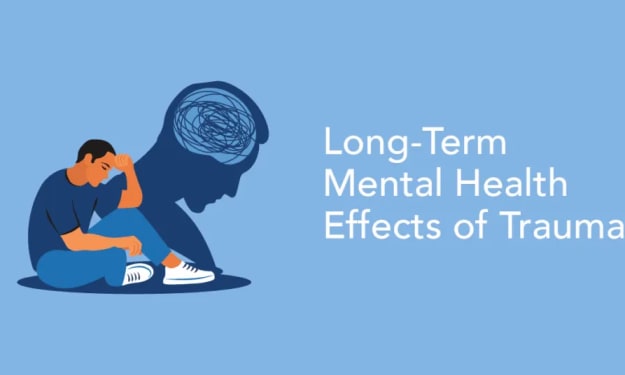
How can healing from past trauma improve your mental and emotional well-being?
Healing from past trauma is one of the most important journeys a person can undertake. It is not quick or easy, but it can transform your whole experience of life. Trauma, whether from childhood, relationships, sudden loss, neglect, abuse, or any overwhelming event, leaves a mark on both mind and body. It doesn’t just fade with time, despite what people often say. Instead, it shapes how you view yourself, how you trust others, how you react to stress, and how safe you feel in the world.
By Naveen Garg2 months ago in Education
Was Alexander the great really that great?
Order, order! Who do we have on the stand today? Alexander... the Great, eh? Well, what’s so great about him? Your honor, the better question is, what's not great about him? He was the King of Macedon and considered a living demigod by Egyptians and Greeks alike. He conquered Persia when it was one of Earth's largest empires. And he was a thoughtful student of Aristotle, creative enough to untie the impossibly tight Gordian knot by cutting it in half. The Gordian knot is a myth— just like the countless other stories invented to enhance Alexander’s legend!
By Munesh Yadavabout 3 hours ago in Education
The 1793 Chain Cent: America's First Large-Scale Copper Coin
Holding a 1793 Chain Cent is like holding the first argument of a new nation. More than just America’s first mass-produced penny, this coin is a piece of history that sparked public debate, fueled by a design many found utterly wrong. Its story—from a chaotic mint to a collector's dream—explains why it remains one of the most coveted pieces in all of American numismatics. This guide will walk you through its turbulent birth, teach you to spot the tiny detail that can mean a fortune, and explain what truly makes it valuable.
By Laura Bennett7 days ago in Education
Center Stage with Paul Stewart
*** I'm keen to republish the interviews I did for my series with Vocal creators. It's been a few years and I thought it might be nice to revisit these wonderful conversations. I'll be releasing them one at a time for a few weeks/months.
By Heather Hubler4 days ago in Interview



Comments
There are no comments for this story
Be the first to respond and start the conversation.