
How Artificial Intelligence is Accelerating Revenue Growth Across Industries
Artificial Intelligence
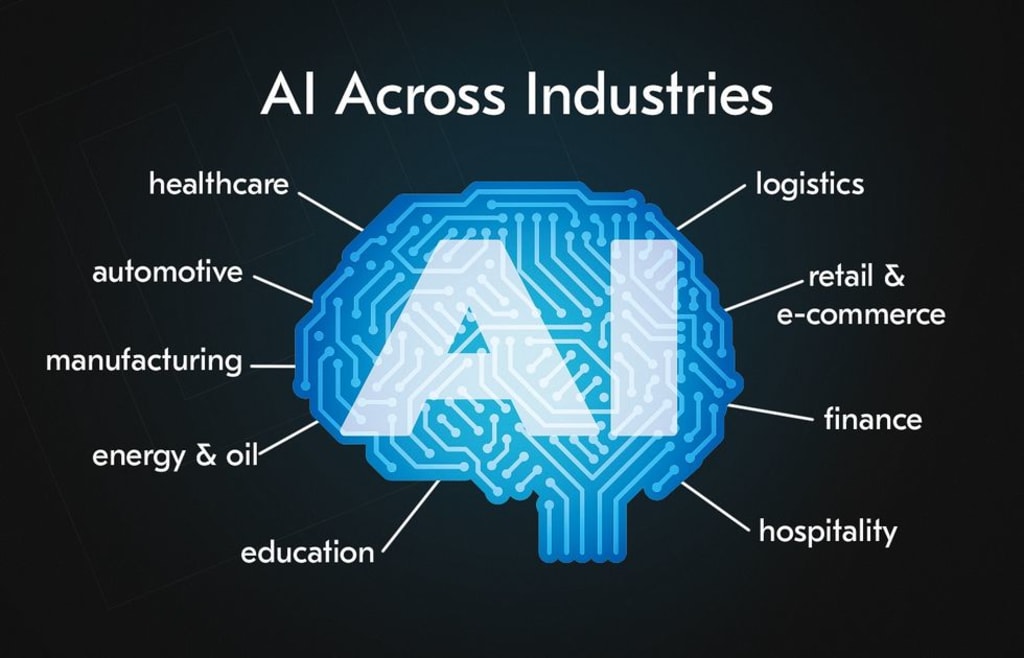
Artificial Intelligence (AI) is reshaping the business landscape, empowering companies to grow their revenue in ways that were previously unimaginable. From automating processes and enhancing customer experiences to enabling data-driven insights, AI is providing a competitive edge that’s hard to ignore. This article explores how businesses are leveraging AI to improve efficiency, innovate, and ultimately, boost their bottom line.
1. Automation: Reducing Costs, Maximizing Productivity
One of AI’s most direct impacts on revenue growth comes through automation. By automating routine tasks, companies can significantly reduce operational costs while improving accuracy and speed.
Task Automation: AI-powered systems are used to automate manual tasks such as data entry, invoice processing, and customer service interactions. Chatbots, for instance, can handle customer queries 24/7, solving simple issues without the need for human intervention. This reduces the need for large customer service teams, cutting labor costs.
AI in Manufacturing: In manufacturing, AI-powered robots and systems streamline production processes. Robots equipped with AI can learn and adapt to new tasks, improving production efficiency. This level of automation not only reduces errors but also ensures consistency in production, which is essential for scaling operations.
These efficiencies free up resources, allowing companies to reinvest cost savings into growth areas such as product development or market expansion. More efficient operations mean faster turnaround times, less waste, and better margins, directly contributing to revenue growth.
2. Personalization at Scale: Delivering Tailored Customer Experiences
Customer-centric businesses are winning the loyalty game, and AI is making personalization possible at an unprecedented scale. AI algorithms can analyze vast amounts of data to deliver customized experiences that cater to individual customer preferences and behaviors.
Recommendation Engines: Companies like Amazon and Netflix use AI-based recommendation engines to suggest products or content based on a user’s browsing history, past purchases, or preferences. By understanding customer behavior at a granular level, these companies can offer highly relevant suggestions, leading to increased sales. According to a study by McKinsey, personalized experiences can increase customer satisfaction by 20% and drive revenue growth by 10-15%.
Dynamic Personalization: Beyond just recommendations, AI can offer dynamic personalization during the customer’s journey. For example, AI-driven e-commerce platforms can adjust website layouts and product offerings based on a user’s browsing behavior in real-time, improving the chances of a conversion. This level of dynamic engagement leads to higher customer retention, increased basket sizes, and ultimately, revenue growth.
Targeted Advertising: AI also plays a crucial role in optimizing advertising campaigns. By analyzing user data, AI tools can segment audiences and deliver targeted ads that are more likely to result in a sale. Companies can reduce their cost per acquisition (CPA) while simultaneously increasing conversion rates by focusing on the right audience at the right time.
3. Predictive Analytics: Anticipating Demand and Optimizing Supply Chains
Predictive analytics is one of AI’s most transformative capabilities. By analyzing historical data and identifying patterns, AI enables businesses to make data-driven decisions that reduce risks and seize opportunities for growth.
Demand Forecasting: Retailers and manufacturers use AI-powered predictive analytics to forecast demand, enabling more accurate inventory management. For example, AI can predict which products will be in high demand during seasonal peaks or specific promotional periods. This helps companies avoid both stockouts (which result in missed sales) and overstocking (which leads to excess inventory costs). By optimizing their supply chains, businesses can improve profitability while ensuring that customer demand is met promptly.
Customer Behavior Prediction: AI can predict which customers are likely to churn, allowing companies to intervene before losing them. Businesses can also use AI to identify the best upsell or cross-sell opportunities, boosting customer lifetime value (CLV). For example, a subscription service might use AI to determine which customers are most likely to upgrade to premium plans based on their usage patterns, helping to drive additional revenue.
4. Innovation: Creating New AI-Driven Products and Services
AI is not just about improving existing processes—it’s also enabling companies to create entirely new products and services. The rise of AI-driven innovation has opened up fresh revenue streams across a variety of industries.
AI-Enhanced Products: Companies are integrating AI into their product offerings to make them smarter and more attractive to customers. For instance, smart home devices like Amazon Echo and Google Nest use AI to provide personalized assistance, from controlling household devices to answering questions. These products cater to a growing demand for convenience and connectivity, driving sales and subscription-based revenues.
New Service Models: AI-powered SaaS platforms are emerging in areas like cybersecurity, marketing, and customer service. These platforms provide real-time insights, automation, and analytics that help businesses solve complex problems. The ability to offer such solutions on a subscription basis allows companies to generate recurring revenue.
AI in Healthcare: The healthcare industry is using AI to develop predictive diagnostic tools, personalized treatment plans, and even AI-driven surgical procedures. Companies that leverage AI to improve patient outcomes are not only reducing costs for healthcare providers but also opening up new business models, such as AI-driven drug discovery.
5. AI in Marketing: Optimizing Campaigns and Maximizing ROI
AI is transforming the marketing landscape by analyzing customer data and optimizing campaigns. Businesses can now create highly targeted, personalized marketing efforts that yield better results.
Targeted Campaigns: AI tools can identify patterns in customer behavior, allowing businesses to target specific segments with tailored campaigns. This level of precision increases the chances of a successful campaign and reduces wasted ad spend. Platforms like Google and Facebook already use AI to optimize ad delivery, ensuring that businesses reach the right audience at the right time.
A/B Testing: AI can rapidly conduct A/B testing of marketing campaigns, analyzing results in real-time to determine which version performs best. This continuous optimization ensures that businesses are always delivering the most effective messages, leading to improved customer engagement and higher sales.
Dynamic Pricing: AI can also be used to adjust pricing strategies in real-time based on factors such as demand, competitor pricing, and market conditions. This dynamic pricing model maximizes revenue by ensuring that products are neither underpriced nor overpriced. For example, airlines and ride-sharing services already use AI to adjust fares based on demand, leading to optimized profit margins.
6. Risk Management and Fraud Detection: Protecting Revenues
AI plays a crucial role in mitigating risks and protecting revenues, especially in industries like finance, insurance, and retail.
Fraud Detection: Financial institutions use AI to detect and prevent fraudulent activities. AI models can analyze transaction data in real-time to flag unusual patterns that may indicate fraud. Early detection not only reduces financial losses but also strengthens customer trust, which is crucial for long-term growth.
Predictive Maintenance: In industries with high equipment costs, such as manufacturing or aviation, AI-driven predictive maintenance can monitor machinery in real-time and predict when it will require maintenance. By preventing unexpected breakdowns and reducing downtime, companies can save on repair costs and maintain continuous production, contributing to revenue growth.
Conclusion
AI is not a luxury—it's a necessity for companies looking to grow and stay competitive in today’s market. By automating tasks, personalizing customer experiences, optimizing operations, and driving innovation, AI is helping businesses unlock new avenues for revenue. Companies that embrace AI are not only improving their efficiency but also creating better products, more satisfied customers, and sustainable growth models.
As AI continues to evolve, its impact on revenue generation will only deepen, and businesses that invest in AI now will be well-positioned to thrive in the future.
About the Creator
Suresh Devendran
Tech writer exploring AI's impact on startups and innovation. Dive into stories of transformation and success in the tech world.
Keep reading
More stories from Suresh Devendran and writers in Education and other communities.
How AI Learns from Data: An Overview of the Learning Process
AI learns from data through a process called machine learning, which enables systems to improve their performance on specific tasks without being explicitly programmed. Here’s an overview of how AI learns from data:
By Suresh Devendranabout a year ago in Education
How Learning About Global Health Gives Early Impacts to Medical Students
Medical students begin forming their professional identities long before they enter residency, and early exposure to global health giving plays a decisive role in shaping those identities. While traditional training emphasizes diagnostics and clinical precision, global learning encourages students to understand the broader human context behind every medical decision.
By Dr. Seth Eidemiller6 days ago in Education
Why Do We Dream?
In the third millenium BCE, Mesopotamian kings recorded and interpreted their dreams on wax tablets. A thousand years later, Ancient Egyptians wrote a dream book listing over a hundred common dreams and their meanings. And in the years since, we haven't paused in our quest to understand why we dream. So, after a great deal of scientific research, technological advancement, and persistence, we still don't have any definite answers, but we have some interesting theories. We dream to fulfill our wishes.
By Munesh Yadav3 days ago in Education



Comments
There are no comments for this story
Be the first to respond and start the conversation.