
How Advanced Vitrectomy Techniques Are Revolutionizing Eye Surgery Outcomes
Revolutionizing Eye Surgery with Advanced Vitrectomy


Advancements in medical technology are reshaping the field of ophthalmology. Among these innovations, vitrectomy has emerged as a groundbreaking surgical procedure, transforming the outcomes for patients with complex retinal conditions. From improving vision quality to ensuring faster recoveries, modern vitrectomy techniques are setting new standards in eye surgery, particularly in addressing issues related to the retina eye surgery field.
This article dives into the evolution of vitrectomy, its benefits, and how these advancements are changing lives every day.
Understanding Vitrectomy: The Basics
Vitrectomy is a microsurgical procedure that involves removing the vitreous gel, a clear, gel-like substance that fills the eye. This procedure is typically required when the vitreous becomes cloudy, infected, or detached from the retina, hindering vision.
Common Conditions Treated with Vitrectomy:
- Retinal detachments
- Diabetic retinopathy
- Macular holes
- Epiretinal membranes (scar tissue on the retina)
- Eye trauma (such as blood or debris in the vitreous)
- Complications from cataract surgery or infections
Vitrectomy has become a staple in retinal care, but recent advancements in tools and techniques are what make it a game-changer.
Key Advancements in Vitrectomy Technology
The last decade has been pivotal in the evolution of vitrectomy procedures, thanks to advancements in instrumentation, imaging, and surgical precision.
1. Smaller-Gauge Microincision Instruments
Traditional vitrectomy relied on larger incisions, which often resulted in longer recovery times and a higher risk of complications. Modern techniques use smaller-gauge instruments like 23G, 25G, and even 27G tools.
Benefits of smaller gauge instruments include:
- Reduced trauma to the eye tissue
- Faster healing and reduced post-operative discomfort
- Better cosmetic outcomes with minimal scarring
2. Real-Time Imaging Systems
One of the most significant upgrades in retina eye surgery is the integration of real-time, high-definition imaging systems. These systems allow surgeons to visualize the retina more clearly during surgery, leading to:
- Enhanced precision and fewer surgical errors
- Better detection of subtle abnormalities
- Reduced surgery time
3. Robotic-Assisted Surgery
Robotic technology has recently entered the scene, enabling surgeons to perform vitrectomies with an unprecedented level of accuracy. Robotic systems can:
- Stabilize microsurgical instruments with precision
- Access hard-to-reach areas of the retina
- Minimize tremors for delicate maneuvers
4. Enhanced Vitrectomy Fluids
Advances in fluids used to replace the vitreous during surgery have improved post-surgical outcomes. These fluids, such as silicone oil or saline-like solutions, allow better support for the retina during its recovery process.
Quick Fact: Did you know that the first vitrectomy was performed in the 1970s? Back then, the tools were much larger and less efficient compared to the ones we use today.
5. Laser-Assisted Techniques
Combining vitrectomy with laser treatments has made it possible to repair damaged retinal tissue during the same procedure. Surgeons can:
- Stop active bleeding
- Seal retinal tears immediately
- Address diabetic-related damage in a single session
Benefits of Advanced Vitrectomy Techniques for Patients
The continual evolution of vitrectomy has not only improved surgical outcomes but has also enhanced the entire patient experience. Here’s how:
1. Improved Vision Restoration Rates
Earlier techniques couldn’t guarantee significant vision restoration. However, with today’s advances, patients experience:
- Higher success rates in treating macular holes and retinal detachments
- Better preservation of existing vision
2. Shorter Recovery Times
Earlier procedures required extended periods of recovery. Modern approaches focus on localized treatment and quicker rehabilitation, reducing downtime for patients.
3. Enhanced Safety Protocols
The state-of-the-art imaging and robotic tools significantly lower the risk factors, creating safer surgical environments.
4. Minimally Invasive Solutions
The smaller incision sizes have decreased pain levels post-surgery and reduced the need for additional follow-ups, making the procedure less daunting for many.
Pro Tip: Resting in the recommended face-down position after surgery can accelerate healing and help maintain the positioning of your retina during recovery.
Who Should Consider Vitrectomy?
Vitrectomy is generally prescribed for individuals experiencing complications that impair vision quality. Some indicators include:
- Blurred or cloudy vision
- Floaters or flashes of light
- Significant vision loss unrelated to refractive errors
It’s essential to consult a retinal specialist promptly if you encounter symptoms affecting your vision.
Note: Early diagnosis is critical. Ignoring persistent symptoms can lead to irreversible damage, so take any changes to your eye health seriously.
Preparing for Vitrectomy Surgery
Knowing what to expect before, during, and after an eye surgery vitrectomy is vital for patients to fully benefit from the procedure.
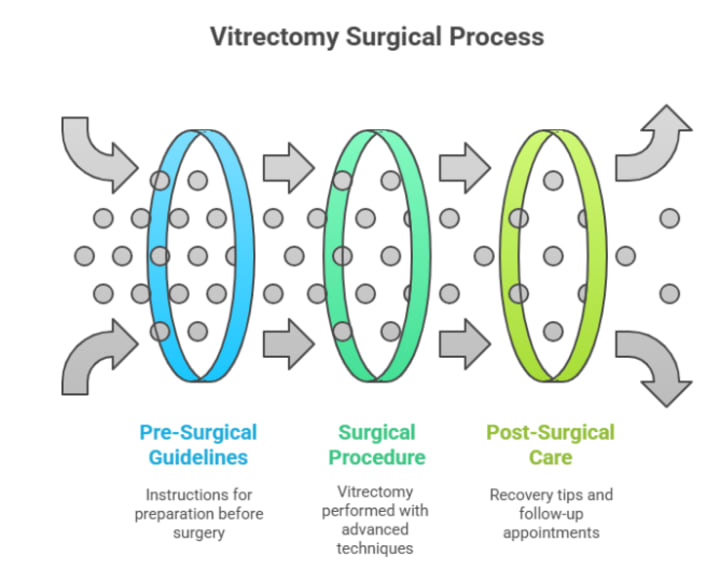
Steps in Preparation:
1. Initial Diagnosis
- A comprehensive eye exam, including imaging tests like Optical Coherence Tomography (OCT), will determine whether vitrectomy is required.
2. Pre-Surgical Guidelines
- Avoid eating/drinking at least 8 hours before surgery.
- Follow the doctor’s instructions for any pre-surgical eye drops.
3. Understanding Post-Surgery Needs:
- Arrange for someone to drive you home post-surgery.
- Ensure a comfortable resting environment and follow posture recommendations for recovery.
The Day of Vitrectomy
The surgery is typically performed as an outpatient procedure and takes about 30 minutes to an hour. Recovery protocols will be explained in detail after the operation.
Did You Know?
Vitrectomy can also be combined with other procedures, like cataract removal, to address multiple eye issues in a single surgery.
Life After Vitrectomy
Post-surgical care plays a critical role in ensuring successful results. Here’s what patients can expect post-vitrectomy:
Recovery Tips:
- Use prescribed antibiotic and anti-inflammatory eye drops diligently.
- Avoid physical activities like heavy lifting for a few weeks.
- Wear an eye shield or patch to protect the eye from trauma, dust, and light.
Final recovery timelines vary from person to person but generally range between 4 to 8 weeks.
Long-Term Outlook:
For patients suffering from conditions like diabetic retinopathy or detached retinas, vitrectomy offers life-changing improvements. Regular follow-ups with your retinal specialist are critical for maintaining eye health.
Wrap-Up
Advances in modern vitrectomy techniques have significantly revolutionized eye surgery, providing quicker recovery times, higher success rates, and minimal post-operative discomfort. The use of minimally invasive instruments, cutting-edge imaging, and even robotic assistance is transforming how retina eye surgery is performed today.
Key Takeaways:
- Thanks to smaller incisions and real-time imaging, vitrectomy is safer and more precise than ever before.
- Robotic and laser-assisted techniques mean faster and more effective procedures.
- Patients benefit from improved outcomes in treating conditions like retinal detachment and diabetic retinopathy.
A study published by the National Center for Biotechnology Information (NCBI) highlights the success rates of vitrectomy in treating conditions like macular pucker and retinal detachment.
Pro Tip: Keep up with regular eye exams, especially if you’re at higher risk for retinal conditions.
FAQs
Q1. How long does it take to recover from vitrectomy?
Recovery typically takes 4-8 weeks, but it can vary depending on the patient and condition being treated.
Q2. Does vitrectomy hurt?
The surgery itself is painless since it’s performed under local or general anesthesia. Mild discomfort can occur during recovery.
Q3. Can vision be fully restored after vitrectomy?
While full restoration isn’t always guaranteed, vitrectomy significantly improves vision in the majority of cases.
About the Creator
Franklin Norton
Franklin Norton is a dedicated health writer specializing in eye care. With a passion for vision health, he educates readers on eye conditions, treatments, and preventive care for optimal eye wellness.
Keep reading
More stories from Franklin Norton and writers in Education and other communities.
Emerging Treatments and Lifestyle Strategies for Managing Dry Macular Degeneration
Dry macular degeneration is a chronic eye condition that typically affects individuals over 50, resulting in gradual vision loss. Managing this condition can be challenging, but advancements in treatments and lifestyle strategies offer hope for better outcomes. If you're seeking reliable information on dry macular degeneration treatment, this guide provides actionable insights to help you preserve your vision and maintain a high quality of life.
By Franklin Norton6 months ago in Education
How Top-Ranked Teams Build a Culture of Excellence and Consistent High Performance
In today’s competitive business environment, success is rarely the result of individual talent alone. Strong, aligned, and resilient teams power organizations that consistently lead their industries. Lists highlighting outstanding teams, such as those curated by Forbes, have drawn attention to a critical truth: exceptional performance is built intentionally. These teams succeed because of how they collaborate, lead, and adapt over time. Understanding what sets these high-performing teams apart provides a roadmap for organizations seeking sustainable excellence.
By Daniel Ladner2 days ago in Education
Is Pharmacy Tech a Good Career Choice for 2026?
Given the recent shifts in the market and AI automation, people are now well aware that economic shakeups can drastically hinder their income sources. This is causing a lot of people to switch careers, and a majority of people are targeting healthcare roles. However, not all allied healthcare roles are created equal. Also, you can aim to become a medical assistant, but if you do not want to deal with patients, the ideal role for you is that of a Pharmacy Technician.
By Meaghan Howe6 days ago in Education




Comments
There are no comments for this story
Be the first to respond and start the conversation.