
Honeybees as Drug Detectives: How Nature’s Pollinators Are Helping Fight Trafficking
Scientists are training honeybees to sniff out narcotics, offering a faster, cheaper, and more sustainable alternative to sniffer dogs


hen most of us think of honeybees, we picture buzzing gardens, golden honey, and pollination that keeps our food supply alive. But these tiny creatures are now stepping into a surprising new role: helping detect illegal drugs. With a sense of smell sharper than many animals, honeybees can be trained to identify substances like heroin, cocaine, and methamphetamine. This discovery is opening doors to faster, cheaper, and more efficient detection methods than traditional sniffer dogs.
Why Bees?
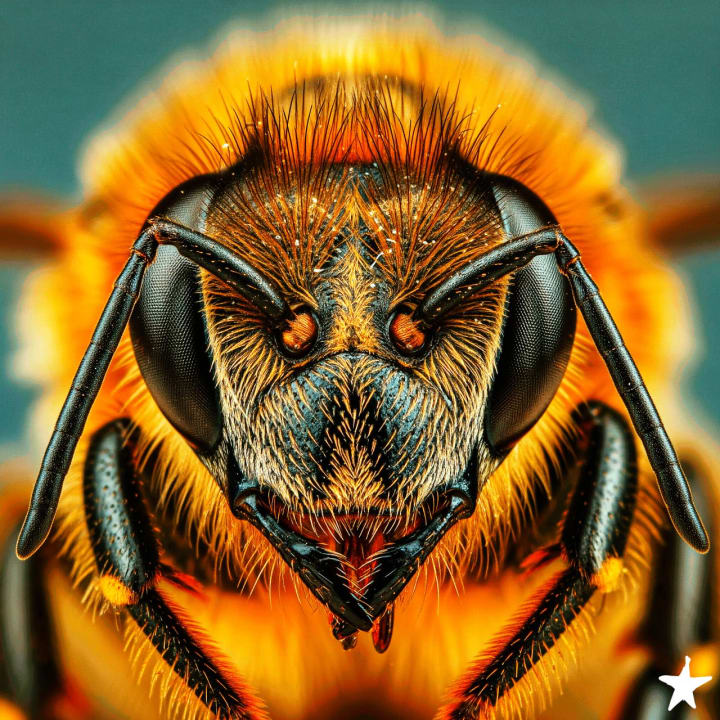
The secret lies in the honeybee’s antennae. Packed with sensitive receptors, these antennae can pick up even the faintest odors. In the lab, scientists measure their reactions using a method called electroantennography (EAG). When bees are exposed to substances like cocaine or heroin, their antennae generate strong electrical signals. Even diluted samples trigger responses, showing how finely tuned bees are to smells. This remarkable sensitivity comes from their survival instincts bees rely on scent to find flowers among thousands of competing aromas.
Training the Bees
Training bees is surprisingly quick. Using a technique called the Proboscis Extension Reflex (PER), scientists pair a drug odor with a sweet sugar-water reward. The bees soon learn to associate the smell with food. When they detect the scent again, they extend their tongue-like proboscis a simple movement that humans or sensors can monitor. This training takes only a few minutes, much faster than the months required for a sniffer dog.

Researchers also use a different approach called aversive conditioning. At Giessen University, bees were placed in small chambers where heroin vapor was paired with a mild electric shock. The bees quickly learned to avoid the smell, and even remembered it in later tests. Both methods show how adaptable and quick learners bees can be.
From Lab to Real Life
Turning bee training into real-world tools is already underway. Devices like the “Wasp Hound,” originally built for wasps, have been adapted for bees. These portable units hold trained bees inside. When air samples from luggage or vehicles are pumped in, cameras track the bees’ responses. If they extend their proboscis or move away from a smell they’ve been conditioned to avoid the device raises an alarm.

Reports also suggest bees could be used in handheld detectors, similar to explosive sniffers. Police labs in Germany have already tested bees against real narcotics, confirming their ability to detect substances beyond heroin and cocaine, including cannabis and amphetamines.
Why Bees Over Dogs?
Sniffer dogs have long been the gold standard, but they come with challenges. Training a single dog can cost more than $50,000 and takes months or years. Dogs also tire, need handlers, and can be difficult to retrain when drug laws change for example, with marijuana legalization.
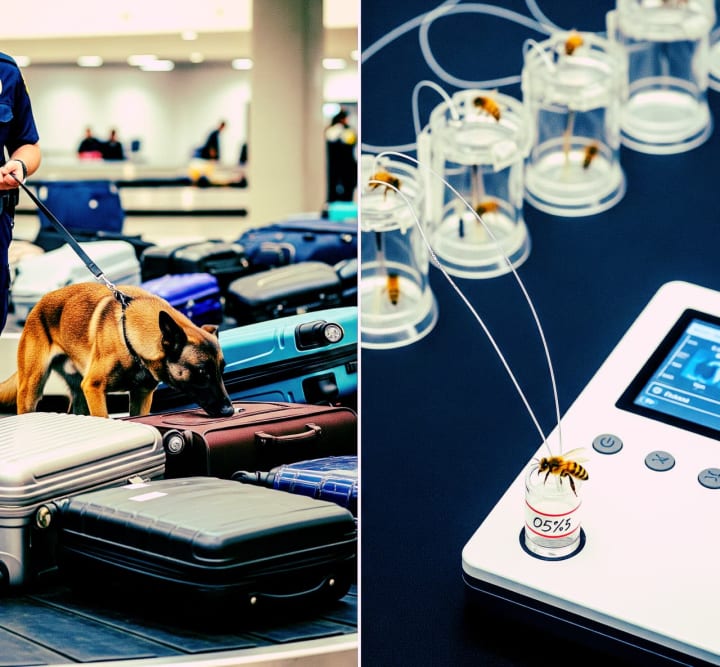
Bees, on the other hand, are inexpensive and abundant. A single hive provides thousands of candidates, and after training, bees can either continue working or be released back into the environment. Importantly, research groups stress humane handling. Bees are briefly chilled to make them easier to work with, and any electric shocks are mild, similar to static electricity.
The Road Ahead
Of course, there are still hurdles. Bees’ reliability outdoors, where weather and competing scents might interfere, remains a challenge. Devices also need further development to be practical at airports or borders. Still, lab tests show promising accuracy, and researchers are exploring ways to pair bees with artificial intelligence for real-time analysis.
The possibilities go beyond drug detection. Since bees can detect subtle chemical changes, scientists are studying whether they could one day help diagnose diseases like tuberculosis or even cancer from a patient’s breath.
A Small Hero for a Big Problem
Honeybees have always been vital for life on Earth, but their role may soon extend beyond pollination. With their incredible sense of smell and ability to learn quickly, they could become an unexpected but powerful ally in the fight against drug trafficking. It’s a reminder that sometimes the smallest creatures hold the biggest solutions.
About the Creator
Muzamil khan
🔬✨ I simplify science & tech, turning complex ideas into engaging reads. 📚 Sometimes, I weave short stories that spark curiosity & imagination. 🚀💡 Facts meet creativity here!
Keep reading
More stories from Muzamil khan and writers in Education and other communities.
Scientists discovered a fierce predator from Patagonia with bone-crushing jaws
Seventy million years ago, in what is now southern Patagonia, a powerful predator lurked in the shadows of dinosaurs. It wasn’t a T. rex or a raptor, but a fierce crocodile relative with jaws strong enough to crush bones. Scientists have now unveiled this creature, named Kostensuchus atrox, in a study published on August 27, 2025, in the journal PLOS ONE. The discovery paints a vivid picture of the Late Cretaceous ecosystem, just before the asteroid strike that ended the age of dinosaurs.
By Muzamil khan5 months ago in Education
Why Great Content Beats Great Code in Modern Media Strategy
Content Is the Core of Every Media Strategy Modern media strategy often starts with tools, platforms, and automation. Many teams believe better code will solve engagement problems. This idea sounds logical, but it misses a key truth. Great content beats great code in media strategy because people respond to meaning, not mechanics.
By James Kaminsky3 days ago in Education


Comments
There are no comments for this story
Be the first to respond and start the conversation.