
Guide to Become a Certified EKG Technician: A Beginner Guide
EKG Technician tips

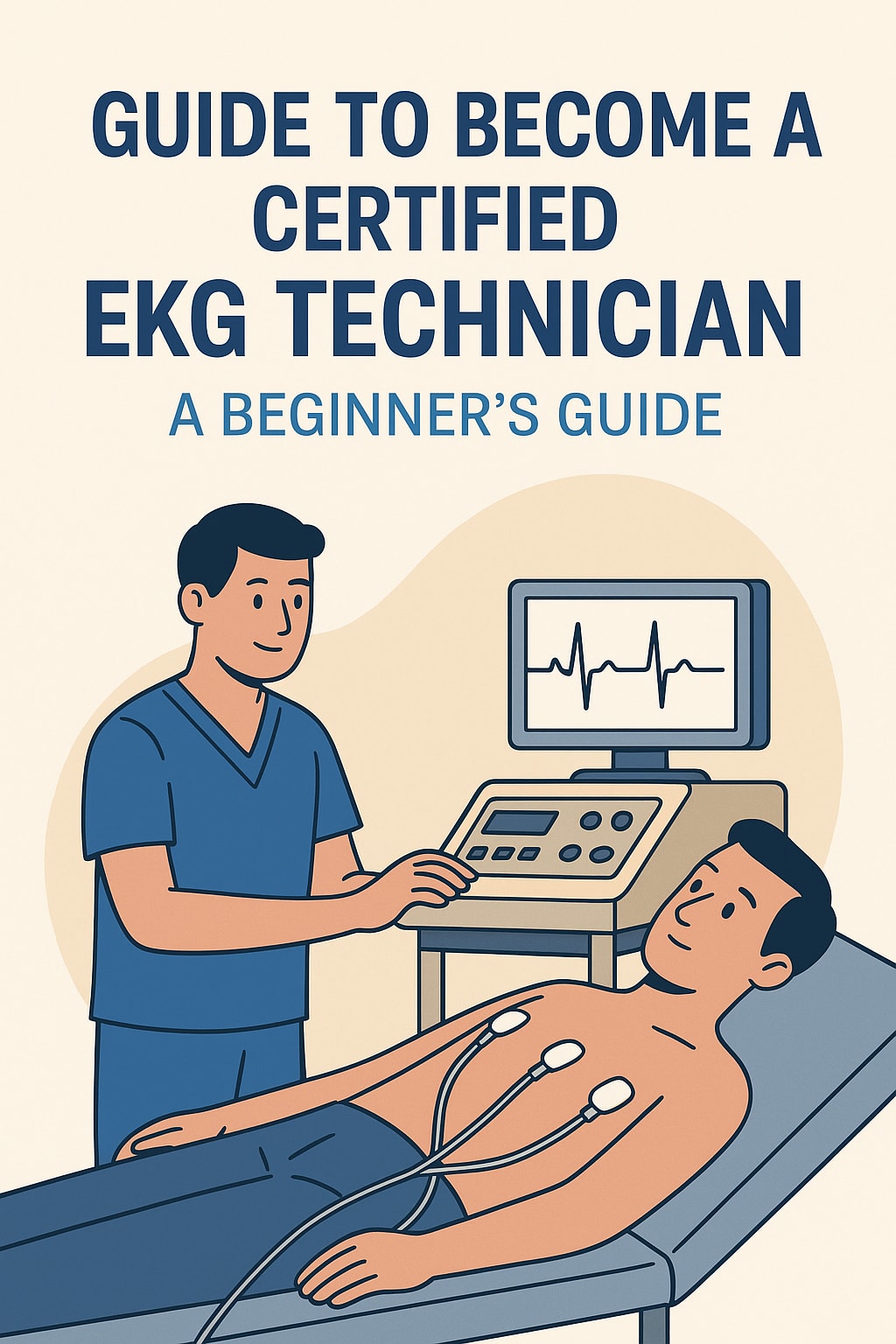
Launching a career in healthcare doesn’t always require years of school or expensive tuition. Some careers allow you to step into the medical world quickly, learn practical skills, and make a real difference for patients almost immediately. Becoming a Certified EKG Technician is one of those paths.
If you’ve ever wondered how to get certified, what the job looks like, or whether this field is right for you, this guide breaks everything down in a clear, beginner-friendly way.
________________________________________
Why EKG Technicians Matter
Every year, millions of patients are tested for heart conditions. EKG Technicians play a crucial role in that diagnostic process. They prepare patients, place electrodes, record cardiac activity, and ensure physicians receive accurate, readable tracings.
Their work might look simple from the outside, but accurate lead placement, patient comfort, and clean recordings are essential for proper diagnosis.
Because of this, trained and certified technicians are in constant demand in hospitals, clinics, and diagnostic labs.
________________________________________
Is This Career Right for You?
Before jumping in, it helps to understand the nature of the work. You may enjoy this career if you:
• Like interacting with patients from different backgrounds
• Pay attention to detail
• Enjoy technology and hands-on tasks
• Stay calm in clinical environments
• Prefer a stable, high-demand medical job with room to grow
If those traits fit you, EKG technology can be an excellent fit.
________________________________________
The Basic Requirements
The entry requirements are refreshingly simple:
• A high school diploma or GED
• Basic English communication skills
• Ability to complete a short training program
• CPR/BLS certification (varies by employer)
Many people enter this career with no previous medical experience. The training is structured for beginners.
________________________________________
How to Start Your Training
Training programs typically fall into three categories:
1. Fast-Track EKG Technician Courses
These last 6–12 weeks and focus directly on EKG procedures, equipment operation, rhythm basics, and patient interaction.
2. Medical Assistant or Phlebotomy Programs with EKG Components
These programs give you a broader skill set plus EKG training. They take longer but open more job opportunities.
3. Community College Certificate Programs
Often more in-depth and include clinical hours.
Whichever route you choose, make sure the program includes hands-on practice. Reading about lead placement is not enough. You need repetition, real equipment, and real or simulated patients.
________________________________________
What You Will Learn
A quality EKG program covers:
• Cardiac anatomy and how the heart’s electrical system works
• How to set up and operate EKG machines
• Standard 12-lead placement
• Identifying and fixing artifacts
• Basic rhythm interpretation
• Safety, infection control, and patient comfort
• Documentation and HIPAA rules
The combination of technical skill and patient care is what makes this role so valuable.
________________________________________
Why Certification Matters
Although some employers hire uncertified techs, certification dramatically boosts your chances of landing a job and earning higher pay. Certification shows employers you can perform accurate EKGs, maintain professionalism, and understand core safety principles.
To prepare for certification, many students use online practice exams. If you want structured preparation, you can also try this EKG Technician Exam practice resource.
How to Prepare for the Certification Exam
Studying for the exam doesn’t have to be overwhelming. A simple, consistent routine works best. Here’s a reliable preparation strategy:
1. Study the Exam Blueprint
Know what topics are tested so you can target your studying.
2. Create a Weekly Study Plan
Short sessions every day are more effective than long sessions once a week.
3. Master Lead Placement
Being off by even one intercostal space affects the tracing.
4. Practice Rhythm Strips Regularly
Start with sinus rhythms, then gradually add arrhythmias.
5. Use High-Quality Practice Questions
Practice builds test confidence and reinforces real-world skills.
6. Simulate the Test Environment
Timed practice helps reduce anxiety and improves focus on exam day.
________________________________________
Taking the Certification Exam
Once you're ready, schedule your exam with your chosen credentialing body. On test day:
• Arrive early
• Bring proper ID
• Stay calm and pace yourself
• Review each question carefully
Most candidates who prepare consistently pass on their first attempt.
________________________________________
What Happens After Certification?
Once certified, you can apply for positions at:
• Hospitals
• Cardiology practices
• Diagnostic laboratories
• Urgent care centers
• Mobile cardiac testing companies
Common job titles include:
• EKG Technician
• ECG Technician
• Cardiac Monitoring Technician
• Stress Test Technician (with additional training)
The field has clear growth paths. Many techs move into advanced cardiac roles, medical assisting, phlebotomy, or even nursing over time.
________________________________________
Salary Expectations
Pay varies by state, but EKG Technicians generally earn competitive entry-level medical salaries. Once you gain experience or additional credentials, your earning potential increases significantly.
Night shifts, weekend roles, and specialized stress-testing roles often pay more.
________________________________________
How to Stand Out to Employers
You can make your resume more appealing by highlighting:
• Your certification
• Any clinical hours performed
• Number of EKGs completed during training
• Patient care experience
• Strong communication skills
• Attention to detail and reliability
Employers especially value techs who demonstrate confidence with lead placement and patient interaction.
________________________________________
Mistakes to Avoid When Starting Out
Here are some common pitfalls beginners face:
• Relying only on theory without real practice
• Forgetting electrode placement basics under pressure
• Ignoring patient comfort or communication
• Overlooking artifacts and assuming the tracing is acceptable
• Not investing in continuing education
Good habits early on lead to long-term success in this field.
________________________________________
Continuing Your Education
Most certifications require renewal every one or two years. This helps ensure that technicians stay current with:
• Updated safety standards
• New cardiac technology
• Professional best practices
Taking short refresher courses or attending workshops will help you stay sharp and confident.
________________________________________
Final Thoughts: Is Now the Right Time?
If you're looking for a fast, reliable pathway into the healthcare field, becoming a Certified EKG Technician is one of the strongest options available. It offers meaningful work, stable demand, and a clear learning path — without years of schooling.
Whether you're just starting your career, switching fields, or looking to grow in healthcare, this profession offers flexibility, opportunity, and purpose.
About the Creator
PrepPool
PrepPool helps students prepare smarter for exams through realistic practice questions, exam-aligned study resources, and practical strategies for AP, nursing, healthcare, and professional certification exams.
Overcome Math Anxiety: A 21-Day Plan with Daily Practice and Math AI
Mathematics often provokes anxiety among students and adults alike—a feeling of unease that can hinder learning and reduce confidence. However, behavioral science shows that small, consistent habits, or "micro-practices," can gradually reshape one's relationship with math. When combined with the aid of advanced AI tools, these tiny daily exercises become even more effective. In this article, we explore a 21-day plan designed to help overcome math anxiety by pairing brief daily practice with the instant feedback of Math AI.
By Violet Chen3 days ago in Education
The Power of Structure: How Creative Discipline Drives Entrepreneurial Success
Entrepreneurship is often celebrated as a field fueled by bold ideas and relentless creativity. Yet, behind every successful venture lies something far less glamorous but equally essential—discipline. The combination of creativity and discipline forms the foundation of lasting innovation. While creativity sparks ideas, discipline transforms them into action. The balance of these two qualities defines whether an entrepreneur remains a dreamer or becomes a true innovator.
By Kyle McAuley6 days ago in Education



Comments
There are no comments for this story
Be the first to respond and start the conversation.