
From Stars to Infinity: Understanding the Universe's Edge
Unveiling the Secrets of the Cosmic Wall

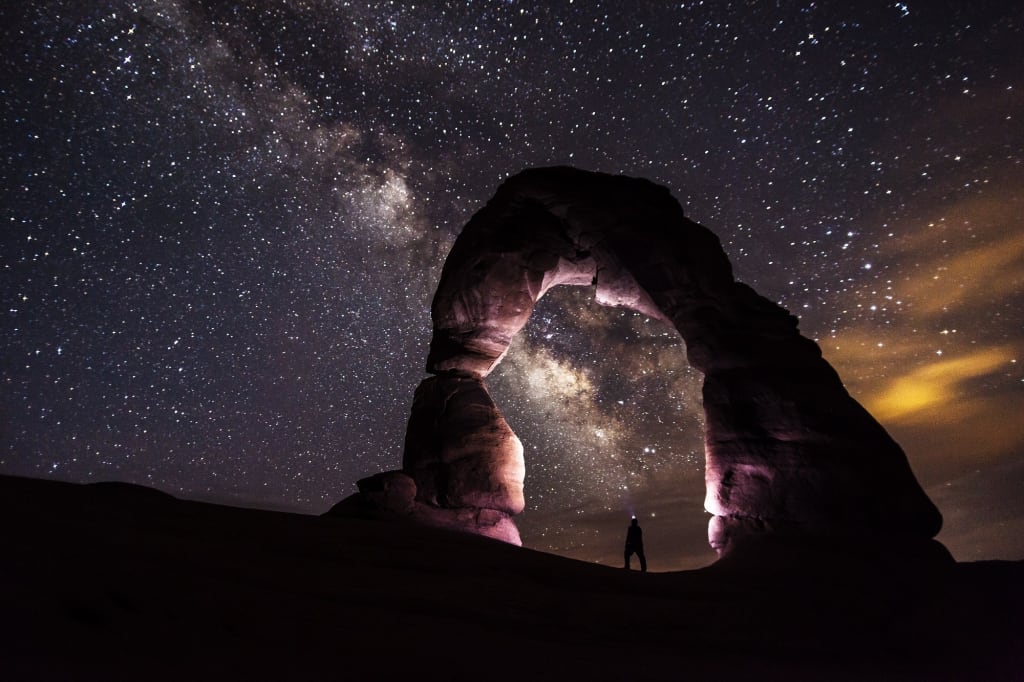
The universe is a realm of wonders, filled with incredible phenomena that continue to astonish and intrigue us. From the enigmatic black holes tearing apart enormous stars to pulsars spinning at incredible speeds and emitting powerful beams of energy, our universe is an expansive canvas of colorful nebulae and galaxies of every size and color. However, it is not infinite, and beyond its boundaries lies an absolute nothingness. In this narrative, we embark on a journey to explore the vastness of our universe, starting from the innermost layers and venturing toward its boundaries, where we will delve into the possibilities of other universes and the enigmatic phenomena of black holes.
The Nesting Doll Universe
Our universe is akin to a humongous nesting doll, each layer nested within another. The largest doll is the observable universe, containing galaxies and nebulae, and within it lies our galaxy, the Milky Way. Within our galaxy is our solar system, with Earth as the smallest doll of all.
Crossing Boundaries - A Journey of Light-Speed
To embark on this cosmic journey, we board a spaceship capable of moving a hundred times faster than the speed of light. Our first boundary is the Carmen line, separating Earth's atmosphere from outer space, located 62 miles above sea level. As we fly further, we leave the solar system, passing Mars, Jupiter, Saturn, Uranus, and Neptune until we reach the heliosphere, the boundary of our solar system, where the solar wind gives way to interstellar space.
In the dark of interstellar space, we encounter Voyager 1 and Voyager 2, the first human-made objects to venture into this vast expanse. Further ahead, we reach the Oort Cloud, a massive collection of asteroids surrounding our solar system, believed to be the source of comets and meteorites.
The Milky Way and Beyond
Zooming past stars and galaxies, we travel towards the edge of our galaxy, where the interstellar wind vanishes, and bright dots of distant galaxies emerge. We find ourselves amid the Laniakea supercluster, thousands of galaxies bound together by gravity. Zooming out even further, we encounter the observable universe, a vast expanse with hundreds of billions of galaxies and a staggering number of stars.
The Possibility of Parallel Universes
As we marvel at the enormity of our observable universe, we explore the concept of parallel universes. Scientists speculate that our universe may be just one bubble among many, and each bubble could house a different universe with unique galaxies and nebulae. If these bubbles collide or interact, it could lead to the creation of new voids or structures, such as the Arduinus Supervoid.
The Mysterious Black Holes
Black holes remain one of the most enigmatic objects in the universe. With their immense gravitational pull, they warp both space and time, making them a gateway to new possibilities. Some scientists propose that black holes could be passages to other universes or even white holes, the opposite of black holes, from which nothing can escape.
The Dance of Galaxies - Mergers and Collisions
The universe is a dynamic dance of galaxies, constantly moving and evolving. As we delve into the future, we encounter the Andromeda galaxy, heading towards a collision with the Milky Way. Such mergers can lead to the destruction of planets or stars, while others may be thrown into dark space. When galaxies collide, their central black holes may merge, creating an active galactic nucleus and sending out powerful jets of energy.
Giant Galactic Structures
In the vastness of the universe, we come across giant galactic structures like the South Pole Wall, the Hercules Corona Borealis Great Wall, and the Huge Large Quasar Group. These structures are clusters of galaxies, bound together by gravity, and can span billions of light-years across. Some regions, known as voids, are vast areas devoid of matter, separated by the galaxy clusters and walls.
Wormholes and Inter-Universal Travel
To reach the boundaries of our universe and explore beyond, we delve into the concept of wormholes. These theoretical shortcuts through spacetime could potentially lead to other universes or parallel worlds. Black holes may harbor these wormholes, making them potential gateways to other realities.
Conclusion
As our cosmic journey comes to an end, we are left with a sense of awe and wonder. Our universe, with its colossal structures and enigmatic phenomena, continues to reveal its secrets, inspiring us to explore further and unravel the mysteries that lie at the edge and beyond. The possibilities of parallel universes, the mysteries of black holes, and the potential for inter-universal travel open new vistas for human exploration and understanding of the cosmos.
About the Creator
Keep reading
More stories from chamara ranasinghe and writers in Education and other communities.
The Challenger Space Shuttle Disaster
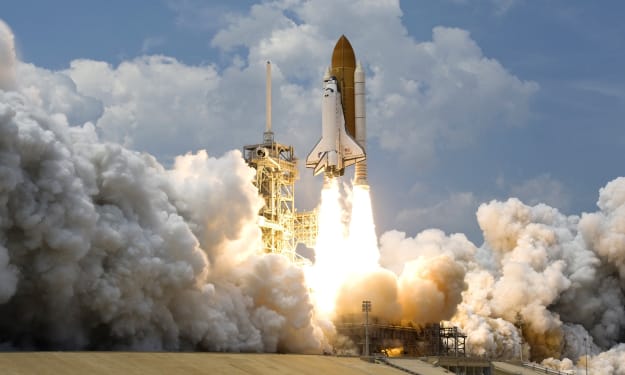
73 seconds after its triumphant liftoff, tragedy struck the Challenger space shuttle on January 28, 1986. What was supposed to be a historic voyage turned into one of the darkest days in space exploration history. The iconic white solid rocket boosters, which had propelled the shuttle into the sky, were now engulfed in flames due to a compromised seal, causing a catastrophic failure in the supporting struts connecting the rockets to the orange external fuel tank. A massive explosion followed, shattering the hopes and dreams of all involved.
By chamara ranasinghe3 years ago in Education
The Lean Advantage: How Small Improvements Create Massive Business Wins
In today’s fast-moving market, businesses don’t always need massive overhauls to see major growth. The real competitive advantage often comes from Lean process improvement—small, consistent changes that reduce waste, improve speed, and strengthen customer value. With a proactive approach, companies can spot inefficiencies early, prevent recurring problems, and build smarter systems before minor issues become costly setbacks.
By Duke Valentour7 days ago in Education
The Path to Salvation
The late autumn evening air filled the monk's lungs, but it wasn't the season that chilled his bones. The heavy-handed presence of evil he had sensed upon entering the woods surrounding this mountain village had not bothered to conceal itself from him.
By Made in DNA4 days ago in Fiction



Comments
There are no comments for this story
Be the first to respond and start the conversation.