
From Sand to Circuits: The Journey of Computer Chips
How the Smallest Technology Shapes Our Biggest Innovations
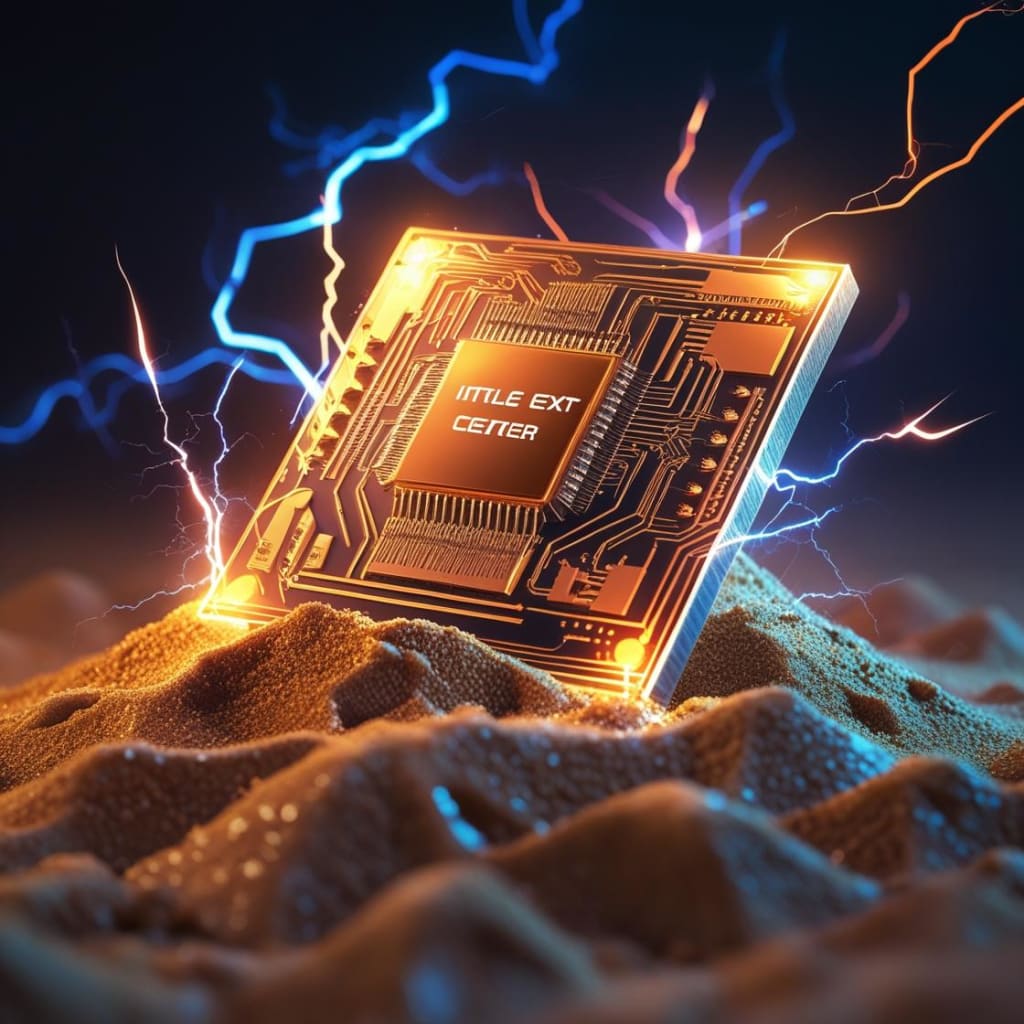
When you swipe your phone screen, stream a video, or play a game, you’re relying on something you almost never see: a computer chip. These tiny squares of silicon are the “brains” behind every modern gadget. Without them, the world as we know it would grind to a halt. But here’s the fun part — they start out as nothing more than grains of sand.
From Sand to Silicon
Sand may look ordinary, but hidden inside is silicon, one of Earth’s most common elements. Engineers heat and purify it until they create a shiny crystal called an ingot. Imagine a giant crystal log, taller than you and heavier than a car. That log is sliced into paper-thin discs called wafers. Each wafer is the foundation for thousands of chips.
Designing the Blueprint
Before chips can be built, scientists design them like architects planning a city. The “streets” on this city map are pathways for electricity. A modern chip may have billions of these tiny roads, each smaller than a red blood cell. Every road, bridge, and tunnel is carefully planned so signals can race through at lightning speed.
The Magic of Photolithography
This is where the high-tech magic begins. Using a process called photolithography, engineers shine ultraviolet light through stencils onto the wafer. Think of it as a super-powered 3D printer that prints with light instead of ink. Each pattern forms part of a circuit, smaller than a speck of dust. Dozens of these layers stack on top of each other like floors of a skyscraper.
Transistors: Tiny Switches With Big Power
At the heart of every chip are transistors — tiny switches that can turn on or off. On means “1,” off means “0.” That’s the binary code, the secret language of all computers. Billions of these switches flip every second to process information. To put it into perspective, the world’s fastest chips can perform over a trillion calculations per second.
Testing for Perfection
Not all chips make the cut. A single mistake — a scratch, a dust particle — can ruin the entire design. That’s why chip factories are cleaner than hospitals. Workers wear special suits so even a single hair won’t contaminate the wafers. Each chip is tested under powerful microscopes. Only the flawless ones are sent forward.
The Global Journey
Here’s something surprising: most chips aren’t made in the U.S. Factories in Taiwan, South Korea, and a few other countries handle the majority of global production. After testing, chips are packaged and shipped across the world. By the time one reaches your phone, it may have traveled thousands of miles and passed through dozens of machines.
Why It All Matters
Without chips, there would be no smartphones, no laptops, no self-driving cars, no medical imaging, and no space travel. Even everyday objects — like washing machines and microwaves — rely on them. The 2020 global chip shortage showed just how critical they are. Cars sat unfinished, electronics skyrocketed in price, and industries slowed down.
Every year, engineers race to shrink chips further while making them more powerful. The first microchip, invented in 1958, could fit a few dozen transistors. Today’s chips can fit tens of billions. That’s like squeezing the population of Earth into a single room — and still giving everyone space to move.
So the next time you scroll through a video, remember: the brain inside your device started as a simple grain of sand. From sand to circuits, chips are proof that the smallest technology can change the world in the biggest ways.
About the Creator
Tech Tellers
Digital creator sharing uqick insights on focus, growth, and real-world side hustles. Helping people build better habits, one post at a time.
Keep reading
More stories from Tech Tellers and writers in Education and other communities.
How Does AI Work? Explaining Artificial Intelligence for Kids & Teens
Artificial Intelligence, or “AI,” has become one of those phrases you hear everywhere—on the news, in games, even at school. But what does it actually mean? Is it like a robot brain? Is it magic? Or is it something else entirely?
By Tech Tellers7 months ago in Education
Beyond the Protein: Mastering Wine Pairings by Understanding the Sauce
When planning a remarkable dinner, many hosts instinctively choose the wine based on the main protein. They assume red wine belongs with beef and white wine suits chicken or fish. However, this traditional rule often oversimplifies the art of pairing. Because sauces concentrate seasoning, texture, and aroma, they define the dish’s personality more than the protein itself. Therefore, if you want a truly elevated dining experience, you should evaluate the sauce before selecting the wine.
By Joel Barjenbruch3 days ago in Education
The Invisible War for Your Mind: How Social Media Hijacked Human Attention — And How to Take It Back
The Invisible War for Your Mind: How Social Media Hijacked Human Attention — And How to Take It Back From dopamine loops to digital manipulation — why your focus is no longer fully yours
By The Insight Ledger 2 days ago in Education
Who is your "Person"?
It's important to recognize that you cannot go through life as easily on your own. My name is Elizabeth and I'm a survivor of child abuse and horrific trauma. Healing from trauma is not a quick fix and recognizing that it will take time, is part of the struggle.
By Elizabeth Woods4 days ago in Psyche




Comments
There are no comments for this story
Be the first to respond and start the conversation.