

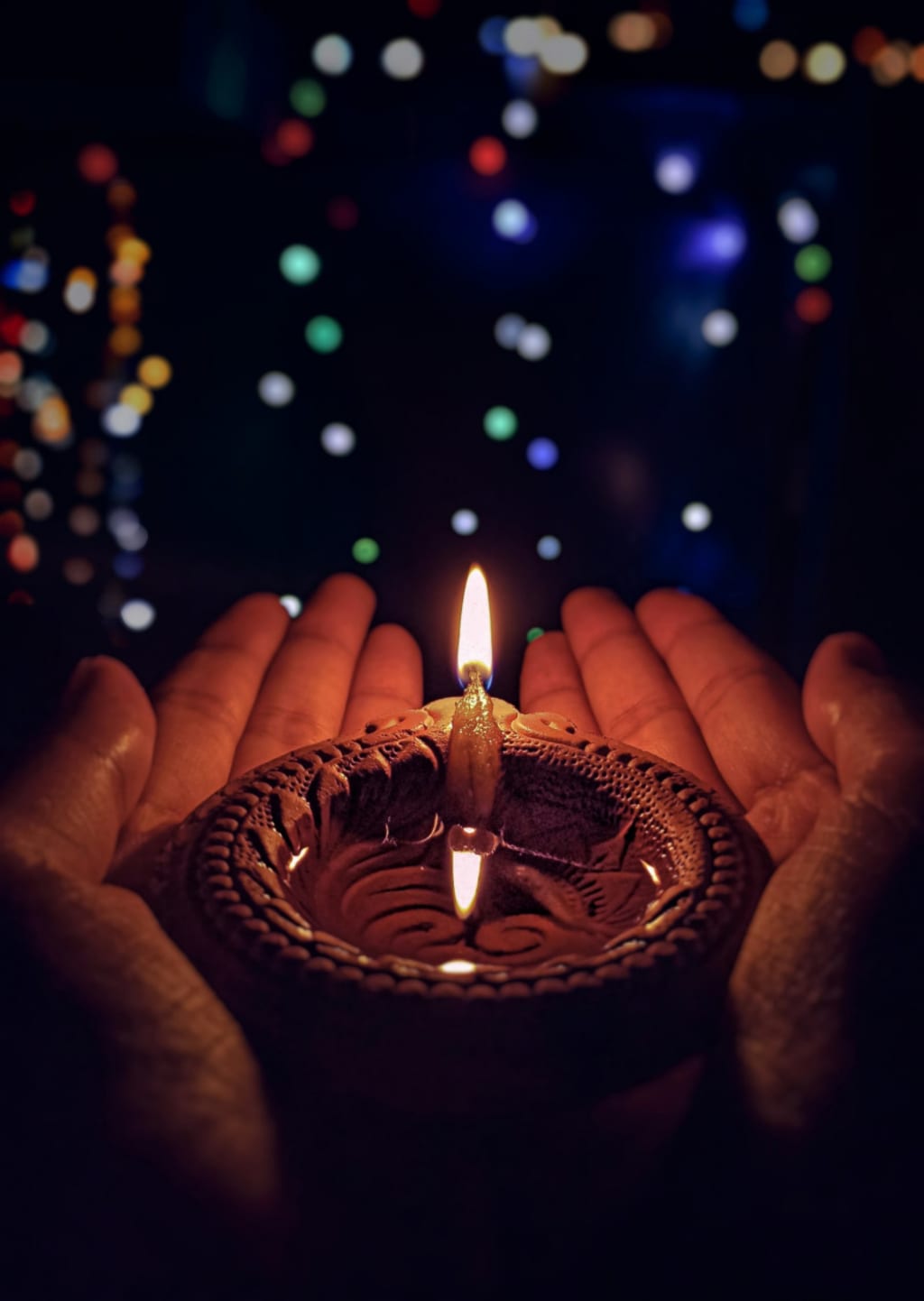
Hindus in Nepal and some regions of India celebrate Tihar, a five-day holiday, most commonly. The celebration, known as Deepawali or the "Festival of Lights" in the lunar calendar, is one of the most significant occasions in Nepalese culture. The phenomenon can be seen around late October or early November, depending on when the moon is in the sky.
Tihar honors the bond between people and the supernatural natural world. Crows, dogs, cows, and the Hindu god of death, Yama, are just a few creatures worshipped during the event. Tihar is a celebration marked by prayers, feasts, and giving and receiving gifts, with each day honoring a different god.
The first day of Tihar sometimes referred to as Kaag Tihar, is devoted to crows. Crows are said to be the messengers of Yama, the deity of death, and are responsible for transporting the souls of the deceased to the afterlife. On this day, people adorn their homes with dazzling lights and provide food for the crows as a sign of respect and appreciation.
The second day referred to as Kukur Tihar, is devoted to dogs. Given their reputation as devoted friends, dogs are revered on this day and decorated with red tikas and flower garlands. Dogs play a significant role in the Tihar festivities because people believe dogs safeguard the souls of the dead and guard the entrances of the afterlife.
A celebration of cows on the third day of Tihar is also known as Gai Tihar. Cows are considered sacred in Hinduism and are symbolic of plenty, fertility, and wealth. On this day, cows are revered, fed, and decorated while being the subject of dances.
The fourth day of Tihar is Laxmi Puja, dedicated to the Hindu goddess of wealth, prosperity, and good fortune. On this day, people perform puja (worship) to Laxmi, light lamps and candles, and exchange gifts with loved ones. The night is filled with music, dance, and feasting, making it one of the most festive and joyful days.
On the fifth and last day of Tihar, known as Bhai Tika. The worship of brothers and sisters. Sisters make a puja for their brothers on this day and present them with tikas and gifts to win their blessings and protection. The day honors sibling relationships and the love and support that siblings provide to one another.
Tihar is also characterized by the giving and receiving of presents as well as the sharing of food and treats with family and friends. The streets are alive with music and singing, and people decorate their homes with lights, rangolis (colorful floor decorations), and flowers. The event was held for families to gather, create new memories, and strengthen their familial ties.
In conclusion, Tihar is a simple and joyful celebration that honors the bond between people and the divine between people and nature. It's a time for people to gather together, give thanks and prayers, and celebrate the love and support that families and communities have for one another. The event is a significant component of Nepalese culture, making it a highlight of the year. Tihar symbolizes the victory of good over evil and is a celebration of the bond between humans and animals, particularly the crow, dog, and cow. The festival holds great cultural and religious significance and is an important part of Nepalese and Indian heritage.
About the Creator
Insang Limbu
Artists use lies to tell the truth. Yes, I created a lie. But because you believed it, you found something true about yourself.
Keep reading
More stories from Insang Limbu and writers in Education and other communities.
The Brave and Cunning Queen
Once upon a time, there was a small kingdom called Ardenia. It was a peaceful kingdom, where the people lived in harmony with each other and nature. The kingdom was ruled by a fair and just king named Harold, who was beloved by all his subjects.
By Insang Limbu3 years ago in Fiction
How Mathematical Principles Drive Stable Monthly Results in Index Trading
Index trading has gained popularity among investors who value consistency over speculation. While market headlines often focus on short-term price swings, steady monthly returns in index trading are built on mathematical logic rather than predictions. By understanding how numbers shape market behavior, traders can develop strategies that prioritize reliability and long-term growth over emotional decision-making.
By Agast Mishraa day ago in Education




Comments
There are no comments for this story
Be the first to respond and start the conversation.