
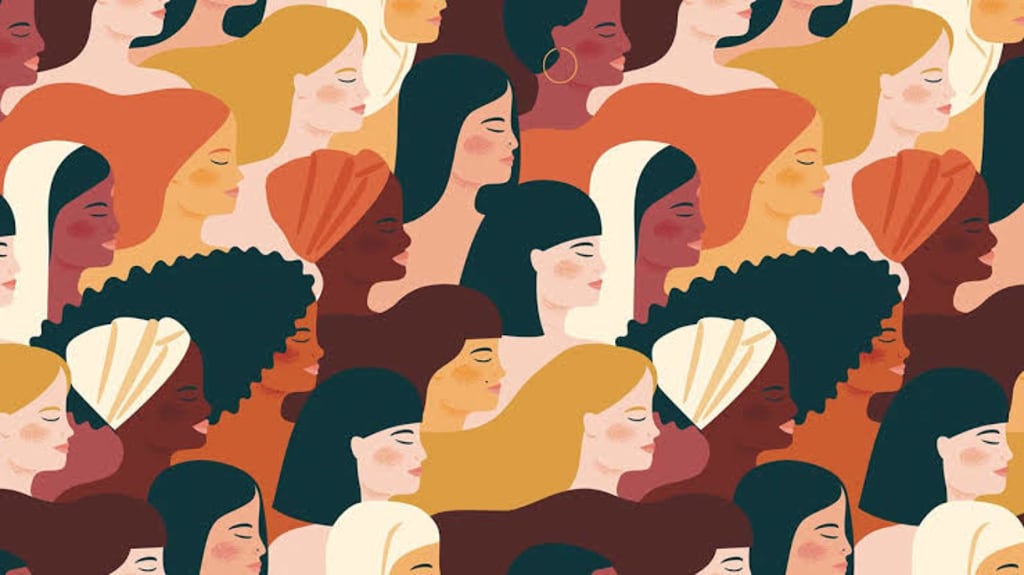
In the ongoing pursuit of gender equality, feminism has emerged as a significant social movement with a rich history and ongoing relevance in today's world.
At its core, feminism is a belief in the equal rights and opportunities of all people, regardless of gender. While its roots can be traced back to the late 19th century, the movement gained momentum in the 1960s and 70s with the rise of second-wave feminism, which focused on issues such as reproductive rights, workplace discrimination, and domestic violence.
Today, feminism continues to be a driving force for change, with activists working to address issues such as the gender pay gap, sexual harassment and assault, and the underrepresentation of women in positions of power.
However, the movement is not without its critics, some of whom argue that feminism has gone too far and is now discriminatory against men. Others view feminism as a narrow movement that only addresses the concerns of privileged women.
Despite these critiques, feminism remains a powerful and relevant force for social change, challenging traditional gender roles and advocating for a world in which all individuals are treated with dignity and respect, regardless.
#MeToo Movement: In October 2017, the hashtag #MeToo became a viral social media movement, in which women shared their experiences of sexual harassment and assault.
Women's March: The Women's March i.s a series of protests held annually around the world to advocate for women's rights and gender equality.
Time's Up: Time's Up is a movement launched in January 2018 by prominent women in the entertainment industry to fight against sexual harassment and discrimination in the workplace.
Equal Pay Day: Equal Pay Day is an annual event held in many countries, including the United States, to raise awareness about the gender pay gap and advocate for equal pay for women.
Free the Nipple: The Free the Nipple movement is a campaign that advocates for the right of women to go topless in public, arguing that men and women should be treated equally in this regard.
Reproductive rights: Various movements have advocated for reproductive rights, including access to birth control, safe and legal abortion, and comprehensive sex .
FOR EMPHASIS , THIS IS A POEM THAT DESCRIBES A WOMAN.
Pride of her Mother,
Wombs sweetness tasty
Another has come, a generation to come.
At her entrance,
The ground shaketh not.
She is the pillar, a city strengthener.
Strands of her hair counting generations that she will bear
Laying and growing to cherish her glittering skin.
She shines like the stars at night and
Gives light to the world by day.
Oh! Pride of her mother,
Whilst you plant your feet on the soil,
Our eyes adores the imprints of your feet
Your arms rest on your hips
Tsk! tsk!
Men’s taste begin to appear on their faces
Mouth waters at every move
Every step has imprints on our minds.
Many women played important roles in the Civil Rights Movement, from leading local civil rights organizations to serving as lawyers on school segregation lawsuits. Their efforts to lead the movement were often overshadowed by men, who still get more attention and credit for its successes in popular historical narratives and commemorations. Many women experienced gender discrimination and sexual harassment within the movement and later turned towards the feminist movement in the 1970s. The Civil Rights History Project interviews with participants in the struggle include both expressions of pride in women’s achievements and also candid assessments about the difficulties they faced within the movement.Older interviewees emphasize the opportunities that were available to an earlier generation of women. Mildred Bond Roxborough, a long-time secretary of the National Association for the Advancement of Colored People, discusses the importance of women leaders in local branches: “Well, actually when you think about women's contributions to the NAACP, without the women we wouldn't have an NAACP. The person who was responsible for generating the organizing meeting was a woman. Of course, ever since then we've had women in key roles--not in the majority, but in the very key roles which were responsible for the evolution of the NAACP. I think in terms of people like Daisy Lampkin, who was a member of our national board from Pittsburgh; she traveled around the country garnering memberships and helping to organize branches. That was back in the '30s and '40s before it became fashionable or popular for women to travel. You have women who subsequently held positions in the NAACP nationally as program directors and as leaders of various divisions.” She goes on to discuss the contributions of many women to the success of the NAACP.
Doris Adelaide Derby, another SNCC activist, remembers that the challenge and urgency of the freedom struggle was a formative experience for young activist women, who had to learn resourcefulness on the job: “I always did what I wanted to do. I had my own inner drive. And I found that when I came up with ideas and I was ready to work to see it through, and I think that happened with a lot of women in SNCC. We needed all hands on deck, and so, when we found ourselves in situations, we had to rely on whoever was around. And if somebody had XYZ skills, and somebody only had ABC, we had to come together. We used to joke about that, but in reality, the women, you know, were strong. In the struggle, the women were strong.”
Ruby Nell Sales, who later overcame psychological traumas from the racial violence she witnessed in the movement, encourages us to look beyond the simplistic story of Rosa Parks refusing to move to the back of the bus in Montgomery. As she explains, Parks was a long-time activist who had sought justice for African American women who were frequently assaulted—both verbally and physically-- in their daily lives: “…When we look at Rosa Parks, people often think that she was – she did that because of her civil rights and wanting to sit down on the bus. But she also did that – it was a rebellion of maids, a rebellion of working class women, who were tired of boarding the buses in Montgomery, the public space, and being assaulted and called out-of-there names and abused by white bus drivers. And that’s why that Movement could hold so long. If it had just been merely a protest about riding the bus, it might have shattered. But it went to the very heart of black womanhood, and black women played a major role in sustaining that movement.”
The Civil Rights History Project includes interviews with over 50 women who came from a wide range of backgrounds and were involved in the movement in a myriad of ways. Their stories deepen our understanding of the movement as a whole, and provide us with concrete examples of how vital they were to the gains of the Civil Rights Movement.
Articles and Essays
The March on Washington
Collecting and Presenting the Freedom Struggle at the Library of Congress
Music in the Civil Rights Movement
Nonviolent Philosophy and Self Defense
School Segregation and Integration
The Murder of Emmett Till
Voting Rights
Women in the Civil Rights Movement
Youth in the Civil Rights Movement
Partnerships
The American Folklife Center in collaboration with Smithsonian National Museum of African American History and Culture
About the Creator
Keep reading
More stories from writers in Education and other communities.
Global Beer Industry Performance Across Developed and Emerging Economies
Beer is one of the oldest and most widely consumed alcoholic beverages in the world. With roots dating back thousands of years, beer has evolved from a simple fermented drink into a global industry that reflects cultural traditions, changing consumer lifestyles, and continuous innovation. Today, the global beer industry plays a significant role in the international beverage market, supporting millions of jobs and generating substantial economic value across developed and emerging economies.
By Bobby Yadavabout an hour ago in Education
Blue Gold The Quiet Revolution of Bangladesh Aquaculture in 2026
Bangladesh is often described as a land of rivers, but in 2026, it is more accurately described as a global leader in the "Blue Revolution." For decades, fish has been the primary source of animal protein for the Bangladeshi population encapsulated in the famous proverb "Mache Bhate Bangali" (Fish and rice make a Bengali). However, what was once a subsistence activity has transformed into a sophisticated, multi-billion dollar commercial industry. As we move through 2026, Bangladesh stands as one of the top five global producers of inland aquaculture, contributing significantly to its GDP and providing livelihoods for millions. Yet, this success is at a critical crossroads, facing the dual pressures of climate change and the complexities of graduating from the Least Developed Country (LDC) status.
By Neeraj kumar7 days ago in Education
Self Help: Grifters' Gospel
On Self-Help, Snake Oil, and the Illusion of Change Psychology professionals and students can be imagined on two opposite sides of a line called self-help books: likely a larger group opposes pop-science and step-by-step manuals filled with talk of success, journaling, and not giving a f**k; others love them, but they aren’t many.
By Avocado Nunzella BSc (Psych) -- M.A.P 3 days ago in BookClub




Comments
There are no comments for this story
Be the first to respond and start the conversation.