
Blue Gold The Quiet Revolution of Bangladesh Aquaculture in 2026
Bangladesh Aquaculture
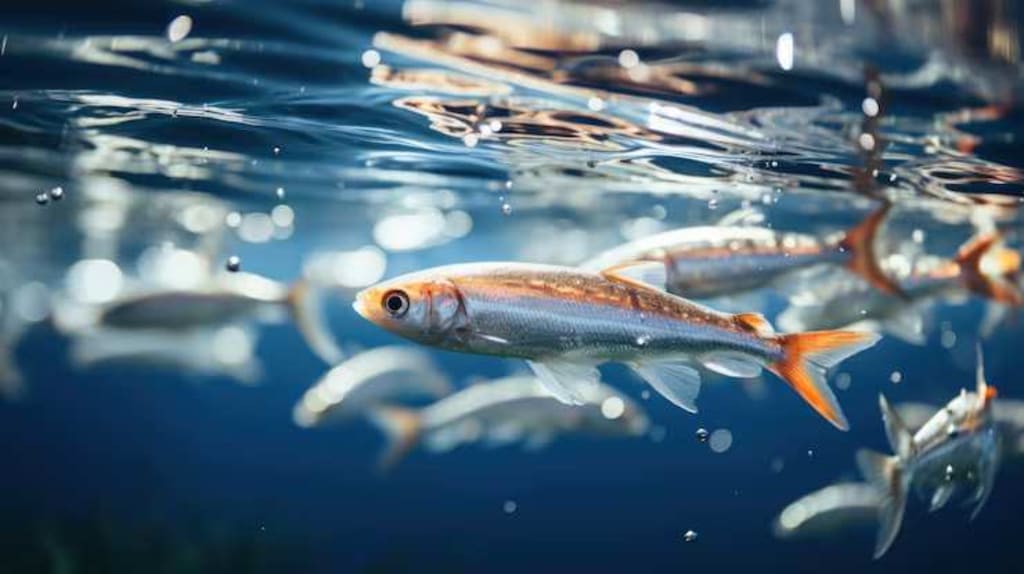
Bangladesh is often described as a land of rivers, but in 2026, it is more accurately described as a global leader in the "Blue Revolution." For decades, fish has been the primary source of animal protein for the Bangladeshi population encapsulated in the famous proverb "Mache Bhate Bangali" (Fish and rice make a Bengali). However, what was once a subsistence activity has transformed into a sophisticated, multi-billion dollar commercial industry. As we move through 2026, Bangladesh stands as one of the top five global producers of inland aquaculture, contributing significantly to its GDP and providing livelihoods for millions. Yet, this success is at a critical crossroads, facing the dual pressures of climate change and the complexities of graduating from the Least Developed Country (LDC) status.
The Economic Powerhouse: From Ponds to Global Markets
In 2026, the sheer economic scale of Bangladesh aquaculture is undeniable. The sector now contributes over 3.5% to the national GDP and nearly 25% to the total agricultural GDP. Total fish production has reached a milestone of nearly 5 million metric tons, with aquaculture (farming) contributing more than 58% of that total. This shift from wild-catch fisheries to intensive farming has been the engine of growth, providing food security for a population that is expected to reach 184 million by 2030. The commercialization of species like Tilapia, Pangas, and various Indian Major Carps (Rui, Katla, Mrigal) has turned small-scale pond owners into successful entrepreneurs, creating a vibrant rural middle class.
However, the headline story of 2026 is the resilience of the export sector. Bangladesh’s frozen fish and shrimp exports the "Blue Gold" have rebounded strongly, earning nearly $300 million in the last fiscal year. This rebound has been driven by a strategic pivot toward high-value markets in China and India, alongside traditional strongholds in the EU and the UK. To maintain this momentum, the industry has undergone a massive upgrade in traceability and quality control. Every batch of Black Tiger shrimp (Bagda) or Giant River Prawn (Golda) can now be traced back to its "Gher" (farm) using digital ledgers, meeting the strict phytosanitary standards of international buyers. This transparency is no longer a luxury but a survival requirement as the world demands ethical and clean seafood.
The LDC Graduation: A Looming Challenge for 2026 and Beyond
While the production numbers are celebrating, 2026 marks a significant psychological and economic shift: Bangladesh’s official graduation from the LDC category. For the aquaculture industry, this is a double-edged sword. For years, Bangladeshi seafood enjoyed duty-free and quota-free access to major global markets through schemes like the EU’s "Everything But Arms" (EBA). As these benefits begin to phase out, the industry faces a potential 10-15% drop in export competitiveness due to new tariffs. The "LDC clock" is ticking, and 2026 is the year where the industry must prove it can compete on quality and innovation rather than just low prices and subsidies.
To counter the loss of trade preferences, the government and private sector are aggressively moving up the value chain. Instead of exporting raw, frozen shrimp, 2026 has seen a surge in "Ready-to-Cook" and processed seafood products marinated fillets, breaded shrimp, and vacuum-packed fish curries. By exporting "convenience" rather than just "commodity," Bangladesh is capturing a higher margin that can offset the new tariff burdens. Furthermore, the industry is exploring new species like Crab and Seaweed, which are gaining massive popularity in East Asian markets. This diversification is the "Safety Net" that will protect the Blue Economy as the country navigates its new status as a developing nation.
Technological Leap: AI, Nano-Bubbles, and Genetic Resilience
The most visible change on the ground in 2026 is the "High-Tech" makeover of the traditional fish farm. As land becomes scarcer and water quality more volatile, farmers have turned to intensive technologies like Biofloc and Recirculating Aquaculture Systems (RAS). These systems allow for high-density farming with minimal water usage, making them ideal for the urbanizing fringes of Dhaka and Chattogram. In 2026, we are also seeing the introduction of Nano-bubble technology, which increases dissolved oxygen levels in ponds, allowing for faster growth rates and lower mortality. This isn't just "farming"; it's precision engineering where sensors monitor pH levels and ammonia in real-time, sending alerts directly to the farmer’s smartphone.
Moreover, the battle against climate change has moved into the laboratory. Bangladesh is on the front lines of salinity intrusion due to rising sea levels, especially in the southern coastal belt. In response, 2026 has seen the widespread adoption of Saline-Tolerant species. Scientists have developed strains of Tilapia and Carp that can thrive in brackish water, turning a climate threat into an opportunity for coastal farmers. Additionally, the "Revival of the Hilsa" the national fish stands as a global success story. Through a combination of seasonal fishing bans and community-based conservation, Hilsa production has grown by 10% annually, proving that when science meets community incentives, even the most threatened ecosystems can recover.
The Social Fabric: Women, Youth, and the Future Workforce
Beyond the technology and the trade deals, the heart of Bangladesh’s aquaculture in 2026 is its people. The industry has become a major employer for women, especially in the processing and value-addition sectors. Thousands of women are now engaged in quality control, packaging, and even hatchery management, gaining financial independence that is transforming rural social structures. Similarly, the "Youth Drain" from villages to cities has slowed down in major aquaculture hubs like Mymensingh and Jashore. Young graduates are returning to their family farms, armed with degrees in fisheries science and business, to turn traditional ponds into "Smart Farms."
However, challenges remain. The average farm size in Bangladesh is small often less than one hectare which limits the ability to achieve economies of scale. In 2026, the solution has been the rise of "Aquaculture Clusters" or cooperatives. By pooling resources, small farmers can negotiate better prices for feed and fingerlings and gain access to institutional credit that was previously out of reach. This "Strength in Numbers" approach is critical for survival in a globalized market. As the industry matures, the focus is shifting from "more fish" to "better lives" for the farmers, ensuring that the wealth generated by the Blue Gold is distributed fairly across the value chain.
Conclusion: Navigating the Waters of Tomorrow
As we look at the state of Bangladesh’s aquaculture in 2026, the picture is one of incredible resilience and rapid evolution. The industry has successfully transitioned from a traditional craft to a tech-driven global competitor. While the "LDC Graduation" and climate change present formidable hurdles, the nation’s ability to innovate from saline-tolerant breeds to digital traceability suggests that the Blue Revolution is only just beginning. For the global seafood market, Bangladesh is no longer just a source of cheap shrimp; it is a sophisticated partner in the quest for sustainable, high-quality protein. The story of 2026 is clear: the Silicon Savannah might be in Kenya, but the "Blue Silicon Valley" is taking shape in the wetlands of Bangladesh.
About the Creator
Keep reading
More stories from Neeraj kumar and writers in Education and other communities.
The Digital Pulse Kenya Mobile Money Revolution and the Roadmap to 2026
Kenya has long been celebrated as the global "cradle" of mobile money. Since the launch of M-Pesa in 2007, the nation has skipped the traditional banking phase and leaped directly into a digital-first economy. However, as we move through 2026, the narrative is no longer just about "financial inclusion." It is about Financial Sophistication. Today, mobile money in Kenya is a mature, trillion-shilling ecosystem that has moved beyond peer-to-peer (P2P) transfers into the realms of decentralized finance (DeFi), AI-driven lending, and a structural shift in how physical cash is handled. In this deep dive, we explore how Kenya is redefining its digital pulse and what the future holds for the world's most successful mobile money market.
By Neeraj kumarabout 2 hours ago in Education
How Toys Shape Young Minds and Inspire Lifelong Learning
Toys aid in development by providing children with the opportunity for exploration, stimulus for creativity and development of life skills. While playing with toys from infancy, children develop cognitively and emotionally. Toys have not only been used as objects of play and amusement, but also as a tool for imagination, exploration, and emotional development. The toy industry has had to adapt and grow with new educational models, innovations in design, and interactivity to meet children's modern developmental needs. By today, toys are not only for entertainment, they also carry the potential to shape how children think and interact with the world.
By Rohit Shah2 days ago in Education




Comments
There are no comments for this story
Be the first to respond and start the conversation.