
Faking it in the Classroom?
A commentary on teaching in a world of changing social dynamics.

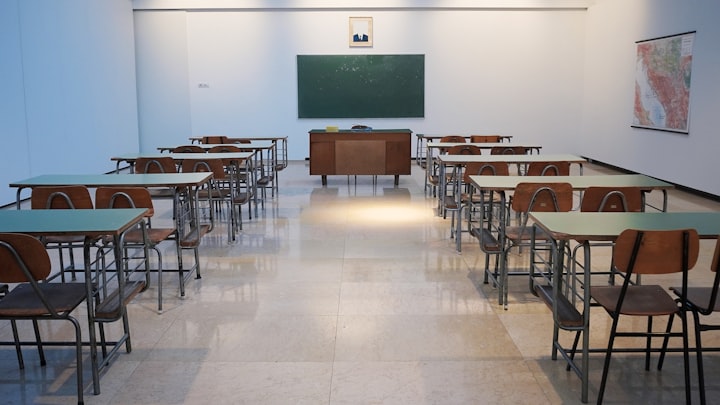
Three weeks away from the mandatory teacher training before the beginning of the new school year and I once again ask myself, "Am I really qualified to do this?" It is a question I ask repeatedly throughout each academic year as a miasma of feelings overwhelm my time in the classroom. And I am not alone in this concern. I have had conversations with my colleagues where this exact sentiment is at the forefront of their own professional thoughts.
Do not get me wrong, each year holds tremendous intrinsic reward for those of us who cling to student 'light bulb' moments, successfully implemented lessons, engaging class discussions, and rewarding conversations with students. But, after twenty years in the classroom, I feel that it becomes more and more difficult to reach these meaningful moments. And I end up feeling like a fraud.
I can tell you; it is not a lack of teacher training that underpins these feelings of frustration. Like most teachers, throughout the years I have been the recipient of hundreds of hours of professional development. Countless, planning meetings and mentorship sessions by senior teachers and administrators. My experience is not the exception, it is the rule. Teaching is a profession where continuous professional development is required to ensure that teachers remain at the top of their game throughout their career. Each state sets their own requirements. Schools and school districts also set training requirements and schedules.
Training is, however, often unfocused and based on the criteria set by institutions. On May 14, 2019, Education Week published an article written by Sarah Schwartz concerning how most teachers feel about professional development: "Mandatory seminars often have no relevance to their particular subject area or cover skills that they mastered years ago." (https://www.edweek.org/leadership/what-do-teachers-really-want-from-professional-development-respect/2019/05). Despite the approach taken by individual schools and districts, this sentiment has been repeatedly echoed by my colleagues.
Of course, the outcome of the training cannot be guaranteed. I have worked at schools with excellent administrators offered professional development based on teacher requested topics. I have also worked at schools that offer more "in-house" training, usually implemented by administrators or other teachers. The quality of this type of training can either be particularly good or incredibly poor. Often, it is quality and purpose of the training that is lacking, not quantity.
And, yes, teachers do receive mandatory training on types of learning styles, types of cognitive and emotional difficulties, etc. Over the decades, we have all become better able to identify the needs of students who experience challenges based on varying learning issues.
As I seek resources to help me understand the changing dynamics of the classroom, I find a lot of resources focused upon children of poverty and children growing up at risk in poor and violent neighborhoods. Schools offer free and reduced lunches to address concerns of nutrition and poverty. Programs exist to provide backpacks and school supplies for families. Teachers have desk drawers full of extra snacks and materials for students in need. I even know of teachers who have spare clothing for students, taking dirty clothing home to be washed and returned. Schools do not have solutions for poverty, but they do have palliative responses to help mitigate some of the circumstances faced by school children who live in poverty.
What educators do not receive is enough training that falls within the realms of social sciences, not education. Like most teachers, I feel I have encountered an increasing number of students facing complex social and emotional challenges. These problems range from criminality, poor self-esteem, and gender identity to bullying and eating disorders. It is not as if these problems never existed, it just seems that there seems to be more and more students presenting with these problems.
As the world has become more complex, the lives of children have also become more complex. Just as it is difficult to teach a child with an empty stomach, so too is it difficult to teach a child weighed down by problems of adult proportions. As our society has become more open and caring in many ways, accepting changing gender roles, recognizing and addressing the consequences of bullying, etc., we have failed to address the changing social dynamics in the classroom for many of our students.
There have been occasions when I have met with an administrator to discuss a learning concern about a student, only to be informed that this student is worrying about an upcoming court date. Or, that student is receiving psychiatric treatment for an eating disorder. As I have listened to the background stories of some of my students, I recognize that what I might be seeing is the classroom is not lack of interest or deliberate opposition, but rather signs of PTSD.
I am equipped to empathize with and love my students. I am qualified to listen and listen and listen. I am qualified to teach my content. This includes developing one thousand and one strategies to try to meet the academic needs of every student. It does not feel like enough, though. I feel as if I am failing my students of greatest need.
As these types of problems increase in schools in ALL zip codes, why are we not developing more innovative strategies to help teachers reach these students who exist on the periphery of the classroom now? I think we all agree that education is one area where we can empower students to improve their lives and circumstances.
Schools with some resources for school counseling positions, lack staff and applicants. Too many schools across the country have no resources at all and no school psychologist or counselor on staff. It might be time for local governments to begin placing resources in critical locations to improve efficiency and success. Place social workers in offices on or next to school premises. Allow families to access resources in convenient, easily accessible locations to access the resources they need. Travel often serves as a barrier to access services. Working hours often prohibit scheduling routine appointments.
Members of social services would not just be available to students and families, but also teachers. Social workers could offer skills training that can be implemented in the classroom for greater efficacy. We could all work on the same team, working towards the same goal; greater emotional, social, and academic success for students.
The current system is untenable. Educational outcomes continue to decline, not just for the poor, but also the middle classes. As a teacher, I cannot accept that I need to sacrifice the needs of the few to ensure the greater likelihood of success for the many. I need to know how to understand the complicated reality of students today. Offering such supportive services to help teachers reach students may also reduce teacher burnout at a time when we need more teachers, not fewer.
Schools cannot fix the ills of society, but we can help those students who might one day provide the needed solutions.
About the Creator
Keep reading
More stories from Melodee Olson and writers in Education and other communities.
My Reward
Only those who live in the shadows of a real life can utterly understand how one simple little thing can make the difference between choosing to live and choosing to die. It does not have to be anything that would be considered important to someone else either. It only need be something that can be fixated upon throughout the day or the week, just getting through the hours until, voila, you have succeeded. One more day in the book of life.
By Melodee Olson5 years ago in Confessions
Image-to-text technology, also known as Optical Character
Image-to-text technology, also known as Optical Character Recognition (OCR), has transformed the way we interact with visual information. It allows machines to extract text from images, enabling various applications across multiple industries. From digitizing printed documents to reading text from scanned images, OCR plays a vital role in making printed content accessible, editable, and searchable. The need for such technology has grown exponentially with the increasing reliance on digital data and the rapid shift from physical to digital content in nearly all sectors of life. As the digital world continues to expand, image-to-text technology has paved the way for more seamless workflows, enabling businesses and individuals alike to save time, effort, and resources.
By Alexander Jackson7 days ago in Education




Comments
There are no comments for this story
Be the first to respond and start the conversation.