
Exploring the Fascinating World of Time Travel and its Intersection with Science
Unveiling the Enigma: Exploring the Theories, Possibilities, and Philosophical Implications of Time Travel


Introduction:
Time travel has captivated human imagination for centuries, fueling countless works of literature, movies, and scientific inquiries. The concept of traversing through time, exploring the past or future, has both intrigued and puzzled us. In this blog post, we will delve into the fascinating world of time travel and its intersection with science. From the theoretical possibilities to the scientific theories surrounding this captivating subject, we will embark on a journey that stretches the boundaries of our understanding.
The Concept of Time Travel:
Time travel refers to the hypothetical ability to move backward or forward in time, experiencing events that have already happened or are yet to occur. While commonly explored in science fiction, scientists and philosophers have contemplated the plausibility and implications of time travel for centuries. It raises questions about the nature of time itself and our place within it.
Theories and Possibilities:
Scientists have proposed various theories and possibilities surrounding time travel, drawing upon fundamental concepts in physics. These theories include Einstein's Theory of Relativity, wormholes, time dilation, and the mind-bending world of quantum mechanics. While the practicality of time travel remains uncertain, exploring these theories helps us grasp the potential mechanisms behind it.
Einstein's Theory of Relativity:
Einstein's Theory of Relativity forms the foundation for our understanding of space, time, and gravity. According to this theory, the fabric of spacetime is interconnected, and massive objects create curves that affect the flow of time. The closer an object is to a gravitational source, the slower time moves for it relative to an outside observer. This phenomenon, known as time dilation, opens up possibilities for time travel.
Wormholes: Gateways to the Past and Future:
Wormholes, also known as Einstein-Rosen bridges, are hypothetical shortcuts through spacetime. These tunnels could connect distant regions of the universe or even different points in time. While the existence of wormholes is still purely theoretical, they offer a potential means of traversing through time if we can find a way to stabilize and navigate them.
Time Dilation: Navigating the Time Dimension:
Time dilation, a consequence of Einstein's Theory of Relativity, occurs when an object moves at speeds close to the speed of light or experiences intense gravitational fields. As a result, time slows down relative to objects outside the influence of these factors. While time dilation has been observed in experiments involving atomic clocks, achieving significant time travel through this mechanism remains a challenge.
Grandfather Paradox: Ripples in the Fabric of Time:
The Grandfather Paradox is a thought experiment often associated with time travel. It poses the question: What happens if someone were to travel back in time and prevent their own birth or cause harm to their ancestors? This paradox highlights the potential complications and inconsistencies that arise when contemplating the possibility of altering the past.
Quantum Mechanics and Time Travel:
The realm of quantum mechanics introduces further intriguing aspects to the study of time travel. Quantum superposition, entanglement, and the concept of multiple parallel universes provide new perspectives on the manipulation of time. While scientists continue to explore these quantum phenomena, harnessing them for practical time travel remains an enigma.
Time Machines: Fiction or Future Reality?
Throughout history, literature and popular culture have popularized the idea of time machines. From H.G. Wells' iconic novel "The Time Machine" to the iconic DeLorean in the movie "Back to the Future," time machines have captured our imagination. While building a fully functional time machine remains beyond our current technological capabilities, ongoing scientific advancements bring us closer to unlocking the secrets of time travel.
Practical Applications and Limitations:
While time travel holds immense scientific and philosophical allure, it also presents practical challenges and limitations. From the immense energy requirements to the ethical implications of altering history, there are numerous factors to consider. Furthermore, our current understanding of the laws of physics and the uncharted territories of quantum mechanics pose significant hurdles in realizing time travel.
Ethical and Philosophical Implications:
The concept of time travel raises profound ethical and philosophical questions. If time travel were possible, how would it affect our notions of free will, causality, and responsibility? The ability to change the past or peek into the future would undoubtedly have profound consequences on our lives and the course of history. Exploring these implications allows us to ponder the boundaries of human agency and the nature of our existence.
Conclusion:
In conclusion, the concept of time travel bridges the gap between science and imagination, captivating our minds and pushing the limits of our understanding. While the practicality of time travel remains uncertain, exploring the theoretical frameworks and scientific possibilities behind it enriches our comprehension of the universe. As we continue to unravel the mysteries of time, we embark on a journey that challenges our perception of reality and expands the horizons of human knowledge.
About the Creator
Keep reading
More stories from Syed Shafqat Ali and writers in Education and other communities.
Unleashing Terror: A Bone-Chilling Horror Story for Your Nightmares
Unleashing Terror: A Bone-Chilling Horror Story for Your Nightmares Introduction Welcome to the Abyss of Fear Prepare yourself for a spine-tingling journey into the darkest corners of human imagination. In this bone-chilling horror story, we will dive headfirst into the realm of the unknown, where terror lurks at every turn. Brace yourself for an adrenaline-pumping experience as we unveil the sinister tale that will leave you breathless and craving for more.
By Syed Shafqat Ali3 years ago in Horror
Morgan Silver Dollars: A Beginner's Guide to Identifying Key Dates and Mint Marks
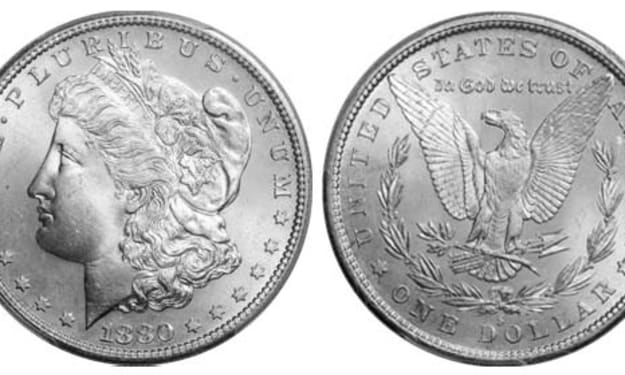
For over eight years as a Senior Numismatic Analyst, I've seen the glint in a new collector's eye when they hold their first Morgan Silver Dollar. It's a powerful feeling—the weight of 90% pure silver, the history in Lady Liberty's profile, the sheer size of America's most iconic coin. Yet, with hundreds of millions minted across 27 years and five mints, it's easy to feel overwhelmed. A common 1921 Morgan might be worth $50, while a pristine 1895 Proof commands over $100,000. The difference lies in the tiny details of dates and mint marks. This guide will give you the foundational map to navigate this classic series, turning confusion into confident identification.
By Laura Bennett6 days ago in Education
Dead and Wearing Green
She was wearing that green dress when I first saw her, five years ago to the day. Flowing meadow fabric draped over long legs, thick auburn hair flowing down her back. That smile. Of course, she is still beautiful now. But now she is no longer alive.
By Karen Cave6 days ago in Fiction



Comments