
Exploring the Benefits of Brain Interface Devices
Brain Interface Devices

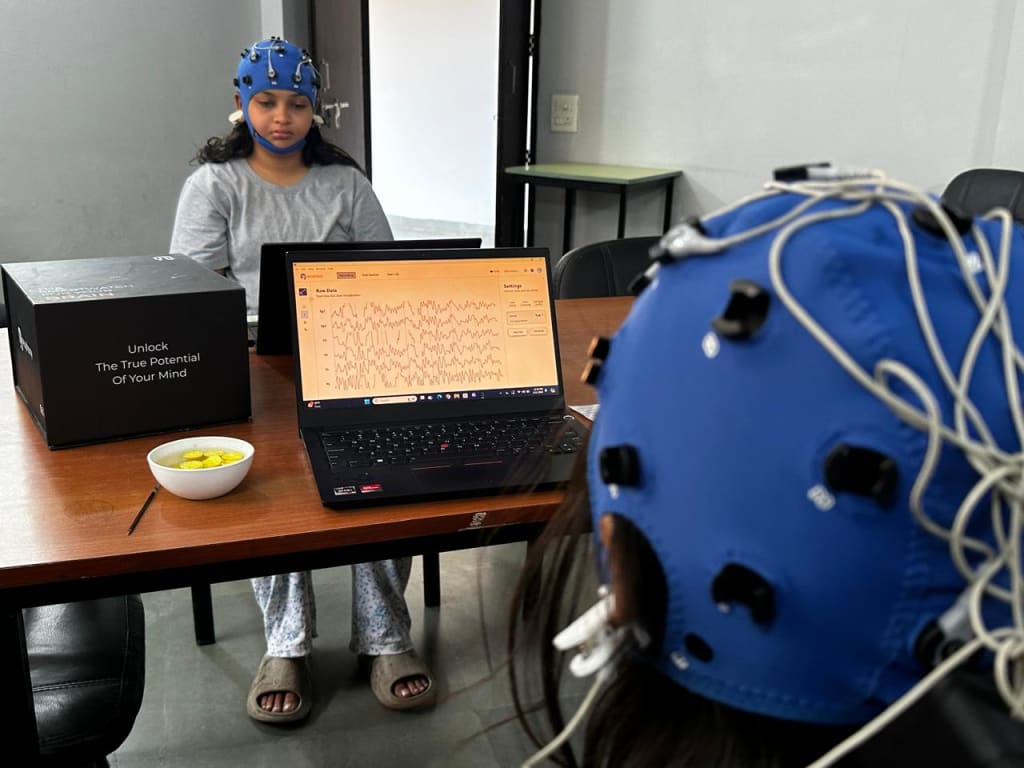
Recent years’ technological innovations have impacted numerous industries with healthcare/Neuroscience being among the major beneficiaries. In these fields, one of the most innovative technologies is the work on the invention of brain interface devices. These devices are also referred to as Brain-Computer interface [BCI] systems and have created unprecedented opportunities in the therapy of neurological disorders, boosting mental capabilities and direct cerebral control of computers and other machinery. This article focuses on discussing the features of working with brain interface devices and presents arguments about their significance for the development of medicine and humanity as a whole.
The implantation of electronic devices in the human brain seems to have great potential in most medical applications, especially those that have something to do with treating certain neurological diseases. Disorders including Parkinson’s disease, epilepsy, and amyotrophic lateral sclerosis (ALS) affect the quality of life an individual is capable of enjoying.
Conventional methods of treatment entail the use of drugs as well as operations, which frequently do not produce the desired outcomes. However, the brain-computer interface system is less intrusive and has similar or greater efficacy.
For example, the Brain computer interface systems allow a patient with severe motor dysfunction to regain voluntary control over his/her troubled limbs. One of the specialties of these devices is to translate neural signals into commands and allow the patients to control prosthetic limbs or interface with computers.
Another special interest has been the opportunities this technology has provided to persons with spinal cord injury and how they have been empowered unlike in the past.
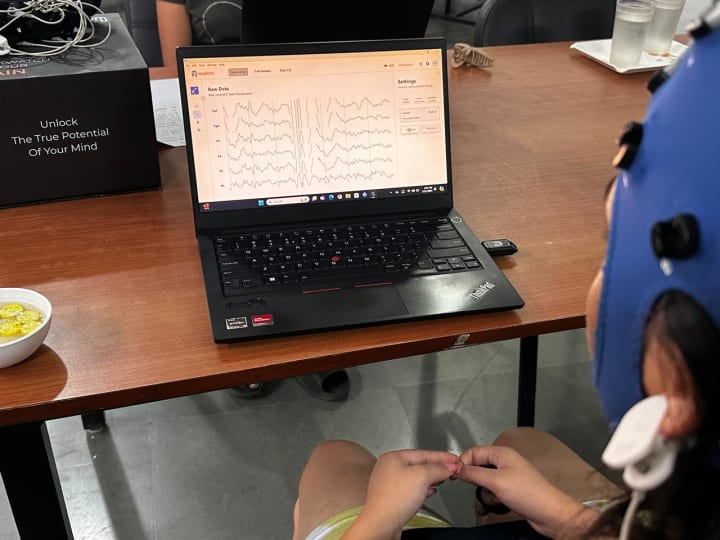
Understanding Brain Interface Devices and Their Applications
BCI stands for the brain-computer interface; devices are revolutionary human technologies that impart a direct avenue for communication between the human brain and some outside equipment. Brain-computer interface systems analyze neural signals to enable a person to control a computer, a prosthesis, and other electricity-based devices with one’s mind. BCI systems are used in various areas as a tool to help in the patient’s recovery during rehabilitation and as a tool for the enhancement of human abilities.
It is also possible to enhance people’s abilities with various applications, and even such applications for the brain are not an exception, as they are electronic versions of the exercises with the same aims. Some of them include:
A brain training app is an application whose goal is to foster the development of a user’s various mental faculties; these faculties include the ability to remember, focus, solve problems, or think critically and these are skills that can be enhanced by utilizing the contents of an application.
Brain interface devices refer to the notion that the brain’s electrical signals can be captured and translated into instructions that would be executed by the machine. Neurons make up the human brain and work in a very intricate structure since they relay their signals by electrical signals. When expressed as impulses, or brainwaves, the activity itself can be measured with electroencephalography (EEG), magnetoencephalography (MEG), and functional magnetic resonance imaging (fMRI). All these are acknowledged and treated as signals, and after interception, undergo a process called Signal Processing that encodes the intentions of a brain.
Speaking of the BCI classification, it is possible to mention invasive and non-invasive systems. High-interference BCIs require the electrodes to be inserted inside the brain. These systems offer clear signals and are applied in clinics for severely disabled clients. Extracranial BCIs, on the other hand, do not require the implantation of electrodes into the brain because they record brain activity through sensors placed on the scalp. Non-invasive BCI has relatively lower spatial resolution compared to the invasive BCI system, but the latter is not fit for daily use as is the former.
The Impact of Brain Computer Interface Systems on Healthcare and Beyond
Recently developed Brain Computer Interface (BCI) systems fall under one of the most progressive technologies that can unlock several industries, especially healthcare. Brain Computer Interface systems are commonly referred to as brain interface devices or Brain and Computer Interface they are systems that interface brains with external devices. Besides using this technology to improve the quality of life for people with severe disabilities, it is also finding unique applications in neuroscience, rehabilitation, and even consumer electronics applications.
The field that can greatly benefit from the use of Brain-Computer Interface system is healthcare. For those with quadriplegia, paraplegia, or other severe movement disorders as a result of spinal cord injuries/ALS, or after a stroke, Brain and computer interface are a new hope. With the help of the BCIs the patient gets a chance to restore his or her mobility, which is beyond the ideas of most people with paralysis: in particular, BCIs translate neural signals into commands that can control prosthetic limbs, wheelchairs, or a cursor of computer.
For example, BCIs help in creating artificial limbs that function upon the user’s input or ‘signal’. This is done by having electrodes inserted into the motor cortex part of the brain where neural signals due to the intention to move are recorded. These signals are then interpreted and relayed as movements of the prosthetic limb helping the users undertake activities such as picking and placement of objects and walking.
It means that the abilities of these devices on precision and responsiveness keep on enhancing owing to the development of machine learning and neural signal processing.
Conclusion:
Advancements in technology especially in the BCI systems will drastically transform healthcare and neuroscience. Since being invented, BCIs have presented unique possibilities for effective clinical application for neurological diseases, supra-mental faculties improvement, and straight brain-computer interfaces for operating various appliances. The translated neural signals into commands make the patients with severe Motor dysfunction or Spinal cord injury capable of controlling the prosthetic limbs and moving.
The non - intrusive technology is going to influence Rehabilitation and Human enhancement and the results show better control over neurological diseases and a better quilty of life for the patients. BCIs are revolutionizing medical science and defining new opportunities for humans.
About the Creator
Neuphonyforu
Neuphony brings you the benefits of neurofeedback at the comfort of your home with the help of EEG headband and a mobile application.
Keep reading
More stories from Neuphonyforu and writers in Education and other communities.
Neurofeedback Devices 2024: Enhance Mental Health and Focus at Home
Of the major difficulties within the present day context one can identify the fact that mental health has been all but easy to preserve and focus on within context to the prevailing stress. More detail oriented and organised persons are turning to new technologies that allow them to improve and sustain well-being and high levels of brain functioning. Neurofeedback is one of the emerging technologies which assist in focusing the persons mind. Neurofeedback devices, among others, are BCI devices; however, they introduce significant changes into what was previously done to ensure new approaches to the enhancement of the person’s mental condition or even awareness of their cognitive impairments and achieve the improvement by training one’s brain from their convenience of home.
By Neuphonyforu2 years ago in Journal
Managing Anxiety During Exams: A Student’s Guide
Exams are one of the most common sources of stress for students at every level. Even the most prepared individuals often feel nervous before or during a test. Exam anxiety is natural — it’s the body’s way of preparing for a challenge — but excessive stress can interfere with focus, memory recall, and overall performance. Understanding the causes of anxiety and learning effective coping strategies can make a significant difference. This guide provides practical, evidence-based techniques to manage stress before, during, and after exams.
By Games Mode On5 days ago in Education
Portable Thickness Gauge Explained: Accurate Measurements Anywhere, Anytime
In modern industries, precision is not a luxury—it is a necessity. From ensuring product quality to maintaining structural safety, accurate thickness measurement plays a vital role. This is where portable thickness gauges come into focus. As the demand for on-site inspections grows, Portable Thickness Gauge Explained: Accurate Measurements Anywhere, Anytime becomes a topic every engineer, inspector, and technician should understand.
By Abdul Alima day ago in Education
Affection and Healing for Yourself
During the night of the last quarter moon, I gathered my ritual supplies. I carefully handled the chunk of black tourmaline that would protect me from your overall negative and narcissistic energy. I carefully walked the house with my stick of selenite in hand, asking the universe to cleanse our working space.
By Alisha Wilkins ✒️🦋🖋️4 days ago in Fiction




Comments
There are no comments for this story
Be the first to respond and start the conversation.