
Evolution of Messaging Apps: From Simple Texts to Smart Communication Hubs
How Messaging Technology Transformed Our Way of Connecting Over Time
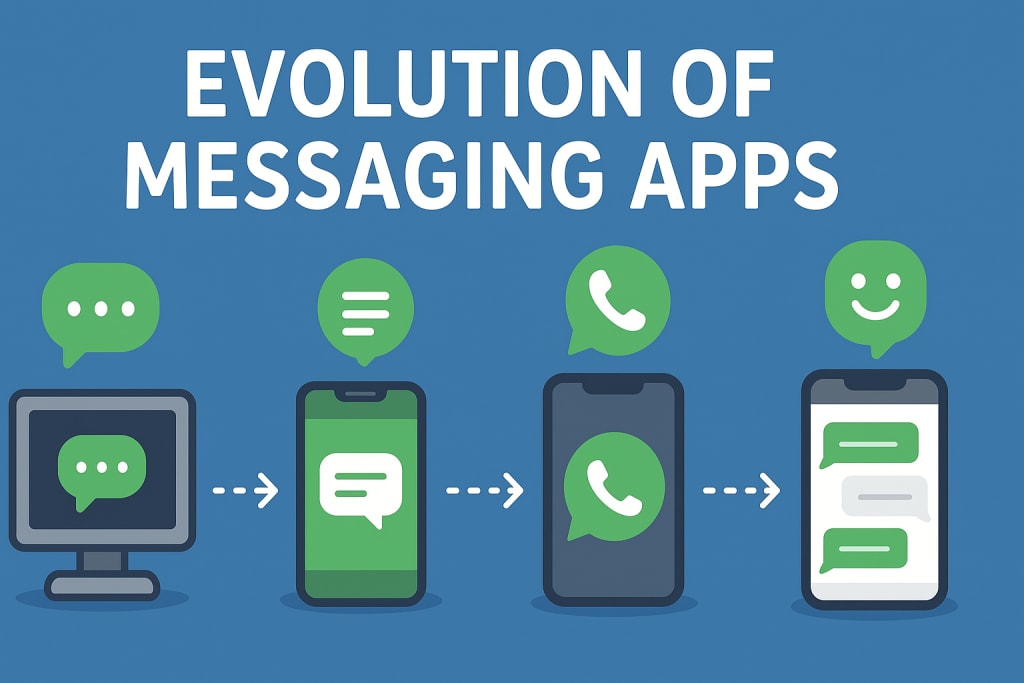
The way people communicate has changed drastically over the past few decades. From handwritten letters to instant text messages, technology has transformed how we connect with friends, family, and colleagues. Messaging apps are now at the heart of digital communication, enabling people to chat, share files, make calls, and even run businesses—all from their smartphones.
In this article, we’ll take a deep dive into the evolution of messaging apps, exploring their history, major milestones, and how they have become essential tools in our daily lives. We’ll also discuss future trends, their role in society, and answer some frequently asked questions.
The Early Days of Digital Messaging
Before modern messaging apps like WhatsApp, Telegram, and Messenger, there was a time when digital communication was slow and limited. The earliest forms of digital messaging can be traced back to electronic mail (email) in the 1970s, but email wasn’t truly instant.
The first real instant messaging services appeared in the late 1980s and early 1990s, such as ICQ, AOL Instant Messenger (AIM), and Yahoo Messenger. These platforms allowed users to send real-time text messages over the internet, often requiring a computer and a dial-up connection.
At the time, messaging was mostly limited to desktops, and users needed to know each other’s unique IDs or usernames. It was revolutionary for its time, but it lacked the mobility and multimedia features we enjoy today.
The Rise of Mobile Text Messaging
The next big leap in messaging came with the Short Message Service (SMS) in the 1990s. SMS allowed users to send brief text messages directly between mobile phones without the need for internet access.
For many, SMS was the first experience with mobile messaging, and it became extremely popular in the 2000s. It was simple, reliable, and available on almost all mobile devices. Later, MMS (Multimedia Messaging Service) introduced the ability to send pictures and videos.
However, SMS had its limitations—character limits, costs per message, and lack of advanced features. These weaknesses created the perfect environment for internet-based messaging apps to emerge.
The Birth of Modern Messaging Apps
The arrival of smartphones in the late 2000s changed everything. With iOS and Android platforms becoming mainstream, app developers began creating internet-based messaging platforms that offered free, unlimited communication.
WhatsApp, launched in 2009, was one of the first major players. It allowed users to send messages over the internet instead of using SMS, bypassing carrier fees. Soon after, other apps like WeChat, Viber, Line, and Facebook Messenger entered the market.
These apps offered not just text messaging, but also voice messages, file sharing, emojis, group chats, and voice/video calls. Suddenly, messaging became richer, faster, and more interactive than ever before.
The Shift to All-in-One Communication Platforms
Over the years, messaging apps evolved from simple chat tools into multi-functional platforms. For example, WeChat in China is more than a messaging app—it’s a super app where users can make payments, shop online, book taxis, and even pay bills.
Apps like Telegram and Signal became popular for their end-to-end encryption, prioritizing user privacy and data security. Meanwhile, Slack and Microsoft Teams focused on the workplace, integrating project management tools and team collaboration features.
By combining multiple services into one platform, messaging apps have become essential for both personal and professional life.
Key Features That Changed the Game
Several innovations have shaped the evolution of messaging apps into what we know today:
- End-to-End Encryption – Protecting messages so only the sender and receiver can read them, boosting privacy and security.
- Voice and Video Calling – Allowing real-time conversations without needing traditional phone services.
- Group Chats and Communities – Connecting large groups of people for both personal and professional purposes.
- Cloud Storage Integration – Making it easier to send and store files directly in the chat app.
- Cross-Platform Sync – Enabling users to switch between devices without losing messages.
- AI Chatbots and Automation – Providing automated customer support and interactive services.
The Role of Messaging Apps in Society
Messaging apps have not only changed how we communicate but also how we live and work. They’ve influenced:
- Business Communication – Many companies now rely on apps like WhatsApp Business, Slack, and Teams for daily operations.
- Social Movements and Activism – Secure apps like Signal have been used for organizing events and protests.
- Education – Teachers and students use messaging groups for assignments and discussions.
- Health Services – Patients can now consult with doctors via chat or video calls.
This widespread adoption has made messaging apps an integral part of modern life, blurring the line between personal and professional communication.
Challenges and Concerns
While messaging apps have many benefits, they also face challenges:
- Privacy Issues – Data breaches and surveillance remain major concerns.
- Misinformation – Apps like WhatsApp have been criticized for enabling the rapid spread of false information.
- Addiction and Mental Health – Thre are some negative points. Constant notifications can cause stress and reduce real-life interactions.
- Security Threats – Hackers target messaging platforms to steal personal data.
To address these, developers are constantly improving security, adding two-factor authentication, and providing better moderation tools.
The Future of Messaging Apps
Looking ahead, messaging apps are likely to become even more intelligent and immersive. We can expect:
- AI-Powered Conversations – Smarter chatbots and predictive typing to enhance user experience.
- Augmented Reality (AR) Features – Interactive filters, avatars, and virtual meeting spaces.
- Deeper Integration with IoT – Controlling smart home devices directly from chat apps.
- Decentralized Messaging – Blockchain-based platforms that further enhance privacy and security.
- Universal Messaging Hubs – Platforms that combine all your messaging services into one app.
As technology evolves, messaging apps will continue to be at the forefront of human communication, adapting to our changing needs and lifestyles.
Timeline of Messaging App Evolution
- 1970s – Email emerges as the first form of digital communication.
- 1980s-1990s – Early instant messaging platforms like ICQ, AIM, and Yahoo Messenger appear.
- 1990s – SMS and MMS dominate mobile messaging.
- 2000s – Rise of smartphones leads to the first generation of modern messaging apps.
- 2010s – Introduction of encryption, voice/video calls, and multimedia sharing.
- 2020s – Messaging apps become multi-functional platforms with AI, payments, and collaboration tools.
FAQs
1. What was the first messaging app?
The first widely recognized instant messaging app was ICQ, launched in 1996. However, email existed before that as a form of digital messaging.
2. Why are messaging apps better than SMS?
Messaging apps use the internet to send unlimited messages, support multimedia, group chats, and calls—often for free—whereas SMS has character limits and costs per message.
3. Are all messaging apps secure?
Not all. Some offer end-to-end encryption, but others may store data in ways that can be accessed by third parties. It’s important to check the app’s privacy policy.
4. Will messaging apps replace social media?
They might not replace social media entirely, but they are becoming more like social platforms with stories, communities, and integrated services.
5. What is the future of messaging apps?
Future apps will likely focus on AI integration, AR experiences, and privacy-first designs, becoming even more central to daily communication.
Messaging apps have come a long way from simple text-based chats to advanced platforms connecting billions of people. Their evolution reflects the broader story of technological progress, showing how innovation continues to shape human interaction. I have a personal blog on messaging apps, you can read more here. Thank you for reading my story.
About the Creator
Expert Banking Digital Signage Energizes Customers
I'll never forget walking into my local branch last Tuesday morning, dreading the usual 20-minute wait just to deposit a check. Instead, I was greeted by a vibrant digital display showing my wait time (3 minutes!), current mortgage rates, and a helpful video about mobile banking features I didn't even know existed. That visit took seven minutes total, and I left with a new savings account. That's the power of banking digital signage done right.
By Jerry Kane 2 days ago in Education



Comments (4)
I completely agree with your opinion on negative sides of messaging apps.
Great post. I was looking for it for my university project.
This was a really cool read! It’s wild to think messaging apps started as just simple chats and now they do everything from calls to payments. The part about privacy and encryption got me thinking too—definitely important nowadays. Looking forward to seeing how AI and AR change the game! Thanks for sharing.
Wow, this is such a comprehensive breakdown of how messaging apps have evolved! I honestly didn’t realize how far we’ve come—from the days of ICQ and AIM to now using apps that do so much more than just chat. The part about messaging apps turning into all-in-one platforms like WeChat really stood out to me. It’s crazy how something that started as simple text messages is now helping us pay bills, shop, and even work remotely. Also, the future predictions with AI and AR features sound super exciting. Can’t wait to see how these apps will keep changing the way we communicate. Thanks for sharing this—it gave me a fresh appreciation for the apps I use every day!