
Do Schools Actually Care About Critical Thinking?
It's regarded as a paramount skill, yet it is seldom modeled in the classroom.

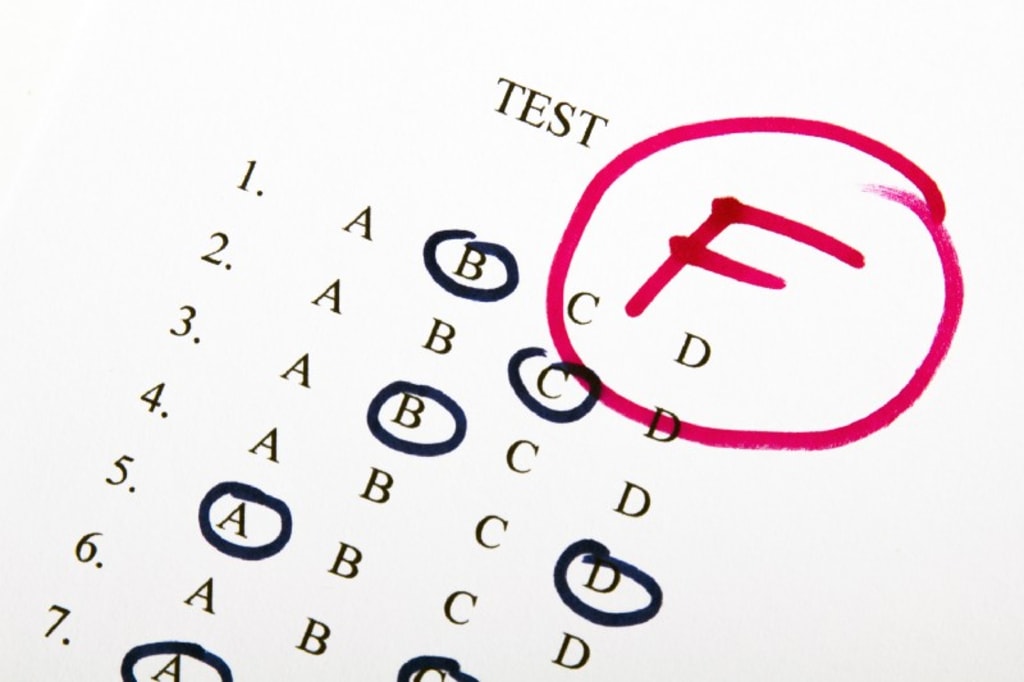
Every now and then, we all come across certain pieces of writing that make us lose faith in humanity. You ever just really think about what possessed them to post such an atrocity?
In those moments, after taking a breath and wondering what choices led me to this point, I find myself contemplating about the nebulous, yet essential concept that is critical thinking. Schools oftentimes regard it as a paramount skill, but when do we truly see it shine in our classes?
Although we can say with certainty what it is not, we might have a harder time clearly defining ways to apply and teach it. Is there a clear step-by-step way?
As a skill, it could be seen as the opposite of being partial and close-minded. You make the active and difficult effort to open your mind, and see things from different perspectives; even if you don't necessarily subscribe to said point of view.
I'm more inclined towards it being a type of philosophy one has. A way to approach situations. It's easy for someone to just put "critical thinking skills" in their resume and call it a day, but are they actually applying it in their lives?
Were they lucky enough to have been modeled this aspect of thinking?
The Face-Value Classroom
In schools, more often than not, we are taught to accept things at face-value. We all have those almost mechanic memories from schooling. Students are frequently seen as passive agents, rather than active participants in their educational process.
That painfully long silence after the teacher asks a question —you know the one—which is somehow even more excruciating during online classes. Many live in fear of being judged for participating and asking for further explanations.
I mean, can you blame them?
Given our current state, this is an almost inevitable thought pattern. One of the basic principles of our education system is to be punished for not knowing. For not understanding the canned lecture. For needing further clarification.
Sure, we might be told about the importance of critical thinking, but is it truly modeled in all of our courses?
Perhaps, at some point in the school year a required activity is a debate. During said assignment, one has to actively defend their assigned point, and—of course—no one wants to be wrong in front of others. That's embarrassing, and as we all know from a young age, being wrong has a very negative association: a humiliating failing grade, and a drop in your sacred GPA, which can affect your academic career.
Students are seldom given the opportunity to think critically. They are so focused on the short-term benefit of their courses, that they might not see the long-term ramifications it has on their learning.
For instance, many think certain Math subjects are useless. They don't see a benefit. "Why do I need to learn the Theorem of Pitagora?" many might bemoan, and rarely is this point of view challenged. They robotically apply the subject matter, or end up just following the textbook way of solving the problems, which defeats the entire purpose.
The importance of learning these subjects—although boring for many—is that they are a way to exercise our problem solving and logical reasoning skills. It helps us see that there is more than one way to solve an issue and view a situation.
No Active Discourse
In History courses, for example, there is no room for active discourse. Many public schools have rules in place about not explicitly talking about political and religious matters, whatever that means, which completely removes room for actual discussion and criticism.
Instead, students are passive agents. They simply listen and write down revisionist history. What actions are they taking? Nothing is being challenged:
If students are only presented with superficial knowledge and trivial activities, how can they learn to analyze, question, reflect, and take action? Students should be challenged to read and write critically, to reflect on multiple and even contradictory perspectives, to face reality in its full complexity.
They are simply told to accept it, as they will be evaluated on the canned lecture in a few weeks.
While, simultaneously, having that blanket statement in their heads about the so-called importance of critical thinking. It's a perpetual contradiction.
Challenging Academia
I'm not by any means a professor or educator, thus I have zero knowledge about what it takes to make a curriculum.
What I do have to note is that there is a fundamental problem that needs to change. We are seldom, if ever, taught to challenge academia, instead there is an emphasis to just take things at face-value which, in turn, harms our critical thinking capabilities.
Rather than just learn from one textbook, perhaps classes should encourage multiple sources and perspectives: favoring complexity and actual discussions, instead of oversimplification.
—
Thank you for reading!
If you enjoyed it, you can tip me through here or on Ko-Fi.
About the Creator
Omy
Hi, everybody! I'm a Puerto Rican writer 🇵🇷🏳️🌈I write poetry and articles about history, life and media.
Is The Fear Of Disappointing Others Ruling Your Life?
Who in their right mind wants to disappoint someone they deeply care about? Seriously, if we had it our way, we'd probably choose to live a life where we never have to experience getting that heart-wrenching "look" of disappointment.
By Omy 4 years ago in Motivation
From Despair to Hope: How Animal Rescue Efforts Rebuild Broken Lives
Animal rescue efforts stand as a powerful response to suffering that often goes unseen. Across towns, cities, and rural areas, animals face neglect, abandonment, injury, and fear every day. Many are left without food, shelter, or medical care. Others are harmed by abuse or natural disasters. Without help, their future is uncertain. Through patience, care, and action, animal rescue efforts transform despair into hope and give animals the chance to heal and live safely.
By Brenda McGrane7 days ago in Education
How to Gain Real Work Experience in Wealth Management
Breaking into wealth management can feel confusing at first. Many roles ask for experience, but it is not always clear how to get it. The good news is that real wealth management work experience comes from action, not just titles. With the right approach, you can build skills, credibility, and confidence before landing a full-time role.
By John Lennox Cummings6 days ago in Education


Comments
There are no comments for this story
Be the first to respond and start the conversation.