
Data Analyst’s Nightmare
Crack Messy Data & Tame Unstructured Chaos

The life of a data analyst is often romanticized as one filled with groundbreaking insights and strategic decision-making. However, the reality often involves navigating a landscape fraught with challenges, where the initial steps can feel more like a descent into chaos than a journey towards clarity. At the heart of this struggle lies the pervasive problem of massive, messy, and unstructured data.
This article will explore the multifaceted difficulties data analysts face from the onset of this problem, and it will present strategies and techniques for effectively solving it, emphasizing how to structure unstructured data and efficiently "crack the code" of large datasets.
The Problem: When Data Turns into a Nightmare
At the heart of the data analyst’s nightmare lies the nature of modern data itself. Unlike the neatly organized spreadsheets of the past, today’s data comes in overwhelming volumes, from an ever-expanding variety of sources, and in formats that often defy traditional organization. This phenomenon is commonly described as the “3 Vs” of big data: Volume, Variety, and Velocity.
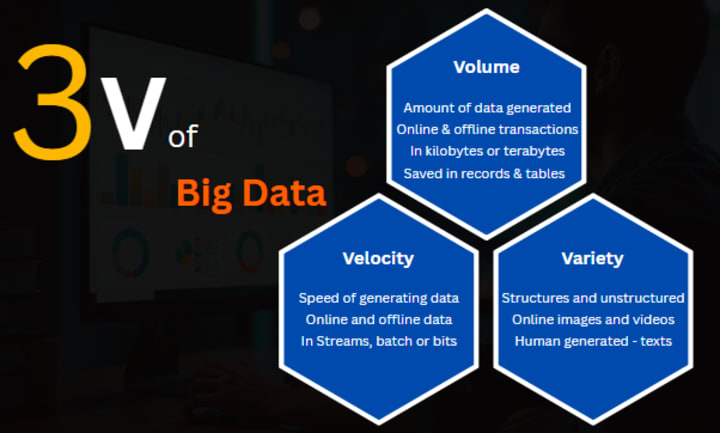
- Volume refers to the sheer amount of data generated every second-from customer transactions, social media posts, IoT devices, to multimedia content. The scale can be staggering, often measured in terabytes or petabytes.
- Variety captures the diversity of data types, including structured data (like databases), semi-structured data (like JSON or XML files), and unstructured data (such as emails, images, videos, and free-form text).
- Velocity is the speed at which data is generated and must be processed, sometimes in real-time, which adds another layer of complexity.
For data analysts, this means they are often handed datasets that are not only enormous but also riddled with inconsistencies, errors, missing values, and formats that do not fit into neat rows and columns. This unstructured chaos makes it difficult to extract meaningful insights without first transforming the data into a usable form. The nightmare is real: without proper handling, the data can mislead, overwhelm, or simply remain unusable.
The Challenges: Why Is This So Difficult?
Several core challenges explain why dealing with massive, messy, and unstructured data is so difficult for data analysts:
1. Data Quality and Integrity Issues
Messy data often contains duplicates, inaccuracies, and incomplete records. For example, customer names might be misspelled, dates formatted inconsistently, or sensor readings corrupted by noise. These issues lead to unreliable analysis and poor business decisions if not corrected.
2. Time-Consuming Data Preparation
Studies show that data cleaning and preparation can consume up to 80% of an analyst’s time, involving tasks such as standardization, deduplication, and validation. This tedious process involves identifying errors, standardizing formats, filling missing values, and reconciling conflicting data-all before any actual analysis can begin.
3. Unstructured Data Complexity
Unlike structured data, unstructured data lacks a predefined schema, making it difficult to store, search, and analyze. Text data, for example, requires natural language processing (NLP) to extract sentiment or key topics, while images and videos need computer vision techniques to identify objects or patterns. Choosing the right combination of data structures to balance time and space complexity is essential.
4. Integration Across Silos
Data often resides in separate silos within organizations-different departments, systems, or platforms-making it difficult to integrate and get a comprehensive view. Without integration, insights remain fragmented and less actionable.
Skill Gaps and Tool Limitations
Many data analysts are experts in statistics and visualization but may lack advanced programming or machine learning skills needed to process unstructured data. Additionally, traditional tools may not scale well with big data or support complex transformations.
Security and Compliance Risks
Handling large volumes of sensitive data increases the risk of breaches and regulatory non-compliance. Analysts must ensure data governance and privacy standards are met while processing data.
Strategies to Tame the Chaos: From Mess to Meaning
Despite these challenges, there are proven strategies and technologies that data analysts can leverage to convert this unstructured chaos into structured, insightful data.
1. Establishing a Strong Data Governance Framework
A solid data governance strategy is foundational. It defines policies for data collection, storage, access, and quality assurance. By enforcing standards and accountability, organizations can reduce errors and inconsistencies at the source, making downstream analysis more reliable. Learn data governance to establish policies and procedures that ensures data quality and compliance.
2. Robust Data Cleaning and Preprocessing
Data cleaning is an unavoidable step but can be made more efficient with automation. Techniques include:
- Standardization: Converting data into consistent formats (e.g., dates, phone numbers).
- Deduplication: Removing repeated records.
- Imputation: Filling missing values using statistical or machine learning methods.
- Validation: Cross-checking data against known rules or external sources.
Tools like OpenRefine, Trifacta, or Python libraries (Pandas, NumPy) can accelerate these tasks.
3. Leveraging Advanced Techniques for Unstructured Data
To handle unstructured data, analysts must employ specialized methods:
- Natural Language Processing (NLP): Extracts meaning from text through tokenization, entity recognition, sentiment analysis, and topic modeling. For example, analyzing customer reviews to identify common complaints.
- Optical Character Recognition (OCR): Converts scanned documents or images of text into machine-readable formats.
- Computer Vision: Uses deep learning to analyze images and videos, identifying objects or patterns relevant to business questions.
These techniques transform unstructured data into structured formats that can be integrated and analyzed alongside traditional data.
4. Integration and Centralization
Data integration platforms and data lakes enable analysts to consolidate data from multiple sources into a unified repository. This centralization facilitates comprehensive analysis and reduces the friction caused by data silos.
5. Metadata Management and Data Cataloging
Maintaining detailed metadata-information about the data’s origin, format, and transformations-helps analysts understand and trust their datasets. Data catalogs make it easier to discover and reuse data assets efficiently.
6. Utilizing Scalable Technologies
Big data technologies such as Hadoop, Spark, and cloud-based platforms provide the infrastructure to store and process massive datasets efficiently. These tools support distributed computing, enabling faster processing and analysis.
Here is a video that explains further strategies about taming the data mess.
Cracking the Code: Analytical Approaches for Insightful Outcomes
Once the data is cleaned, structured, and integrated, data analysts can apply a range of analytical techniques to extract value:
- Descriptive Analytics: Summarizes historical data to understand what happened. Visualization tools like Tableau or Power BI help communicate these insights effectively.
- Predictive Analytics: Uses machine learning algorithms to forecast future trends, customer behavior, or risk factors.
- Prescriptive Analytics: Provides recommendations based on optimization models, helping organizations decide the best course of action.
Visualization tools like Tableau or Power BI help communicate insights effectively through interactive dashboards.
Interactive and Collaborative Data Exploration
To maximize the impact of their work, data analysts should foster an interactive and collaborative environment:
- Interactive Dashboards: Empower stakeholders to explore data dynamically, drilling down into areas of interest.
- Data Storytelling: Combine data with narrative techniques to make insights relatable and actionable.
- Collaborative Platforms: Use tools like Jupyter Notebooks or cloud-based workspaces to share analyses and gather feedback in real time.
Conclusion: From Nightmare to Mastery
The challenge of massive, messy, and unstructured data is undeniably one of the greatest hurdles facing data analysts today. Yet, with the right mindset, tools, and strategies, this nightmare can be transformed into an opportunity for mastery. By establishing strong governance, employing advanced preprocessing techniques, leveraging cutting-edge technologies, and fostering interactive collaboration, data analysts can crack the code of large datasets and tame the unstructured chaos. The result is not just cleaner data, but clearer insights, smarter decisions, and a competitive edge in an increasingly complex data landscape.
Embracing this journey from chaos to clarity is essential for any data analyst who aspires to move beyond survival and truly thrive in the era of big data.
About the Creator
Agni
Aspiring researcher & info provider dedicated to unearthing and sharing impactful knowledge. I translate complex data into simple insights, aiming to inspire progress with reliable, engaging content across all disciplines worldwide.



Comments (1)
Nice