
Echoes of the Past: How Ancient Civilizations Shaped Our World
Unveiling the Remarkable Contributions of Early Societies to Modern Life

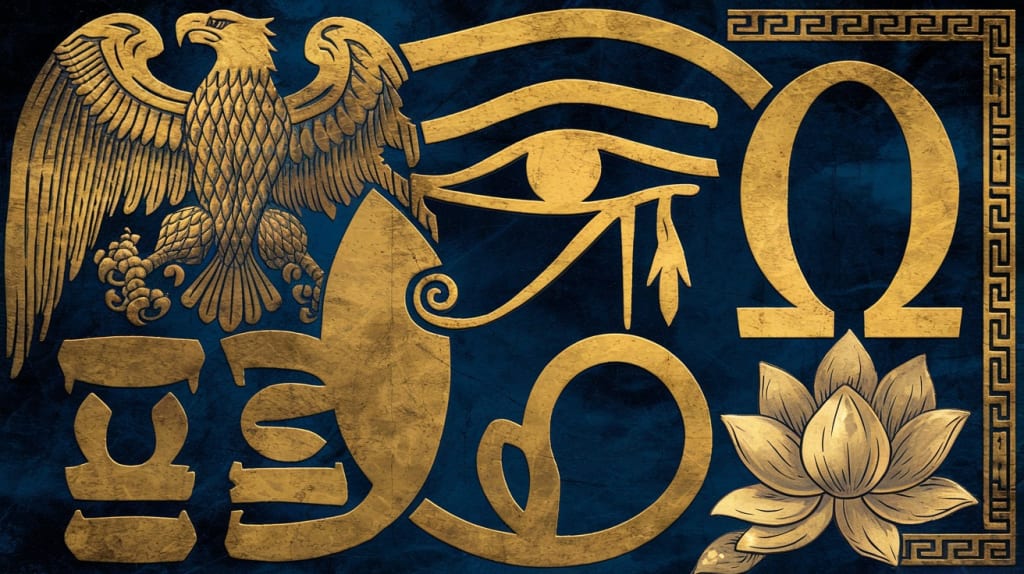
Throughout history, ancient civilizations have played a crucial role in shaping the world we live in today. Their innovations in governance, architecture, science, art, and philosophy continue to influence modern society. From the fertile lands of Mesopotamia to the grandeur of Rome, these civilizations laid the foundation for advancements that still impact our daily lives. In this in-depth exploration, we will uncover the remarkable achievements of Mesopotamia, Egypt, the Indus Valley, China, Greece, and Rome, revealing how their legacies continue to thrive.
Mesopotamia: The Cradle of Civilization
Situated between the Tigris and Euphrates Rivers, Mesopotamia was home to some of the earliest known civilizations, including the Sumerians, Akkadians, Babylonians, and Assyrians. These societies pioneered many essential aspects of human development.
The Birth of Writing
One of Mesopotamia’s most significant contributions was the invention of cuneiform script by the Sumerians around 3100 BCE. This early form of writing allowed for record-keeping, communication, and the transmission of knowledge across generations. It laid the groundwork for future writing systems, eventually leading to the written literature we have today.
Legal Systems and Governance
The Babylonian King Hammurabi introduced one of the earliest known legal codes—the Code of Hammurabi. Engraved on stone tablets, this set of laws established principles of justice, including punishments for various crimes. Many modern legal concepts, such as standardized laws and judicial authority, can trace their origins back to these early principles.
Scientific and Mathematical Contributions
The Mesopotamians were also pioneers in mathematics and astronomy. They developed a base-60 number system, which is why we measure time in 60-minute hours and 360-degree circles today. Their astronomical observations contributed to early calendars and timekeeping.
Ancient Egypt: Masters of Engineering and Medicine
Egypt, one of the most enduring civilizations in history, flourished along the banks of the Nile River. The Egyptians made remarkable contributions in engineering, medicine, and cultural practices that still resonate in modern society.
Architectural Marvels
The Egyptians’ expertise in engineering is evident in their monumental structures, such as the Pyramids of Giza and the temples of Karnak. These grand edifices showcase their mastery of mathematics, construction techniques, and architectural design.
Advancements in Medicine
Ancient Egyptian physicians were pioneers in medical practices. They conducted surgical procedures, used herbal remedies, and even developed early forms of dentistry. Papyrus scrolls, such as the Ebers Papyrus, detail various medical treatments and diagnoses, some of which align with modern practices.
Timekeeping and Calendars
The Egyptian calendar, based on lunar and solar cycles, was instrumental in developing the 365-day year. This innovation remains the foundation of today’s Gregorian calendar.
The Indus Valley Civilization: Urban Planning and Trade
The Indus Valley Civilization, spanning present-day India and Pakistan, was known for its well-organized cities, advanced infrastructure, and trade networks.
Sophisticated Urban Planning
Unlike many contemporary societies, Indus Valley cities like Mohenjo-Daro and Harappa had meticulously planned street grids, drainage systems, and sewage disposal facilities. These urban developments demonstrated a high level of civic organization and public health awareness.
Standardized Economy
The Indus people implemented a standardized system of weights and measures, which facilitated trade with distant regions, including Mesopotamia. This system highlights their economic sophistication and long-distance trade networks.
Mysterious Writing System
Although the Indus script remains undeciphered, its existence suggests a complex communication system, possibly used for administrative and commercial purposes.
Ancient China: Pioneers in Innovation and Philosophy
China’s ancient civilizations introduced groundbreaking inventions and philosophical ideas that continue to shape global culture.
Technological Breakthroughs
Ancient China contributed inventions such as paper, the compass, gunpowder, and printing—innovations that had a profound impact on the world. Paper revolutionized record-keeping, while gunpowder altered the course of warfare.
Philosophical Wisdom
Confucianism and Taoism, two major Chinese philosophical traditions, emphasized ethics, governance, and balance in life. Confucian principles of duty, respect, and education continue to influence societies worldwide.
Engineering Feats
The construction of the Great Wall of China exemplifies the engineering prowess of ancient Chinese civilizations. Built to protect against invasions, this structure remains a symbol of China’s resilience and ingenuity.
Ancient Greece: The Birthplace of Western Thought
Ancient Greece is often credited as the foundation of Western civilization due to its contributions to philosophy, politics, and the arts.
Democracy and Political Systems
The Greeks introduced the concept of democracy, particularly in Athens, where citizens had a say in governance. This early form of democracy influenced modern political systems across the world.
Philosophy and Science
Greek philosophers such as Socrates, Plato, and Aristotle explored ethics, metaphysics, and political theory. Their ideas remain integral to modern philosophy and scientific inquiry.
Art, Literature, and Sports
Greek art and literature, including works by Homer, continue to inspire modern storytelling. The Olympic Games, first held in Olympia, Greece, laid the foundation for international sports competitions.
Ancient Rome: Builders of an Empire
Rome’s legacy is visible in its legal systems, engineering achievements, and administrative governance.
Legal Influence
The Roman legal system introduced principles such as "innocent until proven guilty," which form the basis of many modern legal frameworks.
Engineering and Infrastructure
Roman engineers built extensive road networks, aqueducts, and grand structures such as the Colosseum. Many of these constructions have withstood the test of time, showcasing their advanced engineering techniques.
Cultural Integration
Rome’s ability to assimilate diverse cultures contributed to the longevity of its empire. Latin, the Roman language, influenced numerous modern languages, including Spanish, French, and Italian.
A Legacy That Endures
The contributions of ancient civilizations continue to shape our modern world in ways both obvious and subtle. Their advancements in governance, technology, science, and philosophy have provided the foundation for countless modern innovations. By understanding their achievements, we can appreciate the enduring legacy of these remarkable societies and how they continue to influence our daily lives.
About the Creator
Aurora Lark
I write at the crossroads of science fields that constantly challenge our perceptions and expand our horizons. I decode the intricate narratives of our modern world, transforming technical details into clear, thought-provoking stories.
Keep reading
More stories from Aurora Lark and writers in Education and other communities.
The Universe: A Grand Tapestry of Space, Time, and Existence
The universe is everything. It’s not just the stars twinkling in the night sky or the planets orbiting the Sun—it is all of space, time, matter, and energy combined. It includes the galaxies stretching across unfathomable distances, the black holes swallowing light, and the cosmic dust forming new worlds. Most astonishingly, it includes us, tiny specks of consciousness within an incomprehensible expanse.
By Aurora Lark11 months ago in Education
Major Real Estate Market Trends Defining the Modern Housing Landscape
The real estate market is undergoing steady, visible change. Buyers think differently. Sellers adjust their strategies. Investors watch new signals closely. These shifts affect prices, demand, and how homes are used. To stay informed, it helps to understand real estate market trends and why they matter today. This article explains the key movements shaping the market in clear, simple terms that are easy to read and follow.
By Michael O'Sullivan Hamptonabout 10 hours ago in Education
Tech on the Move: How Mobile Response Technology Transforms Disaster Relief Operations
Disaster relief operations have always required speed, accuracy, and adaptability. Yet as emergencies grow more frequent and more complex, traditional relief methods often fall short. Communities face collapsing infrastructure, mass displacement, communication failures, and urgent medical needs. In this challenging environment, mobile response technology has emerged as a game-changer. From mobile command centers to portable medical units and satellite-based communication tools, these technologies bring critical support directly into disaster zones. Their mobility and advanced capabilities are reshaping how responders work, strengthening coordination, and accelerating recovery.
By Convoy of Hopeabout 3 hours ago in Education




Comments (1)
Ancient civilizations are awesome! Great work!