
Currency and Finance: The Backbone of the Global Economy
How Exchange Rates, Inflation, and Digital Innovation Shape the World of Money

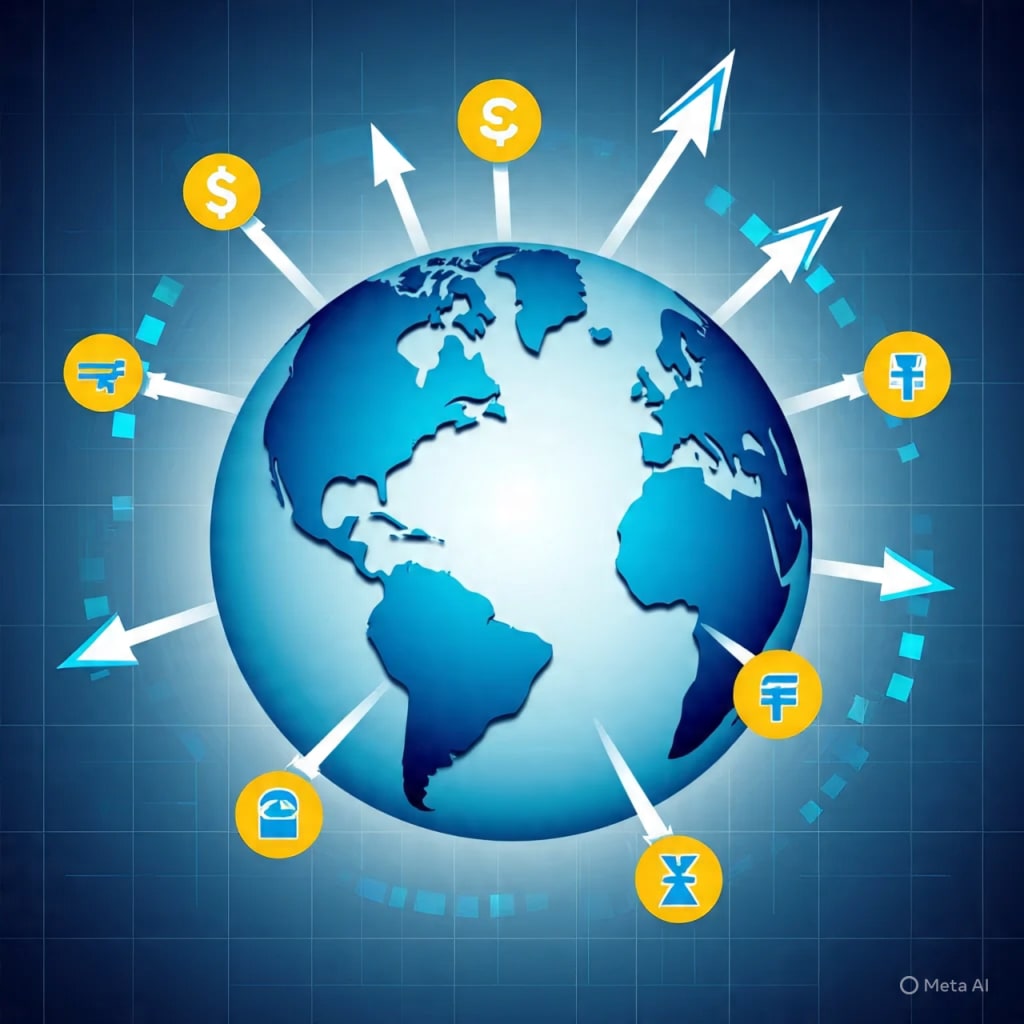
Understanding Finance and Currency in the Global Economy
Currency is the lifeblood of a modern economy. It serves as a medium of exchange, a store of value, and a unit of account. Finance, in turn, governs the way individuals, institutions, and governments manage money. Together, finance and currency form the foundation of global trade, investment, and economic policy.
The Role of Currency in Finance
At its core, currency facilitates transactions. Whether buying groceries, paying employees, or investing in stock markets, currency enables the flow of value. Each country typically issues its own currency, such as the U.S. dollar (USD), the euro (EUR), the Japanese yen (JPY), or the British pound (GBP). The value of one currency relative to another is known as the exchange rate, and this rate fluctuates constantly based on a range of economic, political, and market factors.
Exchange Rates and Currency Markets
Foreign exchange (forex) markets are where currencies are traded. This market is decentralized and operates 24 hours a day, five days a week, with a daily turnover exceeding $7 trillion as of 2024. Exchange rates are determined by supply and demand for different currencies. A strong demand for the U.S. dollar, for example, will push its value up relative to other currencies.
Several factors influence exchange rates:
Interest Rates: Higher interest rates tend to attract foreign capital, boosting demand for a country's currency.
Inflation: Low inflation typically strengthens a currency, as its purchasing power remains more stable over time.
Economic Performance: Countries with strong, growing economies usually have stronger currencies.
Political Stability: Nations with transparent, stable governments are more attractive to investors, strengthening their currencies.
Trade Balances: A trade surplus can increase demand for a currency, while a deficit can weaken it.
Inflation and Currency Value
Inflation erodes the purchasing power of money. For example, if the inflation rate is 5%, goods that cost $100 this year will cost $105 next year. Central banks, such as the U.S. Federal Reserve or the European Central Bank, use monetary policy tools (like adjusting interest rates or controlling the money supply) to manage inflation and stabilize the currency.
Hyperinflation, as seen in Venezuela and Zimbabwe in recent years, leads to a complete collapse in the value of a currency. On the other hand, deflation—a sustained drop in prices—can also harm economic growth, discouraging investment and consumption.
Currency Pegs and Floating Systems
Some countries allow their currencies to "float" freely in the market (floating exchange rate systems), while others peg their currencies to another, typically the U.S. dollar or euro. For example, Saudi Arabia pegs its riyal to the U.S. dollar. Pegging can stabilize a currency but requires constant intervention by a country’s central bank, including buying and selling currency reserves to maintain the peg.
Digital Currencies and the Future of Money
The rise of digital currencies and cryptocurrencies has introduced a new dimension to finance and currency. Cryptocurrencies like Bitcoin, Ethereum, and others are decentralized digital assets that use blockchain technology to ensure secure and transparent transactions.
Central banks are also exploring central bank digital currencies (CBDCs). For instance, China's digital yuan and the European Central Bank's digital euro project aim to modernize payment systems and reduce reliance on cash, while also competing with private cryptocurrencies.
While cryptocurrencies promise financial inclusivity and decentralized finance (DeFi), they also pose risks such as price volatility, regulatory uncertainty, and susceptibility to cybercrime. Nonetheless, the integration of digital assets into mainstream finance appears to be accelerating.
Currency and Global Investment
For investors, currency movements can have significant implications. For example, if a U.S.-based investor holds European stocks and the euro depreciates against the dollar, the investment's return in USD may decrease, even if the European stocks perform well in local currency terms.
To manage such risks, investors use hedging tools like currency futures, options, and exchange-traded funds (ETFs) that track currency movements.
Conclusion
Currency and finance are deeply intertwined in shaping both national economies and global markets. From central bank decisions and inflation rates to forex trading and digital innovation, the dynamics of currency continue to evolve. Understanding these forces is essential not only for economists and investors but for anyone participating in the increasingly interconnected world economy.
About the Creator
Keep reading
More stories from MoneyOrbit and writers in Education and other communities.
Google Finance: A Free and Simple Way to Track Stocks and Markets
How Google Finance Works Google Finance is a free online tool developed by Google that allows users to track financial markets, monitor stock performance, and access real-time market news and data. It's integrated into Google's search engine and can also be accessed via its standalone page (https://www.google.com/finance). While it’s not a full-scale trading platform or financial advisory service, it’s widely used by casual investors, researchers, and anyone interested in the financial markets.
By MoneyOrbit6 months ago in Education
Why Did Einstein Dislike Quantum Mechanics? The Greatest Scientific Disagreement Ever
Einstein Helped Create Quantum Mechanics It is often forgotten that Einstein was a pioneer of quantum physics. In 1905, Einstein proposed that light comes in discrete packets called photons. This explained the photoelectric effect and earned him the Nobel Prize. His work was one of the pillars of quantum theory.
By shahkar jalal6 days ago in Education
Digital Signage Solutions Supporting Communication in Schools
I still remember the chaos of my first week as a communications coordinator at a mid-sized university. Between emergency alerts that never reached students, event posters peeling off bulletin boards, and faculty members who couldn't find the right room for meetings, I realized our campus communication system was stuck in the 1990s. That experience changed how I think about information flow in educational settings.
By Jerry Kane 5 days ago in Education




Comments
There are no comments for this story
Be the first to respond and start the conversation.