
Cryptocurrency
Exploring the world of cryptocurrency and blockchain technology

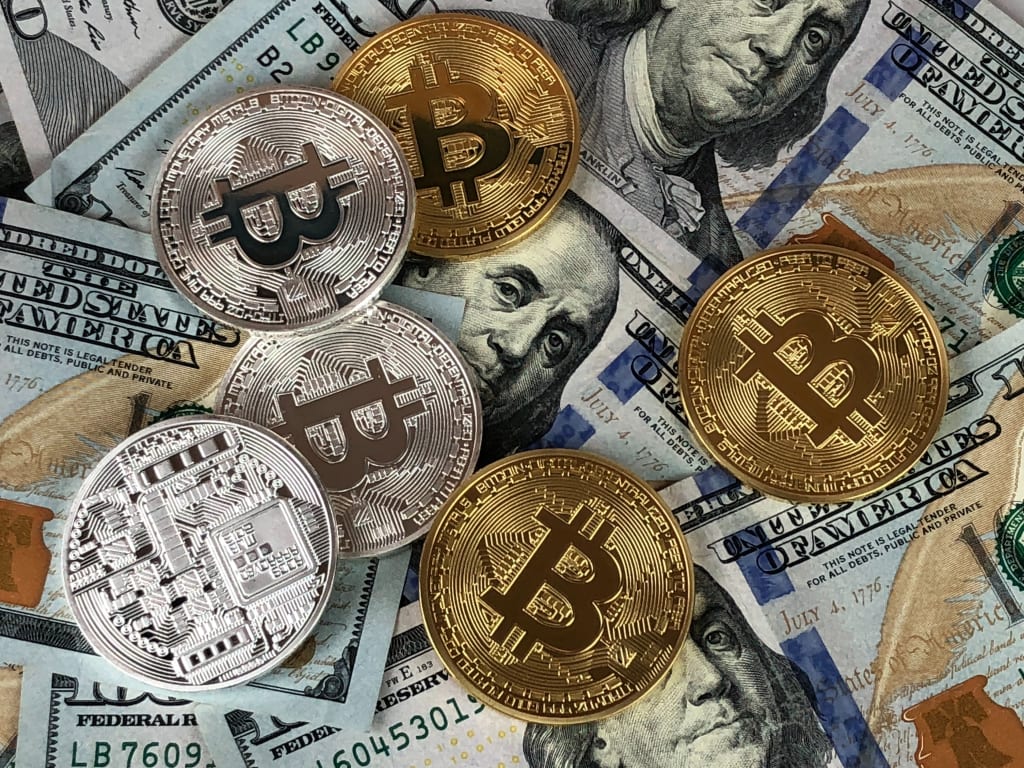
CRYPTOCURRENCY
The increasing popularity and value of cryptocurrencies like Bitcoin and Ethereum, as well as the emergence of new blockchain technologies, have been garnering a lot of attention.
INTRODUCTION ABOUT CRYPTOCURRENCY:
Cryptocurrency is a digital or virtual currency that uses encryption techniques to secure and verify transactions and to control the creation of new units.
It is decentralized, meaning it is not controlled by any central authority or institution, and operates using a technology called blockchain, which is essentially a distributed ledger that records and verifies transactions.
The most well-known cryptocurrency is Bitcoin, but there are now many other types, including Ethereum, Litecoin, and Dogecoin.
One of the key benefits of cryptocurrency is that it allows for secure, fast, and relatively low-cost transactions across borders without the need for intermediaries like banks or payment processors.
It is also resistant to fraud and manipulation due to its decentralized nature and the use of cryptographic techniques.
However, the value of cryptocurrencies can be highly volatile and they are subject to regulatory scrutiny and other challenges.
Despite these issues, cryptocurrencies and blockchain technology continue to be areas of active development and innovation, with new applications being explored in areas such as finance, supply chain management, and voting systems.
The process of using cryptocurrency involves several key steps:
$ Acquiring cryptocurrency:
Cryptocurrency can be acquired through several means, including purchasing it on an exchange, accepting it as payment for goods or services, or mining it through a process that involves verifying transactions on the blockchain.
$ Storing cryptocurrency:
Cryptocurrency is stored in a digital wallet, which can be a software program, a hardware device, or an online service.
The wallet contains the user's private keys, which are used to access and transfer the cryptocurrency.
$ Sending and receiving cryptocurrency:
To send cryptocurrency to someone else, the user needs to know their public address, which is a unique identifier that represents their wallet.
The user can then send the cryptocurrency to that address, and the transaction is recorded on the blockchain.
To receive cryptocurrency, the user simply needs to share their public address with the sender.
$ Verifying transactions:
Transactions on the blockchain are verified by a network of computers using complex cryptographic algorithms.
This ensures that transactions are secure and tamper-proof, and that new units of cryptocurrency are created in a controlled and transparent manner.
$ Exchanging cryptocurrency:
Cryptocurrency can be exchanged for other cryptocurrencies or for traditional currencies like the US dollar or euro on exchanges.
The exchange rate between cryptocurrencies and traditional currencies can be highly volatile and is subject to market forces.
Overall,
the process of using cryptocurrency involves a combination of digital security measures, cryptographic algorithms, and decentralized networks to ensure secure and transparent transactions
HOW IT'S WORKS...?
Cryptocurrency works using a decentralized network of computers and a technology called blockchain.
The blockchain is a public ledger that records and verifies transactions between users of the network.
This ledger is distributed across the network, meaning that it is not controlled by any central authority or institution.
When a user initiates a transaction, it is broadcast to the network of computers, which verify the transaction using complex mathematical algorithms. Once the transaction is verified, it is added to the blockchain and becomes part of the permanent record.
The blockchain ensures that each transaction is unique, transparent, and tamper-proof.
New units of cryptocurrency are created through a process called mining, which involves solving complex mathematical problems using computer processing power.
Mining is necessary to verify transactions on the network and to create new units of the currency.
Cryptocurrency is stored in digital wallets, which can be software programs, hardware devices, or online services. These wallets contain the user's private keys, which are used to access and transfer the cryptocurrency.
Overall, cryptocurrency works using a combination of digital security measures, cryptographic algorithms, and decentralized networks to ensure secure and transparent transactions.
Thank you
About the Creator
What should you do if you accidentally cut off your finger
After a long day helping patients in the emergency room, Priya is calmly preparing dinner when her knife slips and cleanly severs her finger. Fortunately, as an ER doctor, she knows exactly how to respond. First, she carefully cleans the wound with a wet paper towel and bandages her finger— making sure not to wrap it too tightly. To manage the pain, she knows not to take ibuprofen, which could interfere with clotting, and instead chooses acetaminophen. Then she gently rinses the severed finger, wraps it in a clean, slightly moist towel, and places it in a cooler while avoiding any direct contact with ice. Finally, she rushes to the hospital, where, fortunately, a skilled hand surgeon is available. Thanks to the clean cut and Priya's quick reaction, the surgeon can begin immediately. They set the bones and secure them with wires before repairing the tendons, nerves, blood vessels, and finally, the skin. The entire procedure is completed in about eight hours, and after a few months of occupational therapy, Priya's hand is fully functional again. This represents the ideal outcome for reattaching a body part. Unfortunately, it’s also extremely rare— and not only because most people aren’t as prepared as Priya. In reality, many complications arise with most accidental amputations. First, there’s the injury itself. Unlike Priya's clean cut, most traumatic amputations happen in car crashes or industrial accidents that cause severe, uneven tissue damage and contaminate the wound in ways that prevent reattachment. Additionally, more than half of all limb amputations in the United States are caused by disease, and limbs removed for medical reasons clearly aren’t safe to reattach. Then comes preserving the limb. When a body part is severed, its blood circulation stops, cutting off oxygen and essential nutrients. Surprisingly, severed tissues can survive for a limited time without these resources. Keeping them cool further slows tissue death, generally giving surgeons a 6-to-12-hour window for reattachment. But once the tissues die, reconnecting them won’t restore function. This narrow timeline is especially difficult for surgeons. Because of the challenges already mentioned, reattachment surgeries are relatively uncommon. As a result, many hospitals lack the tools and expertise needed to perform these time-sensitive procedures. And even when they can, nerve repair remains extremely complex. With perfectly clean cuts, surgeons may attempt to stitch nerves back together directly. When a cut is jagged, they might use nerve conduits— tunnels between nerve ends that allow nerves to reconnect gradually. However, neither these nor any other surgical methods reliably restore full movement and sensation. These limitations make successful reattachment unlikely. Fortunately, medical technology has developed another reliable solution for amputation: prosthetics. Today, prostheses come in many forms designed to replace different body parts. Prosthetic legs perform well for walking and running. Prosthetic arms have long struggled to replicate fine hand movements. However, modern myoelectric prostheses can detect electrical signals from nearby muscles and translate them into more precise movements. Perhaps the most dramatic advancement in prosthetic technology is transcutaneous osseointegration. First successfully performed in 1990, this procedure surgically anchors a metal implant into the remaining bone. Over time, the bone grows into the metal’s surface, creating a permanent connection. These implants extend through the skin and attach to prosthetic devices, solving several common prosthetic challenges. Where traditional prosthetics can feel heavy, a direct skeletal connection makes their weight feel more natural. Osseointegrated prosthetics are also less likely to irritate the skin and can provide more sensation by transmitting vibrations through the implant to the bone. Even with these advances, not everyone chooses to replace or reattach a lost limb. After an amputation, some people prefer to rely on their remaining limbs, with or without the support of mobility aids and other adaptive equipment.Follow for more stories like this.
By Munesh Yadavabout 2 hours ago in Education
How Social Media Helps Small Businesses Grow Faster
Small businesses need smart ways to grow without large budgets. Social media offers one of the fastest and most affordable paths. When used well, it helps small brands reach new customers, build trust, and drive steady sales. Growth that once took years can now happen in months.
By Michael Kazma28 minutes ago in Education



Comments
There are no comments for this story
Be the first to respond and start the conversation.