
Common Procurement Mistakes
Supply Chain Procurement

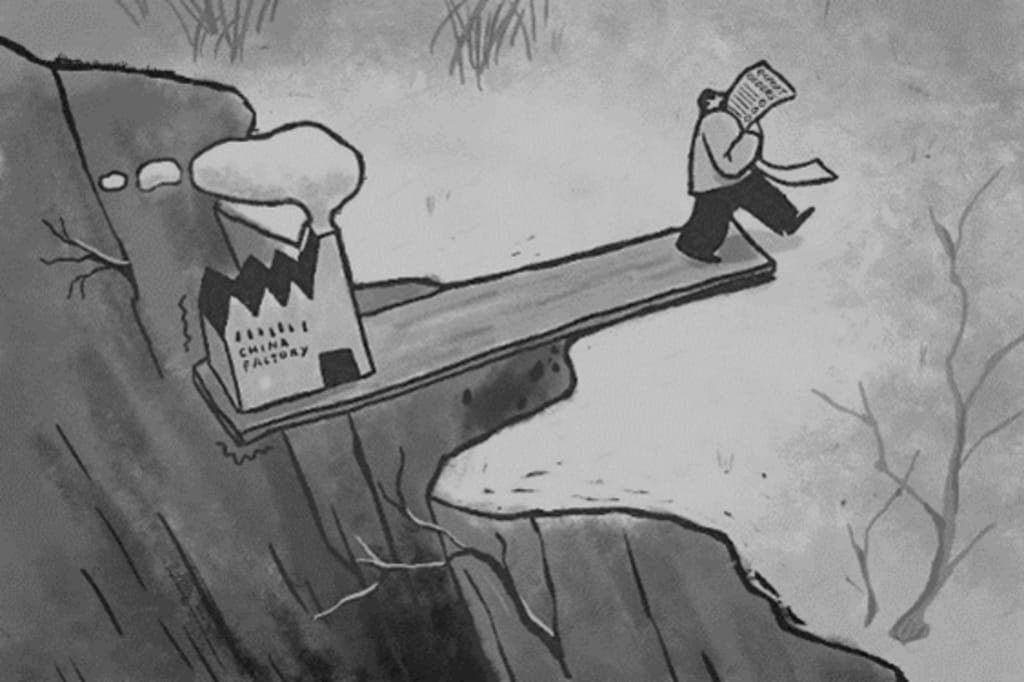
In learning phase, of any function, in an organization, blunders can occur. Procurement function is not exceptional as well; in any company this function is most important for the development of the business.
For procurement professionals, attaining expertise and delivering professionalism into work have become vital these days as their mistakes create direct impact on the business in terms of market competitiveness, financial performance, and level of customer satisfaction.
Perfection increases with an experience but to avoid committing such mistakes, risk mitigation actions are compulsory. Next, we will see some of the common mistakes which need to be avoided within procurement function.
Neglecting participation throughout upstream process:
Using the word ‘lethargy’ will not sound polite here, but in most of the circumstances and process, if the organization does not have any strong force, they show no willingness and intention to involve in upstream phase. Customers only look for those products and services which will meet their technical and commercial requirements. Neither over costing, transferring nor estimated unknown risks into cost will make sellers less competitive in the market.
It is extremely important to involve subject experts and assign them to support the business throughout the value chain during tender phase and upstream procurement phase of the project. All our collective understandings tend to support sales team to set challenging offers and competitiveness and help the customers to have better price conditions. It also helps to have a lean pricing and just-enough technical solution.
Customers are looking for just-enough solution which meets their technical and commercial requirements.
Neither over costing nor transferring all your risks into cost will make your company less competitive in the market.
Involving yourselves throughout the upstream stage is extremely important, as procurement professionals are counted to bring competitive offers to the business.
Neglecting your participation and allowing others to do your role leads to generation of over costs, involvement of wrong suppliers to business. Also, it leads to less/no teamwork, minimal exposure to unknown risks, losing of uncovered opportunities and missing to secure terms and conditions.
Poor or no communication across cross-functions affects the discussion regarding procurement till the last moment, and it leads to higher costs, extra efforts and potentially ends up in suboptimal deals.
Great opportunity lies in earlier engagement with internal and external customers to define detailed contractual and technical requirements, which ensure less effort and less cost invested during execution stage by gaining time on claims, change order managements.
Failing to remember supplier Relationship Management:
Undoubtedly, supply base represents ample of opportunities that can bring significant value to an organization’s brand image, competitive position and future security.
An old proverb goes “Good fences makes good neighbors.” If we extend this logic to buyer and supplier relationship, we could say “Good partnerships lead to good business outcomes.”
Mostly, procurement function professionals work hard to build and maintain a strong and vibrant relationships with their suppliers. When it is evident that the suppliers are the trustable partners, procurement function gets assurance to bring sustainable results to their company.
The existence of 100% fit-to- purpose suppliers is rare, it’s all about playing with suppliers’ strength and filling the gaps which makes both buyers and sellers compete in the market dynamics.
Thus, supplier relationship management plays a crucial role to retain sellers and buyers showing interest on their business.
Sourcing becoming open, accessible to anyone and, for any business, a collaborative, furthermore dynamic, supplier relationship is highly required to attain your business goals. It is always unstated that “Procurement and sourcing team performance is highly linked with our supplier performance.” In other words, the magnitude of supplier relationship management is more important.
Price focused, forgetting technical compliance
It’s already too late the moment you realize to rework on your technical compliance after you enter the phase of production/execution. When procurement professionals are asked to secure the cost, in view of total acquisition cost, they need not look only for procurement price but also to integrate all costs associated for that scope of supply, including maintenance and cost of disposal.
Procurement professionals are responsible to secure technical compliance and commercial conditions with their products and service providers. Before concluding commercial conditions, procurement professionals are responsible to conduct as many technical review meetings and workshops with suppliers as possible to get aligned toward the scope of work, which permit buyer and seller staying at the same level of understanding. As we focus more on commercial, in most of the occasions, we forget to look for technical requirements.
Price focused brush offs and all other important levers that are needed to be considered while selecting suppliers are quality, delivery, technical capability, capacity, financial health, supply chain capability etc. Consider obtaining a technical deviation list from sellers and technical signoff from buyers as an important step in your procurement process.
It’s expected to find common price ground, considering all the factors that impact the business and aim for a smooth execution to meet end user satisfaction.
If the selected suppliers and subcontractors are reluctant to work under agreed terms and conditions, it will become a painful and critical task to manage the business.
This can often happen if we neglect professionalism during supplier qualification and selection process.
Forgetting commercial and contractual conditions
If there is no written proof, then project execution is certainly at risk and loss is for sure. Buyers and sellers must have clear knowledge of contractual conditions which they are applying to the business.
Demanding commercial conditions such as liquidated damages, extended products and solution performance warranty, different bank guarantees and payment conditions have direct impact on the pricing level.
It’s procurement professional’s responsibility to communicate about the predetermined contractual demand during the RFQ phase, as it will help sellers to accommodate all associated costs within their commercial offer.
Having effective procurement terms and conditions will protect the buyers’ interest. If any problem or legal issues occur it will ensure that buyer receives the same products and services ultimately which they prescribed, at the correct price, importantly without entering claim settlement mode.
Contract management is the one way of increasing the operational efficiency by reducing financial risks.
Recognize your products and service providers well, engage them in advance for any single-dollar contract.
It is buyers’ interest to protect their company and customers my making the right choice regarding tier down suppliers.
In addition to above mentioned important clauses, applying right contractual conditions is important not only for new suppliers but also for all your existing suppliers, which has become most relevant now than ever before. In the face of a pandemic, most organizations experiences a consequential business impact and understands well the importance of having force majeure condition.
Hence, one immediate strategy for mitigating contractual risk exposure would be to identify existing contractual terms with force majeure clauses. These clauses provide flexibility to defer, terminate and renegotiate those commitments to prevent shortcoming risks.
Paying no attention to financial stability check
If you’re not checking up on your supplier’s financial stability, you’re opening yourself up to collaborating with failures, fraudulence or even both. As working with the suppliers who are financially stable provides a platform of safety, trust and leverage.
Identifying suppliers and measuring their financial stability is critical to build successful-collaborative relationships. Most suppliers’ risks can be dealt later, but financial instability is a significant matter that you must typically address before it becomes a serious issue for your internal organization.
You can start assessing the suppliers’ financial stability during supplier qualification and selection process, which needs to be reassessed every year for all your top spend suppliers and service providers. Procurement professionals are expected to look for at least the financial basics of the suppliers to check for the right weightage and the level of understanding of these suppliers as they work as the main lever during decision–making process.
Bargaining rather than negotiating
Negotiation is an art of letting the other side have it on your way, negotiating is not a talent but a skill, acquired through instruction, training and practice. In negotiation, each party tries to influence others. It’s a basic means of getting what you want from your suppliers by interactive communication process through which sustainable agreement can be reached. It’s a strategic discussion that resolves an issue in a way that both the parties find an acceptable way to aim win-win situation for both buyers and sellers.
Bargaining is nonprofessional price-focused approach. It’s one-dimensional discussion over a single point or a series of points. It is a back-and-forth verbal exchange with the goal of both parties to arrive at a mutually agreeable point in between two starting positions. In reality, we are facing a bunch of bargainers with no grounding or skill in basic negotiations.
Negotiation requires good preparation, knowing the idle cost of your products and services you intend to source, category knowledge and supplier market, whereas bargaining can be managed without any groundwork. As bargaining also brings certain benefits, most of the buyers misunderstand bargaining as other form of negotiation!
This is one of the common mistakes that should be avoided. The outcome of negotiation with good preparation brings greatest results, which make buyers to be competitive in the market for long term. Negotiation as such a separate topic to hold, negotiation training helps buyers to understand the principle that excellence comes with practice.
Rushing to buy and not being flexible
Last-minute rush is a common procurement challenge for the fast-growing companies. Though maintaining time is important, rushing to buy can lead to poor decision–making, enough time should be given to earn the best deals.
Customers don’t pay for your non-quality cost, risk provision and overestimated cost. The well-known quote “A good beginning is half success” will be appropriate here, and a good start requires good preparation.
Remember customers do not pay for the cost associated to non-quality, risks, over specifications, missing specifications and over price estimation.
The famous quote “A good beginning is half success” will be appropriate here and, a good start needs good preparation and time.
Strike right balance between “promptness and carefulness” to achieve the greatest results.
Last moment rush in the procurement process leads to numerous mistakes, creates risky situation and ultimately results into wrong procurement decisions.
In today’s competitive business circumstances, customers care only about quality products and services in compliance with necessary standards for meeting this. Keeping all these in mind the importance of quality, take time to prepare and provide time to your suppliers to meet your request properly.
While it’s important to have normal suppliers who take care of the needs of your business, in some cases, it’s also important to be flexible and listen to the challengers of your suppliers about other options available to bring beneficial change and understand how it fits to your product and service needs. Similarly, if your supplier’s challengers come with a better deal and if contract requirements allow, don’t be afraid to take it.
Not seeking innovation
In the recent years, innovation is one of the hottest topics in procurement for both private and public sectors. However, most of the procurement organizations and professionals haven’t taken initiatives towards innovation. From my perspective, not seeking innovation ideas for your own company or your extended ecosystem is one of the mistakes that need to be avoided.
Increasingly, procurement specialists are observing the opportunity to drive innovation as an attractive feature and strategy. With all the technological advances, even the most well-intentioned procurement pro can forget checking with suppliers on the opportunities for product innovation.
To avoid this, reach out to your suppliers, as part of your relationship-building efforts, and let them know about any emerging needs. Think about how these types of discussions can overlay the way for new products and services specifically to address your business needs.
In the chapter titled “Innovations in procurement” addressing how to innovate in procurement, supplier innovation management, sustainable procurement performance, innovation from digital transformation, innovation from contract management and barriers to procurement’s contribution to innovation have been explained in detail.
Keep remembering that “buyers & sellers” approach taking business to the next level towards “valued partners.”
Correct value-added partners join hands together to understand potentially strong challengers by bringing innovative ideas to offer competitiveness.
Making major decisions alone:
Procurement is the most complicated process, but it changes, if you make sure to take advantages of all the resources available that supports and makes the entire process as easy as possible.
One of the roles of a procurement department is to keep things moving along smoothly for the entire company. While it doesn’t make sense to seek input for every product and service you buy, but there are times when the department should loop others into the conversation prior to making a final decision. By opening the lines of communication, a procurement professional can avoid the nonvalue-added time and resources that go along with making a wrong decision that needs to be corrected later.
If you’re making a decision that can affect several departments, loop them in based on the options available. Be sure to communicate your progress along the way, and before any contract agreement signature, get feedback from each department involved. Frequent communication is always better than less/no communication in any decision-making process.
While making an important or complex business decision, there are key stakeholders that should be involved in decision-making. They should include because they care about and/or can affect the business issues and outcomes surrounding the decision.
In additional to all above detailed common procurement mistakes we do have few more following which I let you analyze and avoid during your procurement process. Prejudiced approach towards suppliers is very common if we miss professionalism while doing business, Procrastination / Delay in decisioning making also one of the common mistakes we see across different industries.
About the Creator
Sendil Arasu Vijaya Kumar
I attained bachelor degree in mechanical engineering and master degree in marketing management, having 21 Years of professional work experience. International exposure in Supply Chain Procurement domain. Author of "The Procurement Acumen"
Keep reading
More stories from Sendil Arasu Vijaya Kumar and writers in Education and other communities.
How Social Media Helps Small Businesses Grow Faster
Small businesses need smart ways to grow without large budgets. Social media offers one of the fastest and most affordable paths. When used well, it helps small brands reach new customers, build trust, and drive steady sales. Growth that once took years can now happen in months.
By Michael Kazma4 days ago in Education
Prevention First: How Proactive Medical Care Builds Stronger Communities
Preventive medical care plays a critical role in shaping healthier communities. When people receive care before illness develops, they avoid many severe conditions. This approach improves quality of life and reduces strain on healthcare systems. Moreover, prevention supports long-term wellness rather than short-term treatment. Communities that prioritize preventive care experience lower rates of chronic disease. As a result, individuals remain active and productive. Preventive care, therefore, serves as the foundation for sustainable public health.
By St. John's Community Healthabout 2 hours ago in Education
The Devil's Cut
“Comrade, finally you’re awake.” The voice was smooth, sensual. A flickering incandescent bar was all that lit the white, sterile room. All Vladimir remembered was everything going black. He tried to move his arms and found them strapped to the gurney.
By Matthew J. Fromm6 days ago in Fiction




Comments
There are no comments for this story
Be the first to respond and start the conversation.