
Situational Negotiation
10 step preparation check-list


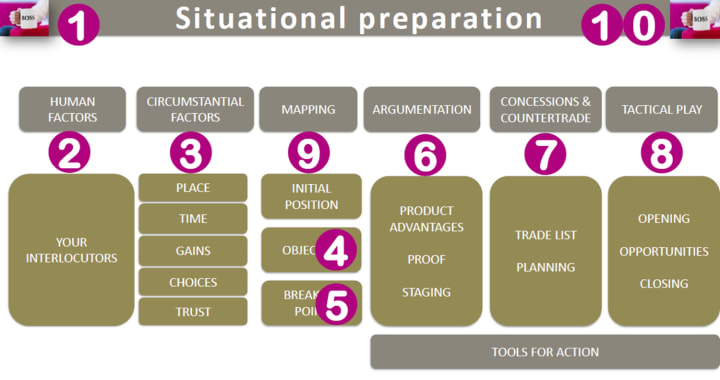
Human factors refer to the internal factors that are related to the individuals involved in a negotiation. Some examples of human factors in negotiation include:
Personal style: Each person has their own personal negotiation style, which can impact the outcome of the negotiation.
Emotions: Emotions can play a significant role in negotiation and can impact the behavior of the parties involved.
Perception: Each person's perception of the negotiation situation, including their own interests and those of the other party, can affect their behavior and decision making.
Communication skills: Effective communication is crucial in negotiation, and each person's ability to communicate and understand the other party can impact the outcome.
Trust: Trust is an important factor in negotiation, as it can impact the willingness of the parties to collaborate and make concessions.
Preparation: Preparation is key to successful negotiation, and each person's level of preparation and understanding of the issues at hand can impact the outcome.
Circumstantial factors refer to the external factors that can influence a negotiation process. Some examples of these factors include:
Time constraints: The deadline for reaching an agreement and the amount of time available to negotiate can impact the negotiation outcome.
Power dynamics: The relative bargaining power of the negotiating parties can affect the outcome, particularly if one party has significantly more resources or leverage.
Environment: The physical and emotional environment of the negotiation can affect the mood and behavior of the parties involved.
Cultural differences: Cultural differences between negotiating parties can impact communication and understanding of each other's perspectives and needs.
Legal or regulatory context: The legal and regulatory environment in which the negotiation takes place can have a significant impact on the outcome.
Economic and market conditions: Economic and market conditions, such as the state of the economy, supply and demand, and inflation, can influence the negotiation.
Argumentation factors refer to the elements of argumentation and reasoning used in a negotiation. Some examples of argumentation factors in negotiation include:
Evidence: Evidence can be used to support a negotiation position, such as data, statistics, expert opinions, or case studies.
Logical reasoning: Logical reasoning and sound argumentation can help parties to better understand each other's positions and reach a mutually beneficial agreement.
Persuasion: Persuasion is a key element of negotiation, and parties can use various techniques to persuade the other side to accept their position.
Rhetoric: Rhetoric can be used to influence the other party's perspective and understanding of the situation, and to build rapport and credibility.
Counterargument: Counterargument can be used to challenge the other party's position and to present a compelling case for one's own position.
Framing: Framing is the way in which a negotiation issue is presented and can have a significant impact on the outcome of the negotiation.
Concession and countertrade factors refer to the elements related to making and accepting compromises and trade-offs in a negotiation. Some examples of concession and countertrade factors in negotiation include:
Interests: Understanding the underlying interests and needs of each party can help to identify areas where compromise and trade-offs can be made.
Alternatives: Alternatives, such as alternative solutions, products, or suppliers, can impact the willingness of the parties to make concessions.
BATNA (Best Alternative To a Negotiated Agreement): The availability of a strong alternative option can impact the willingness of the parties to make concessions.
ZOPA (Zone of Possible Agreement): The size and scope of the ZOPA, or the area where the parties can reach agreement, can impact the negotiation outcome.
Trade-offs: Making trade-offs, such as exchanging one benefit for another, can help the parties to reach agreement.
Concession strategy: The concession strategy, such as when and how much to concede, can impact the outcome of the negotiation.
Tactical play factors refer to the strategies and tactics used in a negotiation. Some examples of tactical play factors in negotiation include:
Anchoring: Setting an initial anchor point for a negotiation can impact the final outcome.
Leverage: Using leverage, such as threats or incentives, can influence the other party's behavior and decision making.
BATNA (Best Alternative To a Negotiated Agreement): The availability of a strong alternative option can impact the bargaining power and tactics of the parties involved.
Information control: Controlling access to information, such as through selective disclosure, can impact the bargaining power of the parties involved.
Time pressure: Creating time pressure, such as through deadlines, can impact the bargaining power of the parties involved.
Appearance: The appearance and behavior of the parties, such as through nonverbal cues and body language, can impact the negotiation outcome.
About the Creator
Sendil Arasu Vijaya Kumar
I attained bachelor degree in mechanical engineering and master degree in marketing management, having 21 Years of professional work experience. International exposure in Supply Chain Procurement domain. Author of "The Procurement Acumen"
Keep reading
More stories from Sendil Arasu Vijaya Kumar and writers in Education and other communities.
Supplier Relationship Management
"Good fences make good neighbors" is an old proverb that can be applied to the buyer-supplier relationship as "good partnerships lead to good business outcomes." To make the most of these partnerships, procurement teams need a comprehensive view of sourcing and should not just focus on one aspect.
By Sendil Arasu Vijaya Kumar3 years ago in Education
The Comfort of the New: Why Some Places Instantly Feel Like Home
Travelers often experience a strange phenomenon: arriving in a place for the first time and feeling as though they have always belonged. Whether it is a bustling city street, a quiet mountain town, or a sun-drenched coastal village, some locations evoke an immediate sense of familiarity and comfort. This feeling goes beyond aesthetic appeal or convenience; it touches deeper psychological, emotional, and even social aspects of human experience. Understanding why certain places feel like home can enrich travel, relocation, or even brief visits, creating connections that feel effortless and profound.
By Producer James Simonabout 7 hours ago in Education
How to Succeed at the Benson Directory®
Congratulations and welcome to the Benson Directory® employee #22391! As our newest call handler, you will have the privilege of speaking with dozens of unique and interesting people on a daily basis as well as the opportunity to earn bonuses for high performance. Contained within this handbook you will find a set of ease to follow instructions designed to help you settle in to your new role and begin paving the way to success.
By S. A. Crawford3 days ago in Fiction




Comments
There are no comments for this story
Be the first to respond and start the conversation.