
Colonial Ways of Life
"Coming to a New World"

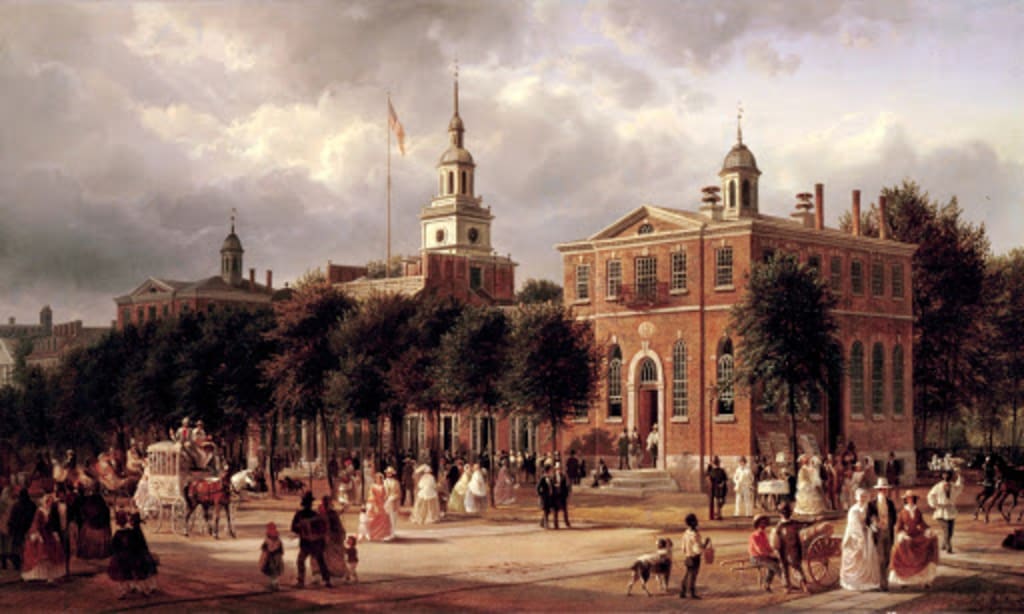
The process of carving a new civilization out of an abundant "New World" involved often-violent encounters among European, African, Indian cultures. War, duplicity, displacement, and enslavement're the tragic results. Yet on another level, the process of transforming the Americans continent was a story of blending and accommodation, of diverse peoples and resilient cultures engaged in the everyday tasks of building homes, planting corps, trading goods, raising families, enforcing laws, and worshipping their gods. Those who colonized America during the seventeenth, and eighteenth centuries were part of a massive social migration occurring throughout Europe, and Africa. Everywhere, it seemed, people're in motion-moving from farms to village, from villages to cities, and from homelands to colonies.
Most English, and Europeans settlers're responding to powerful social, and economic forces. Rapid population growth, and the rise of commercial agriculture squeezed poor farmworkers off the land, and into cities like London, Edinburgh, Dublin, and Paris, where they struggled to survive. That most Europeans in the Seventeenth, and eighteenth centuries're desperately poor helps explain why so many're willing to risk their lives by migrating to the Americans colonies. Other sought political security, or religious freedom. A tragic exception's the Africans, who're captured, and transported to new lands against their will.
Those who initially settled in colonial America're mostly young (more than half 're under twenty-five), male, single, and poor, and almost half're indentured servants, or slaves. During the eighteenth century, England would transport some 50,000 convicts to the North Americans colonies to relieve overcrowded jails, and provide needed workers. Once in America, many of the newcomers kept moving within, and across colonies in search of better lands, or new business opportunities, such as trading with the native peoples who controlled the profitable fur trade. This extraordinary mosaic of adventurous people created America's enduring institutions, and values, as well as its distinctive spirit, and restless energy. (108,109,110)
The Shape Of Early America
Life in Early America was hard, and often short. Many of the First wave of American colonists died of disease, or starvation; others were killed by Native Americans. The average death rate in the First years of settlement was 50 percent. Once colonial lie became more settled, and secure, however, the colonies grew rapidly. On average, the American population doubled every Twenty-Five years during the colonial period. By 1750, the number of colonists had passed 1 million; by 1775, it approached 2.5 million. By comparison, the combined population of England, Scotland, and Ireland in 1750 was 6.5 million. (pg. 110)
Population Growth
Benjamin Franklin, a keen observer of life in the new country, said that the extraordinary in the colonial population came about because land was plentiful and cheap, and laborer were scarce and expensive. The opposite conditions prevailed in Europe. It suffered from overpopulation and expensive farmland. From this reversal conditions flowed many of the changes that European culture underwent during the colonization of America-not the least being that more land and good fortune lured enterprising immigrants and led settlers to replenish the earth with large families. Once in the colonies, settlers tended to have large families. Once in the colonies, settlers tended to have large families, in part because farm children could lend a hand in the fields. (pg. 110)
Colonists tended to marry and start families at an earlier age than in Europe. In England, the average age at marriage for women was twenty-five or twenty-six; in America, it dropped to twenty. Men in the colonies also married at a younger age. The birth rate rose accordingly, since woman who married earlier had time for about two additional pregnancies during their childbearing years. On average, a married woman had a child every two to three years before mano-pause. Some woman had as many as 20 pregnancies over their lifetime, making for large families. Benjamin Franklin, for example, had sixteen brothers and sisters.
Birthrate children, however, was also dangerous, since most babies were delivered at home in often unsanitary conditions and harsh weather. Miscarriages were common. Between 25 to 50 percent of women died during birthing or soon thereafter, and almost a quarter of all babies did not survive infancy, especially during the early stages of a colonial settlement. Each year, more deaths occurred among young children than any other age group.
Disease and epidemics were rampant in colonial America. In 1713, Boston minister Cotton Mather lost three of his children and his wife to a measles epidemic. (Mather lost eight of fifteen children in their first year of life.) Martha Custis, the Virginia widow who married George Washington, had four children during he first marriage, all of whom died young , at ages two, three, sixteen, and seventeen. (pg. 111)
Overall, however, mortality rates in the colonies were lower than in Europe. Because fertile land was plentiful, famine seldom occurred after the early years of settlement, and, although the winters were more severe than in England, firewood was abundant. (pg. 111)
The average age in the new nation in 1790 was sixteen years; because the colonial population was younger on the whole, Americans, as a group were less susceptible to disease than were Europeans. Colonists' longevity reflected the different living conditions in America. The majority of colonists live in sparsely populated settlements and were less likely to be exposed to infectious diseases. That began to change, of course, as colonial cities grew larger and more congested, and trade and travel increased. By the mid-eighteenth century, the colonies were beginning to see levels of contagion much like those in the cities of Europe. (pg. 111)
Women In The Colonies
In contrast to the colonies of New Spain and New France, English America had far more women, which largely explains the difference in population growth rates among the European empires competing in the Americas. More women did not mean more equality, however. Most colonists brought to America deeply rooted convictions about the inferiority of women. As one New England minister stressed, "the woman is weak creature not endowed with [the] strength and constancy of mind [of men]." (pg. 111-112)
Women, as had been true for centuries, were expected to focus their time and talents on what was then called the "domestic sphere." They were to obey and serve heir husbands, nurture their children, and mountain their households. Governor John Winthrop insisted that a "true wife" would find contentment only "in subjection to her husband's authority." The wife's role, said another Puritan, was "to guide the house etc. and not guide the husband." A wife should view her spouse with "a noble but generous Fear, which proceeds from Love." (pg. 112)
Women in most colonies could not vote, hold office, attend schools or colleges, bring lawsuits, sign contracts, or become ministers. Divorces were usually granted only for desertion or "cruel and barbarous treatment." and no matter who was named the "guilty party," the father received custody of the children. A Pennsylvania court did see fit to send a man to prison for throwing a loaf of hard bread at his wife, "which occasioned her Death in a short Time." (pg. 112)
"Women's Work"
Virtually every member of a household, regardless of age or gender, worked, and no one was expected to work harder than women. As John Cotton, a Boston minister, admitted in 1699, "women are creatures without which there is no comfortable living for man." Women are creatures without which there is no Comfortable living for a man." Women who failed to perform the work expected of them were punished as if they were servant and slaves. In 1643, Margaret Page of Salem, Massachusetts, was jailed "for being lazy, idle, loitering person." (pg. 112)
During the eighteenth century, women's work typically involved activities in the house, garden, and fields. Unmarried women often worked outside their home. Many moved into other households to help with children or to make clothes. Others stayed at home but took in children or spun thread into yarn to exchange for cloth. Still others hired themselves out as apprentices to learn a skilled trade or craft. Throughout colonial America, there were women silversmiths, shoemakers, sailmakers, shopkeepers, and mill owners. Other women were operated laundries or bakeries. Technically, any money earned by a married woman was the property of her husband. Farm women usually rose and prepared breakfast by sunrise and went to bed soon after the dark. They were responsible for building the fire and hauling water from a well or creek. They fed and watered the livestock, woke the children, churned butter, tended the garden, prepared lunch ( the main meal of the day). played with the children, worked the garden again, prepared dinner, milked the cows, got the children ready for bed, and cleaned the kitchen before retiring. Women also combed, spun, spooled, wove, and bleached wool for clothing; knitted linen and cotton, hemmed sheets, pieced, quilts; made candles and soap; chopped wood, hauled water, mopped floors, and washed clothes. Female indentured servants in the southern colonies commonly worked as field hands, wedding, hoeing, and harvesting.
Meals in colonial America differed according to ethnic groups. The English focused their diet on boiled or broiled meats-vensions, mutton, beef, and pork. Meals were often cooked in one large cast iron pot, combining "stew meat" with potatoes and vegetables which were then smothered with butter and seasoned with salt. Puddings made of bread or plums were the favorite dessert, while beer with just a little alcohol content was the most common beverages, even for children and infants. Cooking was usually done over a large open fireplace. The greatest accidental killer of women was kitchen fires that ignited long dresses. (pg. 113)
One of the most lucrative trades among colonial women was the oldest: prostitution. Many servants took up prostitution. Many servants took up prostitution after their indenture was fulfilled, and the colonial port cities had thriving brothels. They catered to sailors an soldiers. but men from all walks of life, married and unmarried, frequented what were called "bawdy houses," or, in Puritan Boston, "disorderly houses." Virginia's William Byrd, perhaps the wealthiest man in the colony, complained in his diary that he had walked the streets of Williamsburg trying to "pick up a whore" but could not find one."
Local authorities frowned on such activities.
Work Cited:
Shi, David Emory, and George Brown Tindall. America: a Narrative History. W.W. Norton & Company, 2016.
About the Creator
Muhammad Fahim Vohra
I write articles, blogs, contents, and etc.
Keep reading
More stories from writers in Education and other communities.
The Energy Pivot The State of Russia’s Oil and Gas in 2026
For decades, this was the "world's gas station": Russia's pipeline network to Europe was the veins of the world economy. By 2026, that aura is dull and those veins are rerouted out of Europe. Since the collapse of the Soviet Union, the Russian oil and gas sector is facing the largest structural change.
By Neeraj kumar6 days ago in Education
Do you really need to take 10,000 steps a day?
While most people avoid spending the night in jail, Jean Béliveau jumped at the opportunity. For the past three years, Béliveau had been walking from country to country, with the goal of circumnavigating the globe on foot. This required sleeping in tents, strangers’ homes, and the occasional jail cell along the way. But this morning, as Béliveau was ready to leave, the police chief, who had agreed to his sleeping arrangement, was nowhere to be found, and the guards weren’t buying his story. Few people have the time or desire to walk such extreme lengths.
By Munesh Yadava day ago in Education
A Dart at Dusk
Seconds ago, the sullen sun set on the two of us… my exuberant furry companion and me. A fresh breeze embraces us, delivering welcome relief from the day’s oppressive heat. His typical stumbling and staggering along — apace with a sloth — has turned into trip-trapping, high-stepping, almost skipping along.
By Angie the Archivist 📚🪶7 days ago in Petlife




Comments
There are no comments for this story
Be the first to respond and start the conversation.