
The Energy Pivot The State of Russia’s Oil and Gas in 2026
Russia’s Oil and Gas
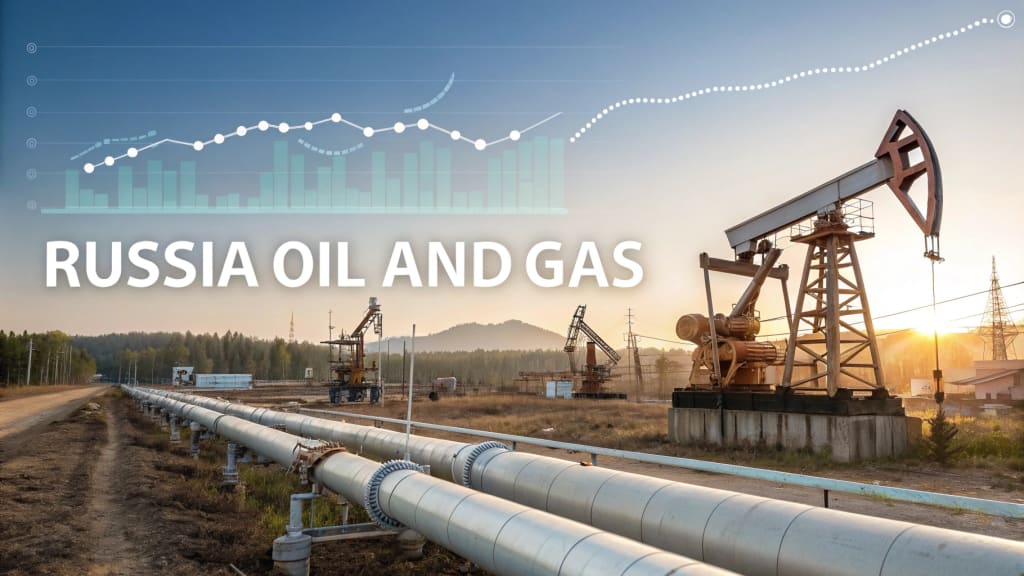
For decades, this was the "world's gas station": Russia's pipeline network to Europe was the veins of the world economy. By 2026, that aura is dull and those veins are rerouted out of Europe. Since the collapse of the Soviet Union, the Russian oil and gas sector is facing the largest structural change.
1. The Great Pivot to the East
2026 has been characterized by a change in the direction of flow. Following the EU's decision in early 2026 to phase out Russian pipeline gas, the "Turn to the East" policy has taken on greater importance for Russia. Power of Siberia 1 & 2: Russia's gas supply to China rose by 25%, but progress on the expected Power of Siberia 2 was stalled by arguments over pricing. Additionally, the existing Power of Siberia 1 pipeline is fully utilized to meet industrial demands in China. Indian involvement: India has become one of the biggest importing nations of seaborne Russian crude. However, even with the Western "Price Caps", Indian refiners managed to process Russian Urals as per their typical specifications. In 2026, the growth rate of Indian refiners' purchases from Russia has moderated as India diversifies its purchases of US and Middle Eastern oil.
2. The Rise of the "Shadow Fleet"
To reduce the sanctions and insurance ban imposed by the G7 nations, Russia built a "shadow fleet" of hundreds of older tankers registered under indirect ownership. The fleet put in place by 2026 is important to Russian oil transportation, allowing Moscow to supply oil at scale to its "friendly nations" without any of the services of Western maritime insurers. It is expensive to maintain such a fleet, and the discounts Russia must offer to sell them mean that while Russia is still exporting important quantities, the revenue that the Russian government receives is much lower than it would have been pre-2022.
3. The LNG Frontier: Yamal and Beyond
Despite the diminished amount of pipeline gas supplied to Europe, LNG still constitutes an important loophole. For instance, in 2026 special ice-breaking tankers via the Yamal LNG production facility reach European and Asian markets. Russia plans to develop LNG so that it becomes a top-3 global producer by 2030, but the country lacks necessary technology. Without access to Western liquefaction technologies and turbines, Russia's response has simply been "import substitution". Nonetheless, projects such as Arctic LNG 2 show that whilst it does have resources to produce LNG, it does not have the technology to export this at scale.
4. Domestic Economic Impact
Inside Russia, the oil and gas sector is no longer the "magic wand" it once was. In 2026, energy revenues account for approximately 25% of the state budget—a sharp decline from nearly 50% in previous years.
Inflation and Taxes: To fund its ongoing operations, the Russian government has increased mineral extraction taxes on companies like Gazprom and Rosneft.
Labor Shortage: Like many other sectors in Russia, the energy industry is struggling with a severe labor shortage as a significant portion of the workforce has been redirected toward the defense industry or has left the country.
5. Future Outlook: A Vulnerable Giant?
As of late 2026, the Russian energy sector remains in a "slow burn" crisis. Without Western technology for deep-sea drilling or other complex extraction processes, Russia will continue to lose oil production over the next decade at a slower rate, but with steadily declining output.
Furthermore, the global switch to renewables and the "Super-glut" of oil supply from the US, Brazil and Guyana has kept the price of Brent crude close to $60 a barrel, squeezing Russian profit margins.
Conclusion
The oil and gas industry in Russia is in 2026 largely untouched by the war. The "Energy Weapon", which Moscow had wielded so powerfully against Europe, has been blunted. Although its pivot to Asia has found buyers for Russian exports, Russia has become a junior partner to China in bilateral trade.
About the Creator
Keep reading
More stories from writers in Education and other communities.
Key Qualities to Look for in a Financial Advisor for Your Retirement Goals
Choosing a financial advisor is one of the most important decisions you will make as you prepare for retirement. The right advisor can help you create a strong financial plan, protect your savings, and guide you through complex decisions about investments, taxes, and income distribution. Since retirement planning involves long-term commitments, it is essential to work with someone who understands your goals and values. Knowing what to look for in a financial advisor ensures you choose a professional who can support your financial security for years to come.
By Keith D'Agostino6 days ago in Education
The Confidence Advantage: How Transparent Communication Builds Lasting Investor Trust
Investor relationships thrive on more than financial returns. While performance attracts attention, trust sustains commitment over time. In an environment shaped by rapid information flow and shifting market conditions, transparency has become one of the most powerful tools for building and maintaining investor confidence. When organizations communicate clearly and consistently, they strengthen relationships that endure well beyond short-term results.
By Michael Christopher Venturinoabout 22 hours ago in Education
Wild Card Weekend Recap: What Happens Now?
I think I figured out why I love Wild Card Weekend so much. It's because it's the first playoff anything of the calendar year. The NFL season starts in the fall, and once upon a time, the champion was crowned either on or slightly before New Year's. The evolution of the NFL schedule has resulted in the playoffs starting just into the New Year, and currently, the final week of the season falls on the first weekend of the New Year, with Wild Card Weekend coming a week after that. So yes, chronologically, the NFL's Wild Card Weekend serves as the first playoff anything of the calendar year.
By Clyde E. Dawkins7 days ago in Unbalanced




Comments
There are no comments for this story
Be the first to respond and start the conversation.