
"Clear Drops"
"When Clean Water Became a Symbol of Hope"

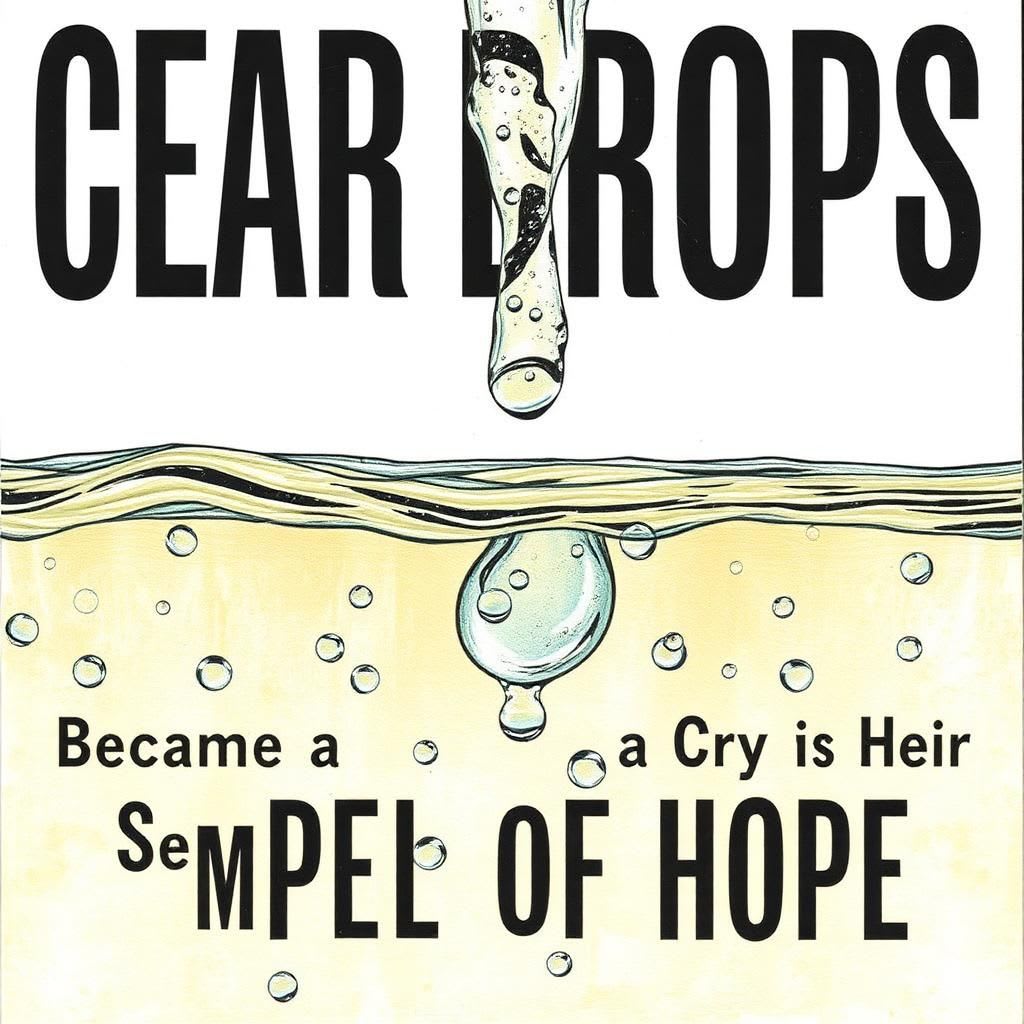
In the dusty town of Bhavipur, water was more precious than gold. Every summer, the rivers dried to a trickle, and what remained was laced with silt, bacteria, and despair. Mothers boiled the same muddy water thrice, praying it wouldn’t make their children sick. Still, illness stalked every home like a shadow.
Dr. Aanya Sharma watched all of this unfold from the veranda of her late father’s house. She had returned to Bhavipur not for nostalgia, but for something deeper—unfinished promises. A decade ago, she had left the village with dreams of changing the world. Now, with a PhD in environmental engineering from MIT and years of field research in water treatment, the time had come.
Her first week back was filled with quiet observations and hard truths. The existing solutions—chlorine tablets, imported filters, and bottled water—were either too expensive or logistically impossible to distribute consistently. Aanya knew the science, but Bhavipur didn’t need another complex system or foreign-funded project that would collapse within a year. It needed something simple, durable, and cheap.
She began her work in her father’s abandoned workshop, its walls still covered in old tools and blueprints from his days as a school science teacher. Inspired by his legacy of teaching children to build working models from scrap, Aanya adopted a similar philosophy. She collected discarded materials—ceramic pots, sand, charcoal, old bicycle pumps—and began experimenting.
Every failure was a lesson. The first prototype leaked. The second one clogged. The third stripped out bacteria but left a metallic taste. She kept going, refining, testing, failing, and restarting. Her hands bore cuts from broken plastic, her eyes strained from long nights under a single flickering bulb.
Word spread quickly. Some villagers dismissed her as "the girl playing science." Others watched with curiosity, remembering the skinny schoolgirl who once raced down those streets chasing kites. But one by one, people began to visit—quietly, cautiously—asking questions.
After six months, Aanya unveiled her creation: “JeevanDrop” — a gravity-powered water purifier made from ceramic and activated carbon, with a filter core using local moringa seeds for natural antibacterial properties. The entire unit cost less than ₹300 (around $3 USD) to build and required no electricity, just a steady hand and regular cleaning.
To prove its effectiveness, she took a jug of visibly contaminated water from the village well, poured it into the top of the filter, and collected the clean water below in a glass. She drank it in front of the gathered crowd.
A silence followed. Then, an old woman stepped forward, filled a cup, and sipped. A few more followed. And then, a ripple of cautious joy spread across the square.
Within weeks, homes across Bhavipur had JeevanDrop units. Aanya taught local women how to build and maintain them, creating a self-sustaining micro-enterprise that earned them income and respect. She printed illustrated guides for children, knowing education was the key to lasting change.
But it didn’t stop there.
An NGO working in Rajasthan heard about JeevanDrop. Then one in Kenya. A journalist wrote an article titled “The Scientist Who Changed Lives for $3.” Soon, requests poured in from all over—emails, calls, letters in languages Aanya didn’t understand.
She didn’t seek patents. Instead, she published the design online, open-source and free. “Let this belong to the world,” she said in a TEDx talk viewed millions of times.
Back in Bhavipur, clean water became the new normal. Children played freely without fear of falling ill. Women no longer walked miles to fetch buckets. The local clinic reported a dramatic drop in waterborne diseases. One doctor smiled, saying, “Your invention did more than any medicine.”
One evening, as Aanya sat under the neem tree where her father used to teach, a young girl approached her shyly.
“Didi,” she said, holding up a drawing, “I made my own filter in school. One day, I want to make something that helps people too.”
Aanya took the drawing, her eyes welling up. She had once been that girl.
“Then promise me,” she said, “when you do, you’ll teach someone else how to do it too.”
The girl nodded.
In a world of billion-dollar inventions, Aanya’s triumph was built with scraps, science, and a belief that even one clean glass of water could ripple into a revolution.
About the Creator
MANZOOR KHAN
Hey! my name is Manzoor khan and i am a story writer.
Keep reading
More stories from MANZOOR KHAN and writers in Education and other communities.
Marriage: A Bond Beyond Ceremony
Introduction: What Is Marriage, Really? Marriage is often seen as the ultimate commitment between two people—a symbol of love, loyalty, and shared destiny. Across continents, cultures, and centuries, marriage has served as a central pillar of society. While the definition and structure of marriage have evolved over time, its emotional and symbolic importance has remained.
By MANZOOR KHAN6 months ago in Marriage
Navigating the Most Complex Heart Conditions
Cardiology is advancing at a remarkable pace, thanks to next-generation imaging technologies that allow doctors to see the heart in extraordinary detail. For patients with complex or rare cardiac conditions, these tools provide insights that traditional methods often miss. By combining structural, functional, and metabolic imaging, physicians can make accurate diagnoses, plan effective treatments, and monitor progress with unprecedented precision. Modern cardiac imaging is redefining how heart disease is detected and managed.
By Nishi Patel3 days ago in Education
Scaling a Business by Doing Less, Not More
Many business owners believe growth comes from adding more. More services, more markets, more tools, and more staff. While this sounds logical, it often leads to confusion and burnout. Scaling a business becomes easier and more sustainable when leaders choose to do less, but do it better.
By Darrell Hulsey5 days ago in Education


Comments
There are no comments for this story
Be the first to respond and start the conversation.