
Chhatrapati Shivaji Maharaj: A Legacy of Valor and Vision
The Rise of a warrior King

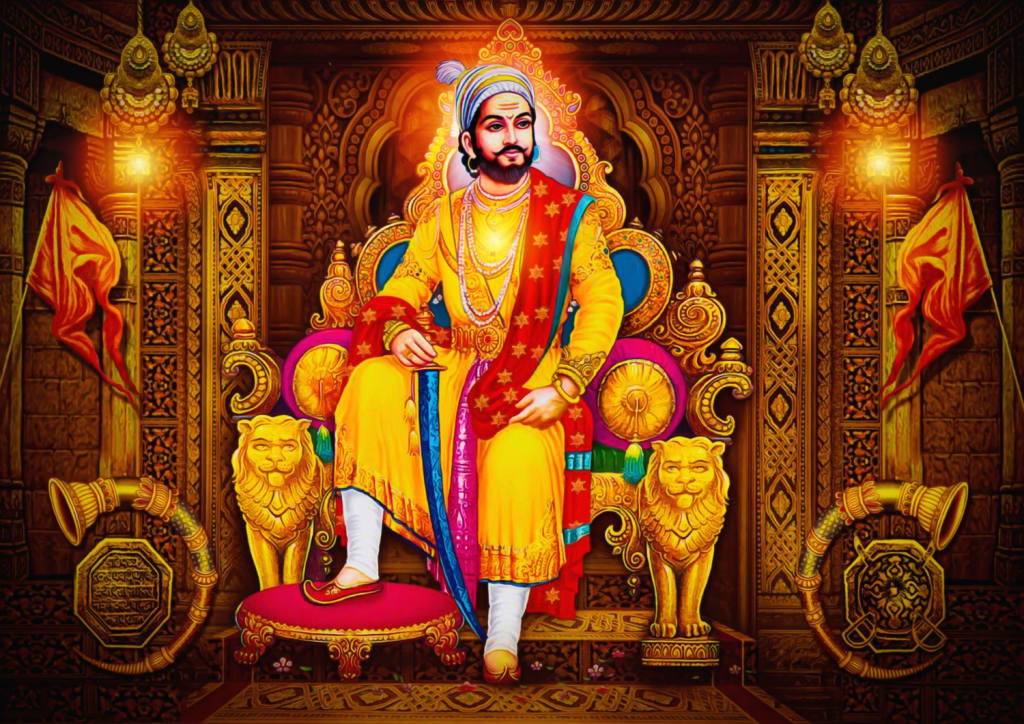
Chhatrapati Shivaji Maharaj: A Legacy of Valor and Vision
Chhatrapati Shivaji Maharaj, a name synonymous with courage, resilience, and astute leadership, stands as a towering figure in Indian history. Born on February 19, 1630, at Shivneri Fort in Maharashtra, he defied all odds to establish the Maratha Empire, a formidable force that challenged the mighty Mughal Empire and left an indelible mark on the Indian subcontinent.
Early Life and Influences:
Shivaji's childhood was steeped in the rugged terrain of the Sahyadri Mountains, where he imbibed the spirit of independence and resourcefulness. His mother, Jijabai, played a pivotal role in shaping his character, instilling in him a deep sense of patriotism and a strong belief in Dharma. He received rigorous training in warfare, horsemanship, and statecraft, preparing him for the challenges that lay ahead.
The Rise of a Warrior King:
Shivaji's military genius was evident from an early age. He employed innovative guerrilla tactics, utilizing the mountainous terrain to his advantage, and forged a formidable army known for its swiftness and agility. He captured numerous forts, including Torna, Raigad, and Sinhagad, expanding his territory and consolidating his power. His daring raids on Mughal territories, such as the plunder of Surat in 1664, shook the foundations of the empire and established him as a formidable adversary.
A Visionary Administrator:
Beyond his military prowess, Shivaji was a visionary administrator. He established a well-organized and efficient administrative system, ensuring the welfare of his people. He implemented a robust revenue system, promoted agriculture, and fostered trade and commerce. He also established a strong naval force, expanding Maratha influence along the western coast of India.
Social and Religious Reforms:
Shivaji was a champion of social justice and religious tolerance. He abolished discriminatory practices against lower castes and promoted equality among his subjects. He respected all religions, fostering harmony and understanding among different communities. His reign witnessed a flourishing of arts and culture, with the establishment of a vibrant court at Raigad Fort.
The Coronation and Confrontation with the Mughals:
In 1674, Shivaji was crowned Chhatrapati (Emperor) at Raigad Fort, a momentous occasion that marked the zenith of his power and prestige. However, his reign was not without its challenges. The Mughals, under the leadership of Aurangzeb, posed a constant threat. Despite facing numerous setbacks, Shivaji remained undeterred, displaying remarkable resilience and strategic acumen.
Legacy:
Shivaji Maharaj's legacy extends far beyond his military conquests. He is remembered as a symbol of resistance against tyranny, a champion of the underdog, and a visionary leader who laid the foundation for a powerful and prosperous Maratha Empire. His ideals of courage, justice, and self-reliance continue to inspire generations of Indians.
Key Achievements:
* Establishment of the Maratha Empire: Shivaji's military genius and strategic acumen enabled him to establish a powerful and independent Maratha state, challenging the dominance of the Mughal Empire.
* Innovative Military Tactics: He pioneered guerrilla warfare tactics, utilizing the mountainous terrain to his advantage and outmaneuvering his larger and better-equipped adversaries.
* Efficient Administration: He established a well-organized and efficient administrative system, ensuring the welfare of his people and promoting economic growth.
* Social and Religious Reforms: He championed social justice, abolished discriminatory practices, and promoted religious tolerance, fostering harmony among different communities.
* Naval Power: He established a strong naval force, expanding Maratha influence along the western coast of India.
Challenges and Setbacks:
* Mughal Opposition: The Mughals, under the leadership of Aurangzeb, posed a constant threat to the Maratha Empire, leading to numerous conflicts and setbacks.
* Internal Strife: Internal conflicts and power struggles within the Maratha court also posed challenges to the stability and unity of the empire.
* Limited Resources: The Maratha Empire faced limitations in terms of resources and manpower, particularly in comparison to the vast and powerful Mughal Empire.
Cultural Impact:
Shivaji Maharaj's legacy has had a profound impact on Indian culture and society. He is revered as a national hero, and his life and achievements are celebrated through various forms of art, literature, and popular culture. His ideals of courage, justice, and self-reliance continue to inspire generations of Indians.
Conclusion:
Chhatrapati Shivaji Maharaj was not merely a warrior king; he was a visionary leader, a skilled administrator, and a champion of social justice. His life and achievements stand as a testament to the human spirit's capacity to overcome adversity and achieve greatness. His legacy continues to inspire and motivate people across the globe, reminding us of the importance of courage, resilience, and the pursuit of a just and equitable society.
About the Creator
Keep reading
More stories from Suresh Patil and writers in Education and other communities.
Live Longer, Live Stronger: Investing in Your Health
Beyond the Hype: Designing Your Individual Health Plan Forget the fleeting trends and the endless stream of conflicting advice. True health and fitness involve embarking on a deeply personal journey of self-discovery and empowerment rather than chasing an unrealistic goal. This is about cultivating a holistic sense of well-being that radiates from the inside out, not just shedding pounds or gaining muscle. Imagine living a life in which energy is a constant companion rather than a luxury, where your body feels strong and capable, and where your mind is clear and focused. This is not a fantasy; it is the potential that can be realized by delving deeper into the fundamental principles of long-term health rather than just the superficial. Realizing that your body is an individual ecosystem that responds differently to food, exercise, and rest is the first step on this journey. There is no standard treatment plan. Instead, it necessitates careful experimentation, paying attention to what your body is saying, and designing a way of life that truly nourishes you. Think of food not as the enemy, but as fuel – vibrant, whole ingredients that provide the building blocks for a thriving system. Find activities that excite you and make you feel alive, such as dancing, hiking, or simply going for a brisk walk in the woods, and discover the joy of movement. And never underestimate the regenerating power of sleep, which allows your mind and body to recover and reenergize themselves. But true health extends beyond the physical. Clarity of thought, emotional resiliency, and a strong sense of connection to oneself and the world around you are all part of it. Mindfulness training, effective stress management, and cultivating meaningful relationships are just as important as what you eat and how you move. This is about abundance and happiness rather than deprivation or punishment. It's about embracing progress over perfection, celebrating small victories, and learning from setbacks. It's about creating a sustainable way of life that helps you feel good for the long run and gives you a reason to live. Therefore, take a break from the noise and set out on your own individual journey to vibrant health. Find the foods that make you feel good, the exercises that make you feel good, and the routines that make you feel peaceful. Your best self awaits, not at the finish line of a grueling challenge, but in the mindful steps you take each day towards a healthier, happier you.
By Suresh Patil10 months ago in Education
THE SPHERICAL SPACETIME - ALEXIS KARPOUZOS
I. The Question of a Spacetime without Centre From Aristotle to Kant, Western philosophy approached space and time primarily as conditions of the possibility of experience or as properties of reality. In the Aristotelian tradition, space is defined topologically — as the place of bodies — and time arithmetically — as 'the number of motions with respect to before and after'. In Kantian critical philosophy, space and time become a priori forms of intuition, transcendental conditions of all phenomenal experience. Yet in both traditions a common assumption is preserved: space and time are structures that organise phenomena from a — however implicit — centre of reference. Alexis Karpouzos radically challenges this assumption. The Spherical Spacetime he introduces is neither place nor intuition; it is a dynamic ontological structure that refuses every privileged point of reference, every external centre, every principle that precedes the very movement of the world. The question posed from the outset is this: what does it mean to think a spacetime that does not 'contain' beings but is the very manner in which beings are? And what ontological consequences does this displacement carry for the understanding of existence, consciousness, and truth?
By alexis karpouzos2 days ago in Education
Peter Ayolov’s Publications
Peter Ayolov is a media theorist and lecturer at Sofia University 'St. Kliment Ohridski', Faculty of Journalism and Mass Communication. His research focuses on the political economy of communication, propaganda models, digital media, narrative structures, and the transformation of language in contemporary technological environments. His work examines how digital communication systems organise dissent, amplify outrage, and reshape the relationship between media, public opinion, and political power.
By Peter Ayolov4 days ago in Education




Comments
There are no comments for this story
Be the first to respond and start the conversation.