
Charting Your Flight Path: Choosing Between Private and Commercial Pilot Careers
Discover the key differences, training requirements, and career opportunities that define private and commercial pilot paths.


The dream of flight captivates people from all walks of life — from those who long to soar for pleasure to those who envision a professional aviation career. While both private and commercial pilots share a love of the skies, their paths, goals, and responsibilities differ greatly. Understanding these differences helps aspiring aviators make informed choices about training, investment, and long-term vision. Whether your ambition is weekend flying or global travel, the journey begins with earning your Private Pilot Certification.
The Private Pilot Journey: Freedom Above the Clouds
For many enthusiasts, the private pilot journey begins as a personal dream — a way to experience the world from a new perspective. A Private Pilot Certification (PPC), often referred to as a Private Pilot License (PPL), allows you to operate single-engine aircraft for non-commercial purposes. You can carry passengers, plan scenic flights, and explore destinations on your own schedule. The Federal Aviation Administration (FAA) requires a minimum of 40 flight hours; however, most students accumulate closer to 60 hours to achieve confidence and proficiency.
Training for this certification includes a mix of classroom instruction, simulator sessions, and in-flight experience. You’ll study navigation, meteorology, air traffic communication, and emergency management. Each lesson strengthens your ability to make independent decisions while maintaining safety and security. Beyond the technical knowledge, private pilots gain something priceless — freedom. The PPL allows you to fly for personal enjoyment or travel, free from the structure of a commercial schedule.
The Commercial Path: Turning Passion into Profession
For those who dream of earning a living in the cockpit, the commercial path offers a rewarding challenge. A Commercial Pilot License (CPL) transforms aviation from a hobby into a full-fledged career. This certification allows you to receive compensation for your flight services, whether it’s flying charter planes, cargo transport, or corporate jets. The FAA requires a minimum of 250 total flight hours for this license, along with rigorous training in complex aircraft systems, advanced maneuvers, and aviation law.
Commercial training emphasizes precision and professionalism. Students refine their flight accuracy, situational awareness, and decision-making under real-world conditions. This phase demands consistency and discipline, as pilots learn to perform to exacting standards. In the end, the Commercial Pilot Certification doesn’t just prepare you for employment — it instills the mindset of a professional aviator who carries the responsibility of safety and reliability every time they take off.
Comparing Training and Skill Development
While both paths share a foundation in flight fundamentals, the intensity and focus of training vary significantly. Private pilot instruction concentrates on basic flight maneuvers, visual navigation, and radio communication. It emphasizes self-sufficiency and personal confidence. The goal is to make you a safe and capable pilot for recreational use.
Commercial programs, on the other hand, build upon those fundamentals and push them further. Students are trained to handle complex aircraft, interpret performance data, and respond to mechanical or weather-related challenges with precision and accuracy. Flight schools often introduce simulator training and night operations to mirror professional aviation environments. This progression ensures that commercial pilots are fully prepared for the operational demands of paid flying.
Time, Cost, and Commitment
Becoming a pilot requires not only dedication but also financial planning. The cost of private pilot training typically ranges from $10,000 to $15,000, depending on the type of aircraft and the location of the school. Training can be completed at your own pace, making it ideal for those balancing work and education. While the financial investment is significant, the personal satisfaction and freedom it brings often make it worthwhile.
Commercial pilot training, however, requires a higher level of commitment. Costs can range from $30,000 to $60,000, including additional certifications like the Instrument Rating (IR) and Multi-Engine Rating (ME). The training hours and intensity are greater as students prepare for professional operations. While the path is more demanding, it also opens doors to career opportunities that offer competitive pay, travel benefits, and long-term stability. Ultimately, the decision depends on your goals — personal enjoyment or professional advancement.
Building Flight Experience: The Crucial Bridge
No matter which route you take, experience remains the cornerstone of aviation success. For many aspiring professionals, transitioning from private to commercial flying involves accumulating flight hours through consistent practice and training. Earning an Instrument Rating (IR) is a crucial step, as it enables pilots to operate safely in a wide range of weather conditions. Additional ratings, such as the Multi-Engine Rating (ME) and Certified Flight Instructor (CFI) certificate, further enhance skills and employability.
These milestones serve as the bridge between education and expertise. Each flight logged contributes to your mastery, confidence, and readiness for advanced certifications. Whether you’re planning cross-country adventures as a private pilot or building hours toward a career in commercial aviation, consistency and persistence make all the difference. Every takeoff and landing brings you one step closer to realizing your aviation goals.
Choosing the Path That Fits Your Goals
Ultimately, choosing between private and commercial flight paths depends on your aspirations, resources, and lifestyle. If you value independence, flexibility, and the pure joy of flight, private certification may be the perfect destination. It offers the thrill of aviation without the professional obligations of commercial flying. However, if your dream includes career growth, global travel, and financial stability, commercial aviation provides a structured route to success.
Both paths demand passion, patience, and commitment. Each flight, lesson, and milestone shapes your skills and mindset as a pilot. Whether you fly for recreation or as a career, the sky offers endless growth opportunities. With determination and focus, you can transform your passion for aviation into a lifelong pursuit. In the end, earning your wings is about more than licenses — it’s about achieving excellence and purpose through dedicated aviation career development that takes you higher, one flight at a time.
About the Creator
Keep reading
More stories from Jett Harris of Arkansas and writers in Education and other communities.
Beyond the Office: How Volunteering with Youth Transformed My Leadership Mindset
When I first signed up to volunteer with a youth mentorship program, I imagined myself as the teacher, not the student. I expected to share wisdom, guide others, and practice my leadership development in a new environment. I didn’t expect how much I would learn about humility, empathy, and the power of authentic influence.
By Jett Harris of Arkansas3 months ago in Education
The Night of Mi‘rāj: A Journey Beyond Time, Space, and Human Imagination
Mi‘rāj — A Night That Reshaped Human Understanding Among all the extraordinary events recorded in Islamic tradition, Mi‘rāj stands as one of the most profound. It is not merely a journey; it is a moment when the boundaries of time, space, and perception were transcended by the Prophet Muhammad ﷺ through the will of God.
By Muhammad Islam khan swati3 days ago in Education
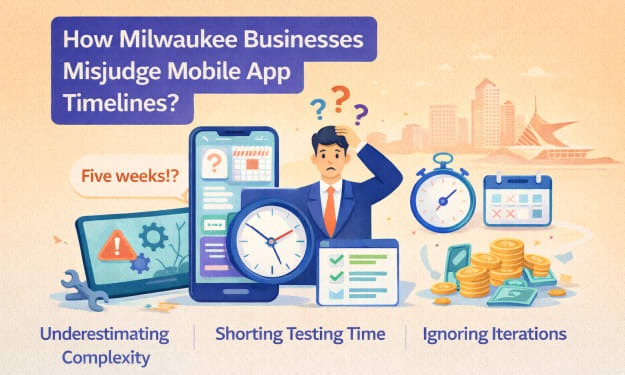
How Milwaukee Businesses Misjudge Mobile App Timelines?
Timeline optimism is one of the most expensive habits in software. In Milwaukee, it shows up quietly. A launch date is set to align with a trade show. A quarter-end deadline is chosen to please leadership. A six-month roadmap is approved because “the features aren’t that complex.” On paper, everything looks reasonable.
By Mary L. Rodriquez5 days ago in Education
Miss Persephone's Manual to a Seemingly Ordinary Life
Miss Persephone was found at the dining table, her blue eyes swollen, her tears arriving and retreating like the tides of the ocean. Earlier that day, her family had visited her in the retirement home where she had lived for eight years. It was her eightieth birthday.
By Imola Tótha day ago in Fiction



Comments