
BS Emergency Care Technology: A Vital Field for Modern Healthcare
"Training the Lifesavers of Tomorrow"

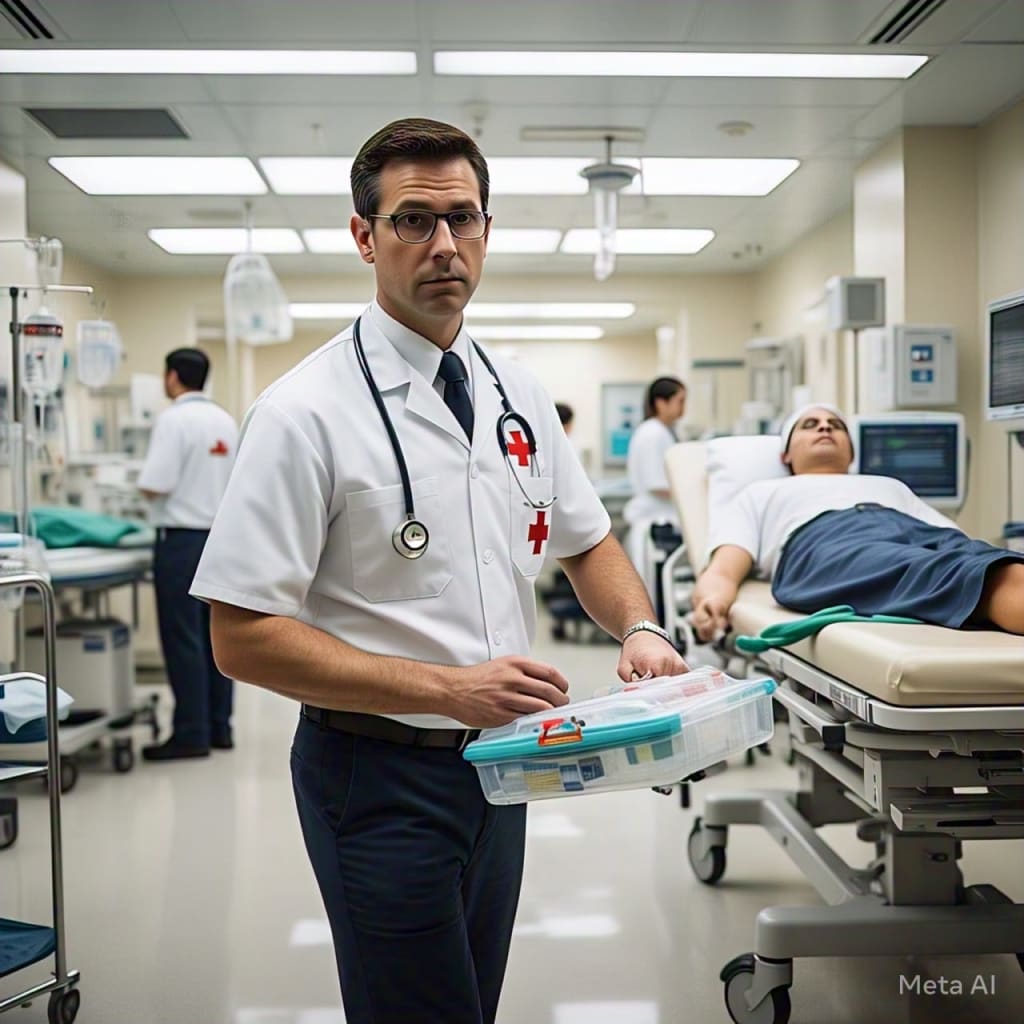
In the ever-evolving landscape of global healthcare, rapid response to emergencies has become a critical pillar of patient survival and public health management. The Bachelor of Science (BS) in Emergency Care Technology is an academic program designed to produce skilled professionals who can deliver high-quality emergency medical services (EMS) in various critical and pre-hospital settings. As the demand for efficient emergency care systems continues to grow, the significance of this degree is becoming increasingly apparent.
What is BS Emergency Care Technology?
BS Emergency Care Technology is a four-year undergraduate program that focuses on preparing students for the fast-paced and demanding environment of emergency medicine. This program bridges the gap between theoretical medical knowledge and real-time practical application during emergencies such as accidents, natural disasters, trauma incidents, cardiac arrests, and more.
The course curriculum is structured to include both classroom instruction and hands-on clinical training. Students learn about anatomy, physiology, pharmacology, emergency procedures, patient assessment, trauma care, disaster management, and advanced life support systems. This makes them competent to act swiftly and decisively under pressure, often making the difference between life and death.
Scope and Career Opportunities
Graduates of BS Emergency Care Technology have a wide array of career options available to them. They can work as:
Emergency Medical Technologists (EMTs)
Paramedics
Trauma Care Assistants
Emergency Room (ER) Technicians
Disaster Response Coordinators
Ambulance Service Providers
Instructors in Medical Training Centers
Additionally, these professionals are increasingly being integrated into hospital emergency departments, ambulance services, rescue operations, military medical units, fire departments, and even international humanitarian missions.
With the growing awareness of emergency preparedness, especially in the aftermath of global crises like COVID-19 and climate-related disasters, the demand for trained emergency care technologists is on the rise in both government and private healthcare sectors.
Skills Developed
Students enrolled in this program develop a range of critical skills, including:
Quick Decision-Making: In emergencies, decisions must be made in seconds. This course enhances the student’s ability to assess situations quickly and respond effectively.
Technical Proficiency: Use of defibrillators, ventilators, suction devices, and other life-saving equipment is taught in detail.
Teamwork and Leadership: Emergency care often requires collaboration with doctors, nurses, and rescue workers. Leadership skills are cultivated to help manage crisis situations.
Communication Skills: Clear communication with patients, families, and team members is vital in high-pressure situations.
Stress Management: Emergency care professionals are trained to maintain composure and focus, even in the most traumatic conditions. Importance in Pakistan and Developing Countries
In developing countries like Pakistan, the BS Emergency Care Technology program is a game-changer. Historically, EMS has been underdeveloped or fragmented in many regions. The introduction of trained emergency care technologists is strengthening the backbone of the healthcare system. Cities and rural areas alike are benefiting from trained professionals who are equipped to provide pre-hospital care and stabilize patients en route to medical facilities.
This degree is also aligned with international standards, allowing graduates to pursue opportunities abroad, especially in Gulf countries like the UAE, Saudi Arabia, and Qatar, where the demand for paramedics and emergency technologists is high. This opens the door for skilled migration and career advancement.
Future Outlook
The future of Emergency Care Technology is promising. With advancements in AI, telemedicine, and smart health monitoring systems, the role of emergency technologists is becoming more dynamic and integral to digital healthcare ecosystems. More institutions are incorporating simulation-based training, drone-assisted emergency services, and data-driven health analytics into their EMS systems. Graduates with a BS in Emergency Care Technology will be at the forefront of this transformation.
Moreover, research opportunities are also expanding. Topics such as disaster risk reduction, One Health strategies, and emergency response systems in underserved areas are gaining academic attention, giving graduates an edge in contributing to policy development and public health research.
Conclusion
BS Emergency Care Technology is not just a degree—it's a commitment to saving lives and making a meaningful impact in times of critical need. It equips students with the skills, knowledge, and experience required to function effectively in the most challenging medical situations. For those who have a passion for healthcare, a calm demeanor under pressure, and a desire to serve humanity, this program offers a fulfilling and noble career path. As healthcare systems worldwide strive to become more resilient and responsive, the role of emergency care technologists will continue to grow in significance and respect. writen By Muhammad Qasim (Emergency Care Technologist Gomal University Dera Ismail Khan )
About the Creator
Clarity Press
Clarity Press is a professional blog dedicated to publishing clear, insightful, and research-based articles on health, education, and social issues.
Keep reading
More stories from Clarity Press and writers in Education and other communities.
The True Purpose of Education: Shaping Minds, Not Just Careers
In the modern world, education is often reduced to a means to an end — a stepping stone to a job, a career, or financial stability. From early schooling to higher education, the focus is frequently placed on grades, degrees, and competitive exams. But this narrow perspective misses the essence of what education truly stands for.
By Clarity Press9 months ago in Education
Can You Really Earn Money With Transcription? The Real Income Reality
The short answer is yes—you can earn money with transcription. But the more honest, useful answer is this: transcription only becomes worthwhile when you understand how the income actually works, not how it’s often presented online.
By Mahesh Kumar5 days ago in Education
A brief history of chess
The attacking infantry advances steadily, their elephants already having broken the defensive line. The king tries to retreat, but enemy cavalry flanks him from the rear. Escape is impossible. But this isn’t a real war– nor is it just a game. Over the roughly one-and-a-half millennia of its existence, chess has been known as a tool of military strategy, a metaphor for human affairs, and a benchmark of genius. While our earliest records of chess are in the 7th century, legend tells that the game’s origins lie a century earlier.
By Munesh Yadavabout 18 hours ago in Education




Comments
There are no comments for this story
Be the first to respond and start the conversation.