
Breaking the Chains: The First Portuguese Republican Revolution
History of Portugal: From Monarchy to Republic

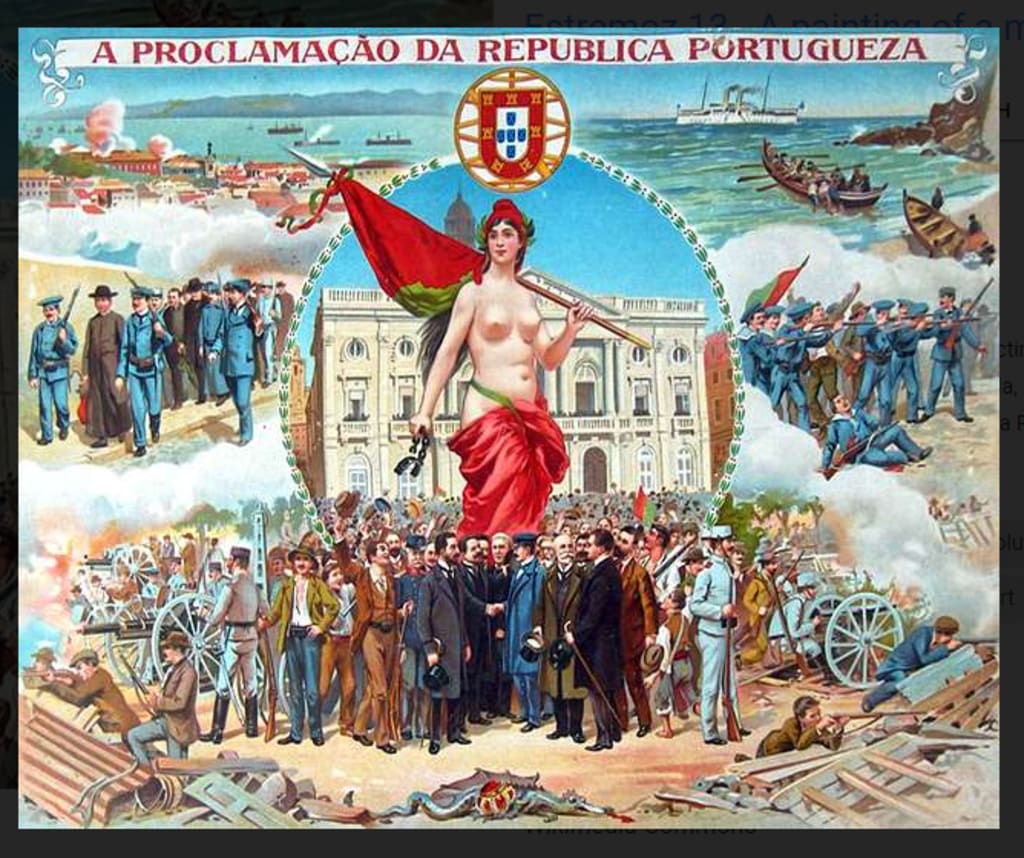
The 31 January 1891 revolt in Portugal was the first attempt by republicans to overthrow the monarchy. It was triggered by the British Ultimatum, which demanded Portugal's withdrawal from southern African territories it claimed. The revolt was fueled by national humiliation and inspired by the proclamation of a Republic in Brazil. Led by sergeants and lacking high-ranking officers' support, the revolt became known as the "revolt of the sergeants."
The revolt in Portugal was primarily led by Captain António Amaral Leitão, who played a prominent role among the military participants. Additionally, there were civilian figures such as lawyer and politician Augusto Alves da Veiga, actor Miguel Verdial, journalist João Chagas, photographer and film director Aurélio da Paz dos Reis, and writer and philosopher Sampaio Bruno, who were also involved in leading and supporting the revolt.
In this article, we explore the intricate details surrounding this significant event and its lasting impact on Portugal's political landscape.
Precursors to the Rebellion:
To understand the gravity of the 31 January 1891 revolt, one must grasp the socio-political climate of Portugal during that period. At the time, the country was entrenched in a monarchy, with economic hardships and widespread discontent laying the foundation for the forthcoming rebellion. Several factors contributed to the eruption of the revolt. Economic struggles, coupled with the growing influence of republican ideals, fueled dissatisfaction among the populace. The stage was set for a monumental shift in Portugal's political dynamics.
You May Also Like: The Eighty Years' War: A Struggle for Dutch Independence
Central to the success of any rebellion are its leaders. The 1891 revolt had prominent figures at its helm, guiding the movement towards challenging the established monarchy. The involvement of military personnel added a strategic dimension to the uprising. The events leading up to the rebellion and the unfolding of the uprising in Porto are crucial aspects of understanding this historical moment. A chronological exploration of the timeline provides insights into the catalysts and consequences of the revolt.
The rebels encountered staunch opposition from monarchial forces. The strategies employed by the rebels and the countermeasures implemented by the monarchy form a narrative of resilience and conflict. The immediate consequences of the revolt reverberated through Porto and the entire nation. Exploring the long-term effects on Portuguese society sheds light on the enduring impact of the 1891 uprising.
Global Response and Legacy:
The global community responded to the Portuguese republican movement, and neighboring countries played a role in shaping the narrative. Understanding the international perspective provides a holistic view of the repercussions of the revolt. Monarchial forces swiftly moved to quell the revolt. The aftermath of the suppression left an indelible mark on Porto and raised questions about the future of republicanism in Portugal.
The 1891 revolt's influence on subsequent republican movements and its role in shaping the political landscape of Portugal cannot be overstated. This section explores the enduring legacy of the rebellion. Reflecting on how the 31 January 1891 revolt shaped Portugal's future provides insights into its historical significance. The ripple effects of this rebellion are felt even in contemporary Portuguese society.
The 1891 Uprising: A Prelude to Portugal's Republican Journey
In the early hours of January 31, 1891, Porto, Portugal, witnessed a bold revolt led by a group of soldiers and sergeants. Converging at Campo de Santo Ovídio, they joined forces with infantry regiments, marching to Praça de D. Pedro. Alves da Veiga declared the Republic from the Porto City Council balcony, unfurling a red and green flag.
Their attempt to seize the post and telegraph station faced resistance from the municipal guard at the Church of Saint Ildefonso. Despite Captain Leitão's efforts, gunfire erupted, prompting panic among civilians and some soldiers. With artillery and cavalry support, the municipal guard, and the initially hesitant 18th Infantry Regiment, forced the rebels to surrender.
You May Also Like: Silk Road Showdown: Assassination and Turko-Chinese Rivalry in Central Asia
Official reports cited twelve deaths and 40 injuries, though other sources suggest higher casualties. Post-revolt, some escaped abroad, with Alves da Veiga in Paris and others seeking refuge in Spain. Some listed members of the provisional government disavowed the coup. The rebels, along with 505 individuals, faced trials on ships off Leixões. Approximately 250 received sentences of exile in Africa. Despite debates on whether the coup had republican leadership approval or was impulsive, it showcased dissatisfaction within the military.
In 1893, a political amnesty released some civilians. A failed 1908 Lisbon coup and the triumphant October 5, 1910 revolution eventually established the Portuguese Republic. Post-Republic, the Rua de Santo António in Porto, where the 1891 rebels fell, was aptly renamed Rua de 31 de Janeiro.
Conclusion:
In conclusion, the 31 January 1891 revolt in Porto stands as a pivotal moment in Portuguese history. Its significance transcends the immediate context, leaving an indelible mark on the nation's political trajectory. As we reflect on this historical event, it becomes clear that the echoes of the 1891 revolt continue to resonate in the fabric of Portuguese society.
About the Creator
Mohammed Shahidullah-Bin-Anwar
Mohammed Shahidullah-Bin-Anwar is a geopolitical analyst and historical writer (MA, University of Dhaka) who contributes to Wikipedia, Wikimedia Commons and ResearchGate while maintaining TIME PRINTER, his political history website.
Keep reading
More stories from Mohammed Shahidullah-Bin-Anwar and writers in Education and other communities.
Charles Curtis: Pioneering Path of Perseverance and Achievement
In a moment that would leave an indelible mark on American politics, Charles Curtis embarked on a transformative journey in 1907, solidifying his place as a trailblazer by becoming the first Native American US Senator. His remarkable story unfolded against a backdrop of cultural diversity and a rapidly evolving political landscape, forever shaping the course of history.
By Mohammed Shahidullah-Bin-Anwar 2 years ago in Education
Beyond Speed: How High-Performance Computing Is Shaping Tomorrow’s Discoveries
High-Performance Computing is changing how people explore ideas, test theories, and solve complex problems. It allows machines to work together at great speed. These systems can handle tasks that are far too large for standard computers. As a result, High-Performance Computing and the future of discovery are closely linked.
By Jason Pruetabout 11 hours ago in Education
Python vs Rust Performance: Speed, Memory Usage, and Scalability Explained
When developers compare programming languages, performance is often one of the most debated factors. Two languages that frequently come up in these discussions are Python and Rust. While both are powerful in their own ways, they approach performance, memory management, and scalability very differently. This makes the Python vs Rust comparison especially relevant for teams choosing the right technology for their next project.
By Lennox Gray3 days ago in Education



Comments
There are no comments for this story
Be the first to respond and start the conversation.