
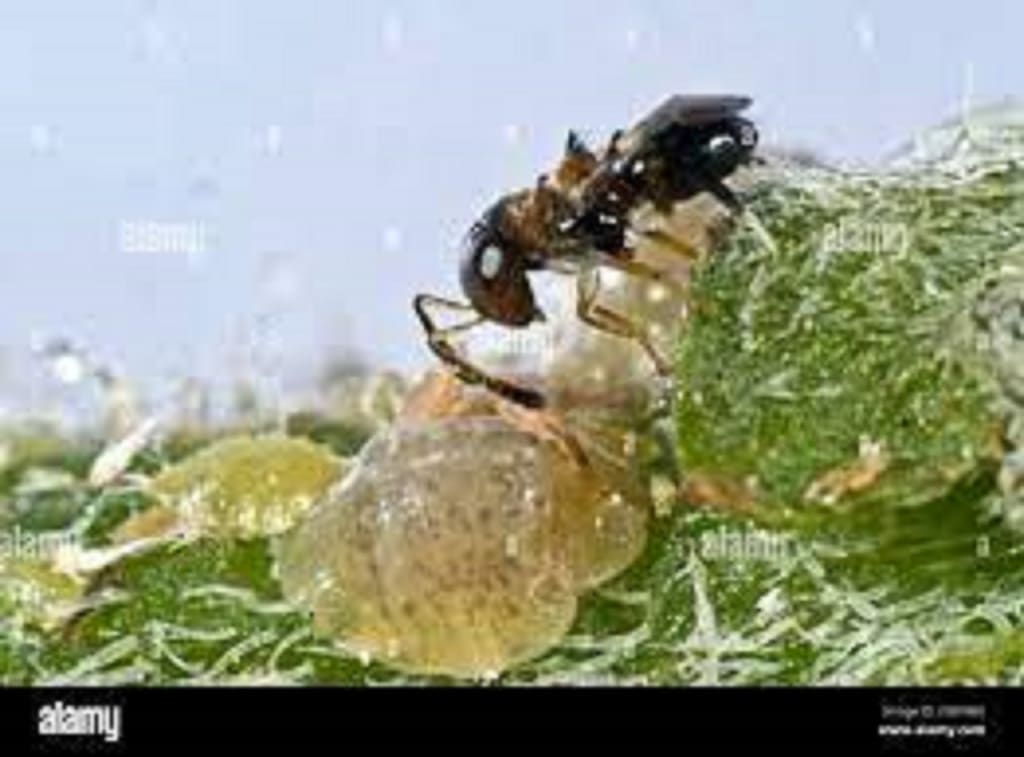
Biocontrol, also known as biological control, is the use of living organisms to control pests or diseases in agriculture or other ecosystems. This can include the use of predators, parasites, or pathogens to target specific invasive or undesirable species. Biocontrol can be an effective and sustainable alternative to chemical pesticides, as it relies on the natural interactions between organisms to control pests, rather than introducing synthetic chemicals into the environment. One example of biocontrol is the use of ladybugs to control aphids in gardens and agricultural fields. Ladybugs are natural predators of aphids, and can effectively reduce aphid populations without the use of pesticides. Another example is the use of the parasitoid wasp, Trichogramma, to control caterpillars in crops such as corn and cotton. The wasp lays its eggs inside the eggs of the caterpillar, and the wasp larvae consume the caterpillar eggs from the inside, effectively controlling the population. There are also some examples of biocontrol that are in development like a project to use RNA interference (RNAi) to control insects. These methods work by altering the genetic makeup of the pest to prevent it from reproducing, or otherwise affecting its ability to survive. While biocontrol can be an effective method for controlling pests, it is not without its challenges. One major challenge is identifying the most appropriate biocontrol agent for a specific pest or ecosystem. This can involve significant research and testing to ensure that the biocontrol agent will effectively control the pest without harming other beneficial species. Additionally, biocontrol agents can be specific to certain regions, climates or pests, so it requires careful consideration of the environment and pest population it is intended for. There are several benefits of using biocontrol as a method for controlling pests and diseases. These include: Reduced use of chemicals: Biocontrol methods rely on natural predators, parasites, and pathogens to control pests and diseases, which can reduce or eliminate the need for chemical pesticides and herbicides. Increased crop yields: By controlling pests and diseases, biocontrol can help to increase crop yields and improve the quality of crops. Preservation of biodiversity: Biocontrol methods help to maintain the balance of ecosystems by controlling invasive species and promoting the survival of native species. Cost-effectiveness: Biocontrol is often less expensive than chemical control methods, especially in the long term. Reduced environmental impact: Biocontrol methods often have a lower environmental impact than chemical control methods, as they do not pollute the air, water, or soil with toxic chemicals. Reduced risk of resistance: Biocontrol methods don't have the same risk of pests and diseases developing resistance as chemical methods do, as they rely on natural mechanisms of control. Despite the challenges, biocontrol is an important tool for sustainable pest management, as it can effectively control pests while minimizing the negative impacts of chemical pesticides on human health and the environment.Biocontrol, or biological control, is the use of living organisms to control pests. This can include the introduction of natural predators, parasites, or pathogens of the pest species, as well as the use of genetically modified organisms. Biocontrol is an environmentally friendly alternative to chemical pesticides and can be an effective means of controlling pests in agriculture, horticulture, and forestry. Some examples of biocontrol agents include ladybugs to control aphids, parasitic wasps to control caterpillars, and Bacillus thuringiensis (Bt) to control certain types of insects. Biocontrol agents are also used in the management of invasive species, weed and disease management as well.Biocontrols refer to the use of living organisms, such as beneficial insects and microorganisms, to control pests or diseases in crops. These can include natural predators, parasites, and pathogens of the pests. Biocontrols are a type of integrated pest management (IPM) that can be an effective alternative to chemical pesticides. They can be more specific in their control, reducing the impact on non-target organisms, and can also help to promote biodiversity in agroecosystems. Biocontrols are known as a more environment friendly and sustainable method.
About the Creator
Keep reading
More stories from writers in Education and other communities.
Top 10 SEO Experts In Pakistan In 2026
Introduction Search optimization in 2026 no longer revolves around keywords or isolated ranking tactics. Google’s AI Overviews, entity-based indexing, and answer-first systems have changed how visibility is earned. Search engines now evaluate meaning, credibility, and contextual authority rather than mechanical signals.
By Sajid Ali Shar6 days ago in Education
The Living Language of Creativity: Why Art Continues to Shape Human Experience
Art has existed for as long as humans have sought to express meaning beyond survival. Universal creative dialogue allows people to communicate emotions, beliefs, and ideas that cannot always be captured through words alone. From early symbolic markings to contemporary visual culture, art reflects how individuals and societies understand themselves and the world around them.
By Marissa Haugh4 days ago in Education
How, Too
Many people wonder how, too. You are not alone, and I am an expert. I will teach you how, too! First, you need to remit a small application fee and fill out an application describing the nature of your financial situation and how often payments will be made, as this will have great bearing on how well I teach you how, too.
By Harper Lewis5 days ago in Fiction




Comments
There are no comments for this story
Be the first to respond and start the conversation.