
Beginner’s Guide to Clinical Pilates for Back and Neck Pain
Everything you need to know about how Clinical Pilates relieves back and neck pain, what to expect in your first session, and how to get started safely in Singapore.

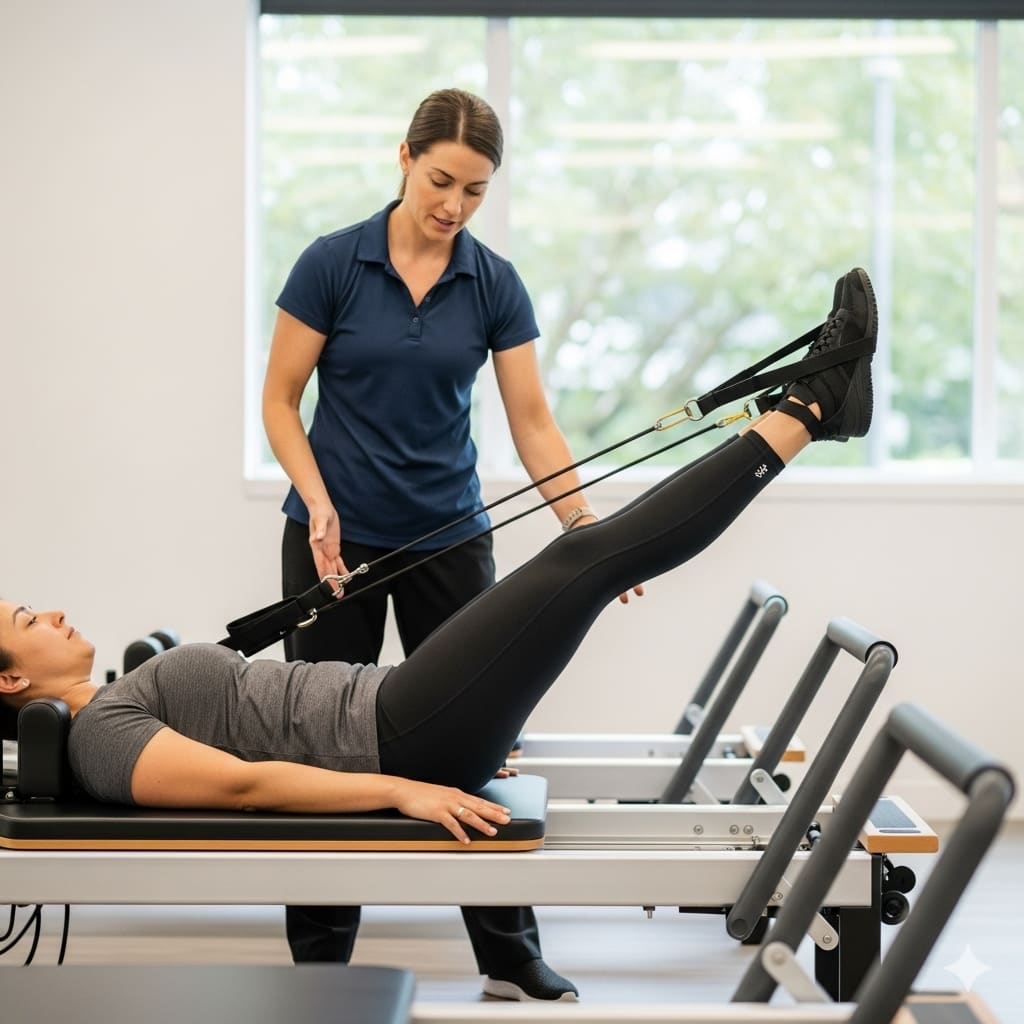
Modern lifestyles – long hours at desks, constant phone use, and minimal movement – have made back and neck pain some of the most common reasons people seek help from a physiotherapist. While medication can temporarily mask discomfort, addressing the root cause usually requires movement-based rehabilitation. One approach gaining strong evidence and popularity is Clinical Pilates.
This beginner-friendly guide explains what Clinical Pilates is, why it’s different from regular Pilates, how it helps back and neck pain, what to expect in your first session, and how to get started with a trusted physiotherapy clinic in Singapore.
What Is Clinical Pilates?
Clinical Pilates is a form of exercise designed and supervised by qualified physiotherapists. Unlike studio or mat Pilates taught in gyms, Clinical Pilates programmes are tailored to your individual injury history, pain patterns, posture, and movement control. Each exercise is selected to improve stability, flexibility, and strength in a way that supports your spine and joints rather than overloading them.
Key features of Clinical Pilates include:
- Individual assessment before you begin
- Specific activation of deep core and stabilising muscles
- Gradual progression based on pain levels and ability
- Use of equipment like reformers, trapeze tables, or small props for support
Because it is delivered under clinical supervision, it is safe for people with ongoing pain, previous injuries, or post-surgical conditions.
How Clinical Pilates Helps Back and Neck Pain
1. Improves Posture and Alignment
Many people develop a rounded upper back and forward head posture from computer work. Clinical Pilates exercises retrain the shoulder girdle, deep neck flexors, and core muscles to support an upright, neutral posture that relieves stress on the spine.
2. Activates Core Stability
Weak or poorly coordinated deep abdominal and spinal muscles allow micro-movements in the vertebrae that trigger pain. Clinical Pilates rebuilds these stabilising muscles so they work automatically during daily tasks.
3. Restores Movement Confidence
People with chronic pain often brace, limit, or avoid movements. Under physiotherapist guidance, Clinical Pilates helps you move safely and regain trust in your body.
4. Integrates Breathing and Mindfulness
Focused breathing reduces tension and improves oxygen delivery to tight muscles, complementing the physical benefits.
What to Expect at Your First Clinical Pilates Session
1. Initial Assessment
Your physiotherapist will review your medical history, pain triggers, and lifestyle factors. They’ll test your posture, joint range, muscle activation, and movement control.
2. Goal Setting
Together you’ll define what success looks like – for example, sitting at a desk pain-free, lifting children without strain, or returning to sport.
3. Personalised Exercise Plan
You’ll start with gentle core and postural exercises, often on specialised equipment for extra support. Your plan progresses weekly as you improve.
4. Education & Home Exercises
You’ll learn why each exercise matters and how to integrate better posture and movement habits into daily life.
Combining Clinical Pilates with Other Physiotherapy Services
Many clients benefit from a multimodal approach. For instance:
Hands-on treatment such as joint mobilisation or soft-tissue release can reduce pain and make it easier to activate muscles in Pilates.
Shockwave therapy in Singapore is sometimes used for stubborn tendon or soft-tissue conditions before progressing to exercise rehab.
A sports physiotherapist in Singapore can integrate sport-specific drills so athletes return to play safely after injury.
By combining Clinical Pilates with these services in one clinic, you get a coordinated recovery plan under the same team.
Tips for Getting the Most Out of Clinical Pilates
- Wear comfortable clothing that allows free movement.
- Commit to regular sessions (usually 1–2 times per week initially) for best results.
- Do your prescribed home exercises between sessions.
- Give feedback to your physiotherapist about what feels good or aggravates symptoms.
- Stay patient – rebuilding postural muscles takes time, but results are long-lasting.
Finding the Right Physiotherapy Clinic in Singapore
Not all clinics offer genuine Clinical Pilates. When choosing a provider:
- Look for a clinic where qualified physiotherapists run the sessions.
- Check that they provide a one-on-one assessment before starting.
- Ask if they have reformer equipment and space for tailored sessions.
- Confirm whether sessions are claimable under insurance.
You can start your journey with a trusted physiotherapy clinic in Singapore that already integrates Clinical Pilates, shockwave therapy, and sports physiotherapy under one roof.
Frequently Asked Questions About Clinical Pilates
1. Is Clinical Pilates safe if I have a herniated disc or chronic neck pain?
Yes. Because exercises are prescribed by a physiotherapist after an assessment, they are tailored to your condition and adjusted if any movement aggravates symptoms.
2. How soon will I feel results?
Many people notice improved posture and less tension within a few sessions, but lasting strength and pain reduction usually develop over 6–12 weeks of consistent practice.
3. Can Clinical Pilates replace physiotherapy treatments?
It’s not a replacement but a core part of physiotherapy rehabilitation. Your physiotherapist may also recommend manual therapy, education, or modalities like Shockwave therapy Singapore alongside exercise.
4. Is Clinical Pilates only for women?
No. Men, athletes, seniors, and office workers all benefit. Programmes are customised for every body type and fitness level.
5. What’s the difference between a Pilates instructor and a sports physiotherapist?
A regular Pilates instructor focuses on general fitness. A sports physiotherapist in Singapore has clinical training to diagnose injuries, plan rehabilitation, and integrate sport-specific exercises.
Takeaway
Clinical Pilates is a powerful, evidence-based way to reduce back and neck pain, rebuild core stability, and improve posture under professional supervision. By starting with a thorough assessment at a reputable physiotherapy clinic in Singapore, you can be confident that each exercise supports your unique recovery needs. Combined with services like shockwave therapy and guidance from a sports physiotherapist, it forms a comprehensive plan to help you move freely and prevent future pain.
About the Creator
Integrative Physio
Integrative Physio Pte Ltd, based in Orchard, Singapore, was founded in January 2016 to fulfill a vision of complete patient management. It is made up of a team of internationally trained health professionals.
Keep reading
More stories from Integrative Physio and writers in Education and other communities.
Choosing Between Yoga, Reformer Pilates, and Clinical Pilates in Singapore: A Physio’s Perspective
In today’s fast-paced Singapore lifestyle, where stress and desk-bound routines dominate, many people turn to movement-based practices for strength, flexibility, and rehabilitation. Among the most popular options are Yoga, Reformer Pilates, and Clinical Pilates. But which one is right for you?
By Integrative Physio6 months ago in Families
Why the Sun Doesn’t Burn Like Fire: How Nuclear Fusion Makes the Sun Shine
Introduction: A Question That Changes Everything As children, many of us imagine the Sun as a giant ball of fire blazing in the sky. It looks like fire. It gives off heat like fire. It even glows like fire.
By shahkar jalal2 days ago in Education
How Artificial Intelligence Is Transforming Modern Industries
Artificial Intelligence (AI) is no longer a concept limited to science fiction or research laboratories. Today, AI technologies are deeply integrated into everyday life and are transforming how businesses operate, how services are delivered, and how people interact with technology. From healthcare and finance to marketing and transportation, AI is shaping the modern world in ways that were unimaginable just a decade ago.
By Rene Van Acker6 days ago in Education
A Transparent Look at Vocal Challenges and Top Stories
Almost three years ago, we shared a resource article that served as a place for people to suggest new challenge prompts. We thought it would be a good idea to refresh that thread, and take the opportunity to answer a few common questions about top stories, how challenges are judged and how submissions are reviewed.
By Vocal Curation Team4 days ago in Resources




Comments