
Choosing Between Yoga, Reformer Pilates, and Clinical Pilates in Singapore: A Physio’s Perspective
Understanding the Benefits of Yoga, Reformer Pilates, and Clinical Pilates for Health, Recovery, and Stress Relief in Singapore

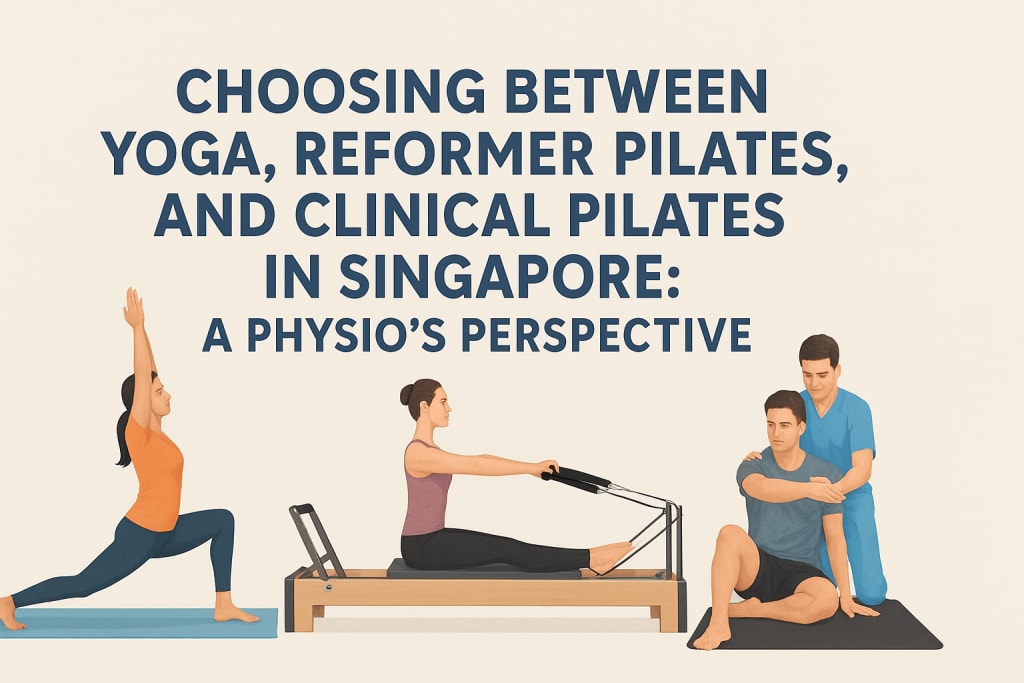
In today’s fast-paced Singapore lifestyle, where stress and desk-bound routines dominate, many people turn to movement-based practices for strength, flexibility, and rehabilitation. Among the most popular options are Yoga, Reformer Pilates, and Clinical Pilates. But which one is right for you?
As physiotherapists, we often see patients confused by these choices. Each method has unique benefits, and the best fit depends on your body’s needs, goals, and any injuries you may be dealing with. That’s why consulting a trusted physiotherapy clinic in Singapore can make a world of difference in tailoring the right program for your health and recovery.
Yoga: Mind-Body Connection Through Movement
Yoga has been practiced for centuries, blending physical postures, breathing exercises, and mindfulness.
Benefits of Yoga for Singaporeans:
- Improves flexibility and mobility
- Reduces stress through mindful breathing and relaxation
- Encourages body awareness and balance
- Accessible to people of all ages and fitness levels
When Yoga is Ideal:
- For individuals looking to reduce stress and improve flexibility
- As a complementary practice for mental health and mindfulness
- For those without significant injuries, as certain postures may strain weak or unstable joints
Clinical Pilates: Rehab Meets Functional Movement
Clinical Pilates takes the traditional Pilates method a step further it’s guided by physiotherapists and tailored for injury prevention, rehabilitation, and posture correction.
Benefits of Clinical Pilates:
- Designed around a physiotherapy assessment
- Focuses on core stability and safe rehabilitation
- Addresses specific injuries such as back pain, shoulder instability, or knee issues
- Provides long-term improvements in posture and movement control
When Clinical Pilates is Ideal:
- If you’re recovering from an injury or surgery
- If you need a safe, structured program monitored by a physio
- For those dealing with chronic pain or recurring posture issues
If you’re struggling with recurring pain or looking for personalized recovery, explore Clinical Pilates programs at a physiotherapy clinic in Singapore.
How Physiotherapists Help You Choose
As physiotherapists, we don’t just recommend a trend; we assess your body mechanics, lifestyle, and health history. For instance:
- Someone recovering from a sports-related injury may benefit from knee physiotherapy in Singapore combined with Clinical Pilates.
- A patient recovering from head or neck trauma may require specialized care, such as concussion treatment, before transitioning into safe movement practices.
- A desk-bound professional may benefit from Clinical Pilates for posture correction, while adding Yoga for stress management.
Conclusion
Choosing between Yoga, Reformer Pilates, and Clinical Pilates in Singapore doesn’t have to be overwhelming. Each has its strengths but the right choice depends on your goals, body condition, and whether you’re managing pain or injury.
The safest way to decide is to consult a trusted physiotherapy clinic in Singapore, where a physio can design a movement plan that combines the best elements of these practices to suit your body. Whether it’s stress relief, strength, or rehabilitation; you’ll be guided toward the practice that supports your health long term.
Frequently Asked Questions (FAQs)
1. What is the difference between Yoga, Reformer Pilates, and Clinical Pilates?
- Yoga focuses on flexibility, breathing, and mindfulness.
- Reformer Pilates uses specialized equipment to improve strength and alignment.
- Clinical Pilates is physiotherapy-guided and tailored to injury rehabilitation and posture correction.
2. Is Clinical Pilates better than Yoga for posture problems?
Yes, Clinical Pilates is often more effective for posture correction because it is guided by a physiotherapist and targets the deep stabilizing muscles that support your spine.
3. Can I do Reformer Pilates if I have back pain?
It depends on the severity of your back pain. If your pain is due to poor posture or muscle imbalance, Reformer Pilates may help. However, it’s safer to start with Clinical Pilates at a physiotherapy clinic in Singapore to ensure exercises are customized to your needs.
4. Which is better for stress relief: Yoga or Pilates?
Yoga is traditionally better for stress reduction and mindfulness, while Pilates especially Reformer and Clinical Pilates is more effective for strength, posture, and core stability.
5. Do I need equipment for Clinical Pilates?
Not necessarily. Clinical Pilates often uses mats and small props, but some sessions may include equipment like reformers or resistance bands depending on your program.
6. How do I know if I need Clinical Pilates instead of regular Pilates?
If you have an injury, chronic pain, or are recovering from surgery, Clinical Pilates is the safer choice because it is supervised by a physiotherapist.
7. Can Clinical Pilates help with sports injuries?
Yes. Many patients combine Clinical Pilates with knee physiotherapy in Singapore or shoulder rehab to recover safely and prevent future injuries.
8. Is Yoga safe after a concussion?
Yoga may not be safe immediately after a concussion. You should first seek proper concussion treatment at a physiotherapy clinic before resuming activities like Yoga or Pilates.
9. How many sessions of Clinical Pilates do I need to see results?
Most patients notice improvements in posture, strength, and comfort within 6–8 sessions, though long-term consistency brings the best outcomes.
About the Creator
Integrative Physio
Integrative Physio Pte Ltd, based in Orchard, Singapore, was founded in January 2016 to fulfill a vision of complete patient management. It is made up of a team of internationally trained health professionals.
Keep reading
More stories from Integrative Physio and writers in Families and other communities.
Easy Knee Strengthening Exercises for Arthritis: Simple Moves That Protect Your Joints
Living with knee arthritis can feel frustrating — the stiffness, discomfort, and reduced mobility often interfere with daily activities. But here’s the good news: strengthening the muscles around your knees can make a world of difference. Gentle, consistent exercises don’t just relieve pain; they also protect your joints, improve mobility, and restore confidence in your movement.
By Integrative Physio7 months ago in Families
The Man with the Jacket Haunts My Childhood Memory
We were in a hurry. Mother always walked fast, but I struggled more than usual to keep up with her as we sped through the train station with her suitcase. She held my hand and dragged me along behind her, her oversized purse swinging from her shoulder, clunking into my head with every step.
By Georgia Kreiger3 days ago in Families
A Transparent Look at Vocal Challenges and Top Stories
Almost three years ago, we shared a resource article that served as a place for people to suggest new challenge prompts. We thought it would be a good idea to refresh that thread, and take the opportunity to answer a few common questions about top stories, how challenges are judged and how submissions are reviewed.
By Vocal Curation Team4 days ago in Resources




Comments