
Bangladesh's Education System in Abhimanyu's Chakravyuh
A Analytical Study

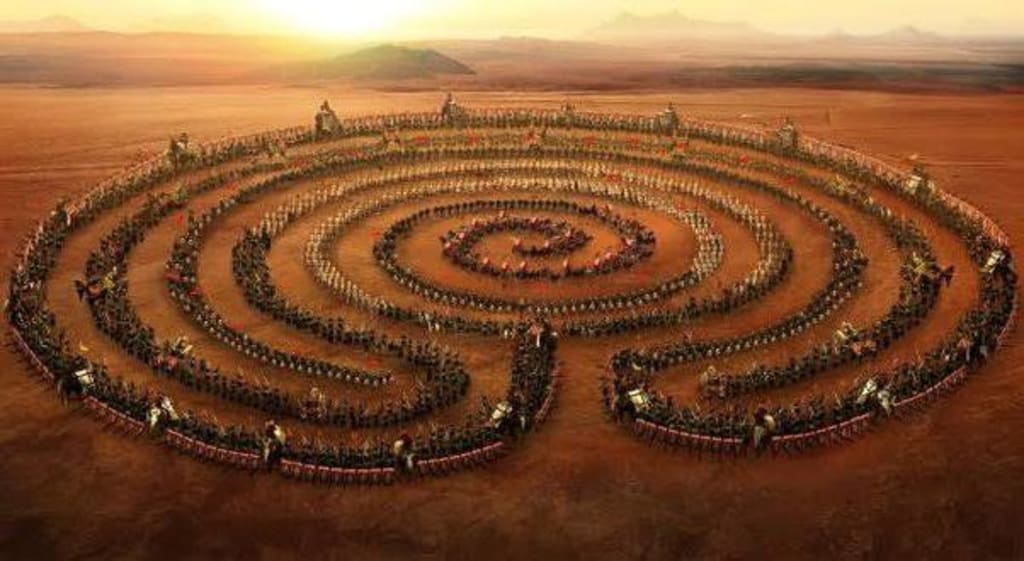
A hakravyuhis a multi-layered defensive formation that, when viewed from above, resembles a disc (hakra. In simpler terms, it's a kind of labyrinth. Those familiar with the ahabharata or who have read or seen it, know well about the Chakravyuh of the Kauravas at Kurukshetra, which was designed by Dronacharya. It is mentioned in the ahabharatathat Abhimanyu learned about the Chakravyuh while still in his mother’s womb, but he couldn't learn how to escape from it. As a result, though Abhimanyu could break into the Chakravyuh, he couldn’t find a way out and was ultimately killed inside.
So, what is the relationship between Bangladesh's education system and the Chakravyuh? The education system of Bangladesh has similarly become trapped within multiple layers, much like a labyrinth, and it seems stuck, unable to find a way out. The first layer of this Chakravyuh began in 2008 when the government first introduced the creative method. The initial years were chaotic, though some stability was achieved later. But in the midst of it all, various additional factors were introduced, such as the introduction of exams like the PSC and JSC, creative approaches in subjects like Mathematics, the inclusion of non-creative subjects in the creative method, etc. While there is much doubt about how much creativity students have actually developed, this approach has set the education system back considerably. Moreover, the haphazard implementation of various teaching methods by the government has also slowed down the system’s progress. For any new method to be successful, properly trained and skilled teachers are essential. For example, let’s consider the new curriculum. Most teachers are clueless about how to implement it. Some training has been provided, but there’s a lingering question about whether that training is sufficient. Implementing new methods or curricula without proper planning is indeed harmful to education.
Now, let’s talk about the most harmful layer of this Chakravyuh: the mushrooming of educational institutions like never before. Yes, this issue is causing immense harm. How, you ask? Through unhealthy competition. With so many institutions springing up, they are resorting to various tactics to attract students. One of the most common tactics is ensuring a flood of A+ grades and a 100% pass rate. And to achieve this, institutions encourage students to engage in exam malpractice, with some teachers even providing direct assistance during board exams.
Another significant issue in Bangladesh's education system is the teachers. Almost 95% of the country’s teachers suffer from a "superiority complex." Now, what is this superiority complex? In simple terms, it’s the belief that one is superior to others and overly confident. People with a superiority complex live under the illusion that they know everything, can do everything, and are unmatched by anyone. You’ll notice that most teachers in Bangladesh treat their students harshly. If a student introduces something new, it’s rarely taken seriously. And if a student dares to point out a teacher’s mistake, the consequences are often severe, ranging from humiliation to other forms of mistreatment. Yet, teachers should be friendly and tolerant.
This covers teachers, institutions, and the government. But another destructive layer of this Chakravyuh is the role of parents. Yes, parents are playing a significant part in driving the education system toward collapse. How? It’s true that parents today are more conscious, but some of their behaviors are quite problematic. For example, they engage in unhealthy competition over their children’s results, particularly mothers. I’ve seen firsthand how mothers scold their 4-5-year-old children in playgroups for scoring 1-2 marks less than their peers. The focus isn’t on what the child is learning, but on ensuring they outperform the neighbor’s child. The entire focus is on results, with no concern for how those results are achieved. Parents boast about their children getting A+ grades, but have no idea how much their children are truly learning. While good results are necessary for admission to good institutions or securing good jobs, understanding what the child is learning is equally important. As for the students? Almost 85% of them are being crushed under the pressure from both their parents and educational institutions. There’s also the matter of leaked question papers, bribery, and middlemen’s involvement in the system.
Abhimanyu couldn’t escape from the Chakravyuh, even though there was a way out—he simply didn’t know it. Can Bangladesh’s education system break free from its Chakravyuh? With effort, it’s possible, because there is a way out. But the solution must start at the root. If parents become a little more aware and focus on their children’s learning rather than just the results, we will see a gradual improvement. When learning becomes the priority, educational institutions will also emphasize it more. And if a student learns well, their results will not be poor either. We need to break free from this unhealthy competition. For example, we should praise what the child learns and encourage them to do even better. The government also has its role to play by taking appropriate measures. But if we start from the root, I believe change is possible.
About the Creator
Nizam Uddin Apou
A researcher, translator, poet, bookworm and analyst.
Keep reading
More stories from Nizam Uddin Apou and writers in Education and other communities.
Why Mentoring Clinicians Is Key to Sustainable Patient-Centered Innovation
Clinician mentorship shapes the foundation for long-term, patient-centered innovation by strengthening skills, encouraging creative problem-solving, and building confidence across healthcare teams. Experienced mentors guide clinicians through complex decision-making while helping them understand how innovation grows from everyday patient interactions.
By Dr. Janet Chollet4 days ago in Education
Affection and Healing for Yourself
During the night of the last quarter moon, I gathered my ritual supplies. I carefully handled the chunk of black tourmaline that would protect me from your overall negative and narcissistic energy. I carefully walked the house with my stick of selenite in hand, asking the universe to cleanse our working space.
By Alisha Wilkins ✒️🦋🖋️5 days ago in Fiction



Comments
There are no comments for this story
Be the first to respond and start the conversation.