
Atheism is the last refuge for a person who can't defend his religion
Deep inside atheist people still cling to their original or defacto religion that is why they always hurl attack on people pointing out flaws in their forefathers religion

Let not your biases blind your judgement is a simple advice for every atheist reading this piece
Atheism is the last refuge for a person who can't defend his religion simply suggests that atheists ultimately cling to their original beliefs while criticizing religious traditions. This perspective implies that atheism arises not from a genuine philosophical stance but as a reaction to the inability to defend inherited religious beliefs which fail to accede as a defeat to their identity and religion.
Atheists often argue that their stance is rooted in reason and evidence rather than emotional or cultural ties to religion. Prominent atheists emphasize the importance of observable, objective evidence for claims about deities, advocating for a rational approach to understanding existence. They argue that many people adopt religious beliefs for psychological comfort, which complicates the transition to atheism. Atheists contend that merely attacking religious beliefs does not lead to conversion; instead, one must demonstrate the unnecessary nature of these beliefs
Furthermore, the rise of "New Atheism" has showcased a more vocal critique of religion, asserting that religious frameworks can hinder rational thought and scientific inquiry. While some may perceive atheism as a refuge for those unable to defend their faith, it is essential to recognize that many atheists engage deeply with philosophical questions, seeking truth through reason rather than clinging to past beliefs.
The Complexity of Cultural Identity
Cultural Heritage:For many individuals, religion is intertwined with cultural identity. An atheist may critique organized religion while still feeling a connection to the cultural traditions of their forefathers. This can manifest in their cultural pride
Cultural Pride: Celebrating cultural heritage without endorsing the religious beliefs associated with it.
Selective Defense: Defending certain aspects of a cultural or religious tradition that may be seen as positive or beneficial while critiquing others
Cognitive Dissonance:This duality can lead to cognitive dissonance, where individuals struggle to reconcile their atheistic beliefs with their cultural upbringing. They may find themselves:
Navigating Conflicts: Balancing respect for their heritage with a rejection of its religious components.
Seeking Common Ground: Finding ways to honor their background while advocating for secular values.
The behavior of some atheists who critique other religions while defending elements of their own cultural heritage reflects a nuanced relationship with belief systems. It highlights the importance of understanding individual motivations and the broader context of identity. Engaging in these discussions can foster greater dialogue about faith, culture, and the role they play in shaping our worldviews.
By recognizing these complexities, we can approach conversations about belief and identity with empathy and understanding.
Why do atheists hate Islam more than any other religion??
Research indicates that atheists tend to have a less favorable view of Muslims compared to followers of other religions. A study found that while atheists rated Christians, Buddhists, Jews, and Hindus similarly to their own group, they rated Muslims significantly lower. This trend suggests a notable level of Islamophobia within the atheist community, as atheists were more likely to express negative evaluations toward Muslims than toward adherents of other faiths.
Moreover, this phenomenon may be influenced by broader societal attitudes and the public discourse surrounding Islam, which has been shaped by prominent figures in the atheist movement who have made critical statements about Islam[1]. The findings align with survey data showing that Americans generally view Muslims with similar warmth as atheists, indicating a shared perception of both groups as less favorable compared to other religious communities.Islam
In summary, atheists do not favor Islam more than other religions; rather, they tend to rate it less positively than several other faiths. Although it is also a fact that most number of atheists do turn to Islam after their quest for the truth.
About the Creator
Khawaja@vocal
Columinst @The Middle Monitor, Opinion writer @The Friday Times. Former Blogger @The News Eye Pakistan.
Keep reading
More stories from Khawaja@vocal and writers in Education and other communities.
Gaza War: Israel is doomed to fail and US must remain cautious
The U.S. government positions itself as a defender of democracy and human rights, readily condemning global discrimination. Yet, it remains silent on Israel's actions and atrocities, raising questions about its commitment to justice. Analysts find this hypocrisy troubling, especially since Israel relies heavily on U.S. military and financial support.
By Khawaja@vocalabout a year ago in Journal
Mastering X-Bar Theory in Grammar in 10 Minutes
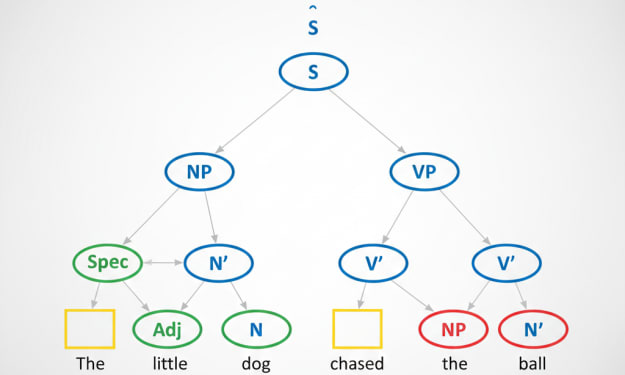
Grammar can often feel like a maze of confusing rules, especially when we dive into syntax — the study of sentence structure. One of the foundational tools in modern linguistics is X-Bar Theory, a framework that helps explain how words and phrases combine to form sentences. While it might sound intimidating, understanding X-Bar Theory can become straightforward if approached step by step.
By Games Mode Onabout 23 hours ago in Education
Miss Persephone's Manual to a Seemingly Ordinary Life
Miss Persephone was found at the dining table, her blue eyes swollen, her tears arriving and retreating like the tides of the ocean. Earlier that day, her family had visited her in the retirement home where she had lived for eight years. It was her eightieth birthday.
By Imola Tóth4 days ago in Fiction


Comments
There are no comments for this story
Be the first to respond and start the conversation.