
As Built Services - Transform Plans with Precision
Precise As-Built Data for Informed Decisions

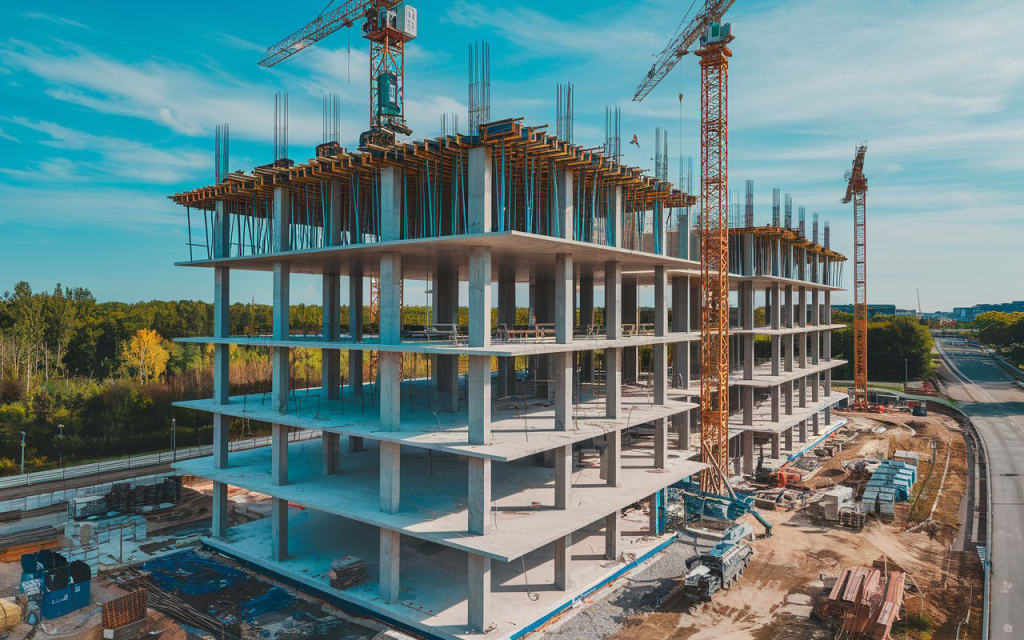
In the dynamic world of construction and renovation, precision is paramount. As-built services have emerged as the unsung heroes of the industry, bridging the gap between what was planned and what was actually built. These services are the secret weapon of savvy architects, engineers, and project managers who understand that accurate documentation is not just a luxury—it's a necessity.
As we dive into the world of as-built services, prepare to discover how this cutting-edge approach is revolutionizing the way we capture, document, and utilize structural information, ensuring that every project stands on a foundation of accuracy and reliability.
Understanding the Importance of As-Built Documentation

As-built documentation is the lifeblood of modern construction and renovation projects. It's the meticulous process of recording the exact dimensions, locations, and specifications of a structure as it stands after completion. This critical information serves as a true reflection of the final product, often revealing discrepancies between the original design and the actual construction.
The importance of as-built documentation cannot be overstated. In an industry where the U.S. construction sector employs 8.0 million people and generates nearly $2.1 trillion worth of structures annually, the need for precision is paramount. As-built services provide a safeguard against costly errors, facilitate efficient maintenance, and pave the way for future modifications.
For facility managers, as-built documents are invaluable tools for day-to-day operations. They offer a comprehensive understanding of building systems, enabling quick troubleshooting and informed decision-making. In renovation projects, these documents serve as the starting point, preventing surprises that could derail timelines and budgets.
Moreover, as-built documentation plays a crucial role in regulatory compliance. Many jurisdictions require accurate as-built drawings for occupancy permits and safety inspections. By ensuring that the final structure aligns with approved plans, these services help avoid legal complications and potential fines.
The Evolution of Technology in As-Built Services
The landscape of as-built services has undergone a dramatic transformation in recent years, mirroring the technological advancements sweeping through the construction industry. Gone are the days of manual measurements and hand-drawn sketches. Today's as-built services leverage cutting-edge technology to deliver unprecedented accuracy and efficiency.
One of the most significant leaps forward has been the integration of 3D laser scanning technology. This innovation allows for the capture of millions of data points in a matter of minutes, creating a highly detailed point cloud representation of a structure. The precision of these scans is remarkable, often accurate to within millimeters, providing a level of detail that was once unimaginable.
Photogrammetry has also emerged as a powerful tool in the as-built arsenal. By using overlapping photographs taken from multiple angles, this technique can create accurate 3D models of structures. It's particularly useful for capturing complex architectural features and hard-to-reach areas.
You would like to explore - How 3D Laser Scanning Improves Construction Efficiency?
The rise of Building Information Modeling (BIM) has further revolutionized as-built services. BIM technology allows for the creation of intelligent 3D models that contain not just geometric data, but also information about materials, systems, and even lifecycle management.
This integration of as-built data into BIM models provides a comprehensive digital twin of the structure, offering invaluable insights for facility management and future renovations.
Mobile technology has also played a significant role in streamlining the as-built process. Tablets and smartphones equipped with specialized apps now allow for real-time data collection and updates in the field. This immediate access to information enhances collaboration between on-site teams and office-based professionals, reducing errors and improving project efficiency.
You would like to explore: How BIM Clash Detection Reduce Construction Rework & Costs?
As the construction industry continues to grow, with more than 919,000 construction establishments in the U.S. as of the first quarter of 2023, the demand for advanced as-built services is only set to increase. The evolution of technology in this field is not just keeping pace with industry needs—it's driving innovation and setting new standards for accuracy and efficiency in construction documentation.
Comprehensive Overview of As-Built Services
As-built services encompass a wide range of specialized documentation techniques designed to capture the reality of constructed environments. These services are essential for creating accurate records of buildings and infrastructure as they actually exist, often differing from original plans due to on-site modifications or unforeseen circumstances during construction.
Architectural As-built: Detailing Existing Conditions
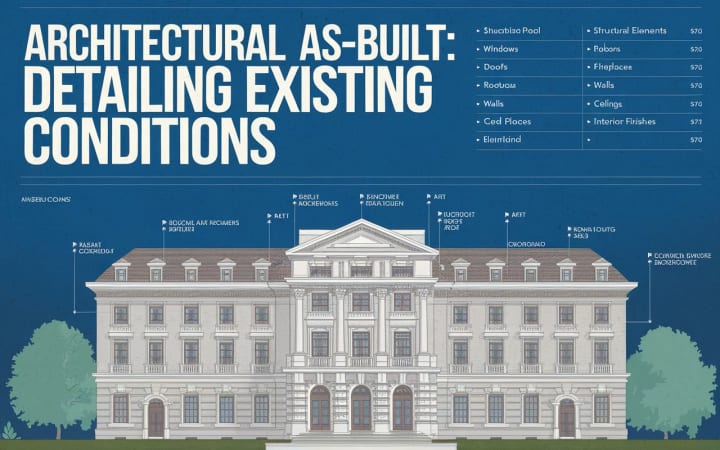
Architectural as-built services focus on documenting the physical characteristics of a building's structure and layout. This process involves meticulously recording as built conditions, including precise measurements of walls, doors, windows, and other architectural elements. The resulting as-built documentation provides a comprehensive snapshot of the building's current state, which is invaluable for future renovations, expansions, or maintenance work.
As-built drawing services for architectural projects typically include:
- Floor plans with accurate room dimensions
- Elevation drawings showing exterior facades
- Cross-sectional views revealing internal structures
- Detailed drawings of unique architectural features
These detailed records are crucial for architects and designers when planning modifications or assessing the feasibility of new installations within existing spaces. By having access to accurate as-built documentation, professionals can make informed decisions and avoid costly mistakes during future projects.
MEP (Mechanical, Electrical, Plumbing) As-built: A Closer Look
MEP as-built services are critical for documenting the complex systems that keep buildings functional. This specialized branch of as-built documentation focuses on capturing the intricate network of mechanical, electrical, and plumbing systems that are often hidden behind walls, above ceilings, or below floors.
Key components of MEP as-built services include:

- Mapping of HVAC ductwork and equipment locations
- Electrical system layouts, including panel locations and wiring routes
- Plumbing schematics showing pipe runs and fixture locations
- Fire protection system details
You would like to explore - MEP BIM for Clash Detection and Resolution
Accurate MEP as-built documentation is essential for facility managers and maintenance teams. It allows for efficient troubleshooting, streamlines system upgrades, and ensures compliance with building codes and safety regulations. By providing a clear picture of these vital systems, MEP as-built services contribute significantly to the overall functionality and safety of a building.
Structural As-built: Ensuring Stability and Safety
Structural as-built services focus on documenting the load-bearing elements of a building. This includes foundations, beams, columns, and other critical components that ensure the structure's integrity. Capturing accurate as built conditions of these elements is crucial for assessing a building's stability and planning any future modifications.
Structural as-built documentation typically includes:
- Detailed drawings of foundation systems
- Beam and column schedules with precise dimensions
- Reinforcement details for concrete structures
- Connection details for steel frameworks
This level of detail is indispensable for structural engineers when evaluating a building's capacity to support additional loads or when planning renovations that might affect the structural integrity. By relying on accurate structural as-built documentation, professionals can ensure that any modifications or additions to the building are carried out safely and in compliance with structural engineering principles.
Innovations in 3D Scanning and Modeling for Accurate Documentation

The field of as-built services has been revolutionized by advancements in 3D scanning and modeling technologies. These innovations have dramatically improved the accuracy and efficiency of capturing as built conditions, leading to more comprehensive and reliable as-built documentation.
Key innovations include:
Laser Scanning: High-precision laser scanners can capture millions of data points to create a detailed point cloud representation of a structure.
Photogrammetry: This technique uses multiple photographs to create accurate 3D models, particularly useful for capturing complex architectural features.
BIM Integration: As-built data can now be seamlessly integrated into Building Information Modeling (BIM) systems, creating intelligent 3D models that contain both geometric and semantic information.
Mobile Scanning Devices: Handheld scanners and mobile apps allow for on-the-spot data collection, improving the speed and flexibility of as-built documentation processes.
You would like to explore :- Understanding As-built Drawings in Construction
These technological advancements have significantly enhanced the quality of as-built drawing services, allowing for the creation of highly detailed and accurate 3D models. These models serve as powerful tools for visualization, analysis, and planning, offering unprecedented insights into existing structures and facilitating more informed decision-making in construction and renovation projects.
By leveraging these innovative technologies, as-built services can now provide a level of detail and accuracy that was previously unattainable, ensuring that the documentation of as built conditions is as close to reality as possible.
The Process: From Initial Scan to Final Documentation
The journey from capturing as-built conditions to delivering comprehensive as-built documentation is a meticulous process that combines cutting-edge technology with expert knowledge. Understanding this process is crucial for anyone considering as-built services for their project.
Latest Technologies Employed in Capturing As-Built Conditions
The field of as-built services has been revolutionized by advancements in technology, enabling unprecedented accuracy and efficiency in capturing existing conditions. Some of the most innovative tools and techniques include:
LiDAR (Light Detection and Ranging) Scanners: These devices emit laser beams to measure distances and create highly detailed 3D point clouds of structures.

Drone Photogrammetry: Unmanned aerial vehicles equipped with high-resolution cameras capture aerial imagery that can be processed into accurate 3D models.

360-Degree Cameras: These specialized cameras capture panoramic images that provide a comprehensive view of interior spaces.
Mobile Mapping Systems: Vehicle-mounted scanners allow for rapid data collection of large-scale exterior environments.

Augmented Reality (AR) Tools: AR devices overlay digital information onto the physical world, aiding in real-time data verification and annotation.
These technologies work in concert to gather vast amounts of data quickly and accurately, forming the foundation of precise as-built documentation. The integration of these tools has significantly reduced the time required for on-site data collection while dramatically improving the quality of the captured information.
Quality and Precision: The Role of LOA Certified Professionals
While advanced technology is crucial, the expertise of professionals certified in Level of Accuracy (LOA) standards is equally important in delivering high-quality as-built services. LOA certification ensures that professionals have the skills and knowledge to produce as-built documentation that meets stringent accuracy requirements.
LOA certified professionals play several key roles in the process:
- They determine the appropriate level of detail required for each project
- They select and operate the most suitable technology for capturing as-built conditions
- They interpret and verify the collected data to ensure accuracy
- They translate raw data into usable as-built documentation formats
These experts are trained to understand the nuances of different building systems and can identify critical elements that might be overlooked by automated processes. Their involvement ensures that the final as-built documentation is not just accurate but also meaningful and useful for its intended purpose.
Speed and Efficiency: What to Expect from Professional Services
Professional as-built services are designed to deliver high-quality results with minimal disruption to ongoing operations. Here's what clients can typically expect from the process:
Initial Consultation: The service provider will discuss project requirements, determine the scope of work, and establish the desired level of detail for the as-built documentation.
On-Site Data Collection: Using the latest technologies, professionals will capture the as-built conditions. This phase is often completed quickly, with minimal interference to daily activities.
Data Processing: The collected information is processed and refined using specialized software to create accurate 3D models and 2D drawings.
Quality Control: Experienced technicians review the processed data, comparing it with on-site observations to ensure accuracy.
Documentation Creation: The verified data is used to produce comprehensive as-built documentation, including detailed drawings, 3D models, and reports.
Client Review and Revisions: The client reviews the documentation and requests any necessary revisions or additional details.
Final Delivery: The completed as-built documentation is delivered in the agreed-upon formats, ready for immediate use.
The efficiency of this process means that even large-scale projects can often be completed in a matter of weeks rather than months. This speed, combined with the high level of accuracy, makes professional as-built services an invaluable resource for construction, renovation, and facility management projects.
By leveraging advanced technologies and expert knowledge, as-built services provide a swift and precise method for documenting existing structures. This comprehensive approach ensures that clients receive accurate, reliable, and useful as-built documentation that can inform decision-making and streamline future projects.
Why Choose Professional As-Built Services?
In an era where precision and efficiency are paramount in construction and renovation projects, professional as-built services have become indispensable.
Let's explore the compelling reasons why partnering with experienced as-built companies can make a significant difference in your project outcomes.
Quality Assurance and Value Proposition
When you choose professional as-built services, you're investing in quality and accuracy that can save you time and money in the long run. Reputable as-built companies employ rigorous quality control measures to ensure that the documentation they provide is precise and reliable.
Here's what sets professional as-built services apart:
Expertise: Skilled professionals with in-depth knowledge of construction and engineering principles
Advanced Technology: Utilization of state-of-the-art equipment for data capture and processing
Standardized Processes: Consistent methodologies that ensure repeatable, high-quality results
Compliance: Adherence to industry standards and regulations
The value proposition of professional as-built services extends beyond mere documentation. By providing accurate representations of existing structures, these services enable:
- Informed decision-making for renovations and retrofits
- Efficient facility management and maintenance planning
- Risk mitigation in construction and modification projects
- Enhanced collaboration among architects, engineers, and contractors
Investing in professional as-built services can lead to significant cost savings by preventing errors, reducing rework, and optimizing project planning. The accuracy of the documentation provided by a reputable as-built company can be the difference between a project that runs smoothly and one plagued by costly delays and modifications.
Flexibility in Customization: Residential, Commercial, Industrial Projects
One of the key advantages of professional as-built services is their adaptability to various project types and scales. Whether you're working on a single-family home renovation or a large-scale industrial complex, as-built companies can tailor their services to meet your specific needs.
Residential Projects:
- Detailed floor plans for home renovations
- Documentation of historical homes for preservation
- As-built surveys for property additions or remodels
Commercial Projects:
- Comprehensive building documentation for office complexes
- Retail space planning and optimization
- As-built drawings for tenant improvements
Industrial Projects:
- Detailed plant layouts for manufacturing facilities
- Documentation of complex piping and equipment installations
- As-built surveys for industrial site expansions
This flexibility allows as-built services to add value across a wide range of industries and project types. Professional as-built companies work closely with clients to understand their unique requirements and deliver customized solutions that address specific project challenges.
Client Success Stories: Real-world Applications and Testimonials
The true measure of any service is in its real-world application and the satisfaction of its clients. Many as-built companies proudly showcase their success stories, demonstrating the tangible benefits of their services across various projects.
Here are a few examples of how professional as-built services have made a difference:
Historic Renovation: "The as-built documentation provided by As-Built Company was instrumental in our successful renovation of a 19th-century theater. Their precise measurements and detailed 3D models helped us preserve the building's character while modernizing its facilities." - Sarah L., Preservation Architect
Industrial Facility Expansion: "When expanding our manufacturing plant, the as-built services we received were invaluable. The accurate documentation of our existing infrastructure allowed for seamless integration of new equipment, saving us both time and money." - Mark T., Plant Manager
Commercial Property Management: "As a property management firm, we rely on accurate as-built documentation for efficient maintenance and tenant improvements. As-Built Company has consistently delivered high-quality, detailed drawings that have become an essential part of our asset management strategy." - Rachel K., Property Management Director
These testimonials highlight the diverse applications of as-built services and the tangible benefits they bring to various projects. By choosing a professional as-built company, clients gain access to expertise and technology that can significantly enhance project outcomes and operational efficiency.
In conclusion, the decision to engage professional as-built services is an investment in precision, efficiency, and project success. With their quality assurance, customization capabilities, and proven track record, as-built companies offer a valuable partnership for anyone looking to transform their plans with unparalleled accuracy.
About the Creator
Matt Sharon
A professional content writer. Having years of experience in Technology, health, finance, and construction and real estate field. Writing is my passion and I love to play with words Confidently.
Keep reading
More stories from Matt Sharon and writers in Education and other communities.
MEP Design Plans for Residential Buildings: Comprehensive Guide
When designing residential buildings, Mechanical, Electrical, and Plumbing (MEP) systems play a vital role in ensuring the functionality, safety, and comfort of a building’s occupants. Properly designed MEP systems not only enhance the quality of life for residents but also improve energy efficiency and reduce long-term operational costs.
By Matt Sharonabout a year ago in Education
Graduated… But Still Broke. Why
Graduation day feels like victory. The hall is full. Names are called one by one. Parents sit proudly in the audience, holding their phones high to record the moment. Friends clap loudly. Teachers smile with approval. For years, this was the goal. Study hard. Get good grades. Earn the degree. And when that certificate finally rests in your hands, it feels like a passport to success. But sometimes, the applause is louder than the opportunity that follows.
By Shahid Zaman4 days ago in Education
The Dark Side of AI: What Could Artificial Intelligence Become in 100 Years?
But while AI promises innovation and efficiency, an important question remains: What could AI become 100 years from now?Looking ahead to the next century, the darker possibilities of artificial intelligence deserve serious attention.
By Spondan Chowdhury5 days ago in Education



Comments
There are no comments for this story
Be the first to respond and start the conversation.